The Jeep Wrangler Suspension System and Major Components Explained guide helps owners understand the parts that keep their Wrangler stable on highways, trails, and rough terrain. In the United States, many Wrangler owners use their vehicles for daily commuting during the week and outdoor adventures on weekends, making suspension performance very important.
After working with vehicle systems and performance topics, one thing becomes clear: a Wrangler suspension is not just about comfort. It controls wheel movement, maintains tire contact with the ground, supports the vehicle weight, and helps the driver stay in control during challenging conditions.

How the Jeep Wrangler Suspension System Works
The Jeep Wrangler Suspension System and Major Components Explained starts with understanding the basic purpose of suspension. The suspension system connects the Wrangler body to the wheels and axles while allowing controlled movement.
A Wrangler needs suspension travel because off-road driving often involves rocks, mud, uneven trails, and steep surfaces. The suspension allows each wheel to move independently enough to maintain traction while keeping the vehicle balanced.
- ✦ Supports Vehicle Weight
The suspension carries the weight of the Wrangler body, passengers, cargo, and additional equipment.
- ✦ Controls Wheel Movement
Suspension parts guide wheel movement while reducing unwanted bouncing and body movement.
- ✦ Improves Traction
A flexible suspension system helps tires stay connected to the ground during off-road driving.
Why Wrangler Suspension Design Is Different
Unlike many regular SUVs, the Wrangler uses a suspension design focused on durability and articulation. This allows the vehicle to handle demanding trails while still providing acceptable road manners.
The same features that help during off-road driving also require proper maintenance because worn parts can affect steering, tire wear, and overall handling.
Major Jeep Wrangler Suspension Components Explained
The Jeep Wrangler Suspension System and Major Components Explained includes several parts that work together as one complete system. Each component has a specific role in controlling movement and supporting performance.
Understanding these parts helps owners identify problems early and choose the right upgrades for their driving needs.
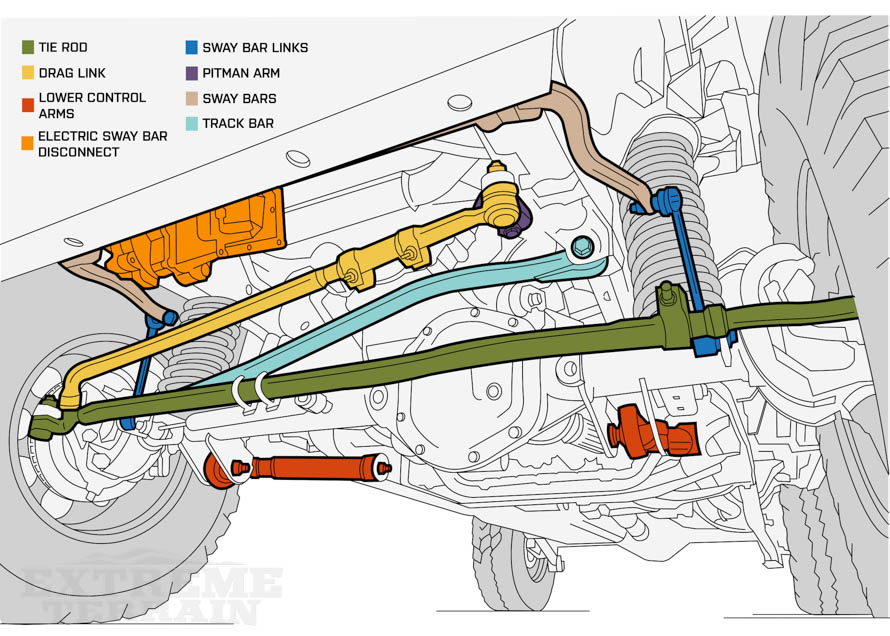
- ✦ Coil Springs
Coil springs support the Wrangler weight and absorb energy from bumps and uneven surfaces.
- ✦ Shock Absorbers
Shocks control spring movement and prevent excessive bouncing after impacts.
- ✦ Control Arms
Control arms keep the axle positioned correctly while allowing suspension movement.
- ✦ Track Bars
Track bars prevent side-to-side axle movement and help maintain steering stability.
Front Suspension Components
The front suspension manages steering input and handles much of the force created during braking and turning. Parts like front control arms, track bars, and steering stabilizers are important for Wrangler stability.
A worn front suspension can cause steering vibration, loose handling, or uneven tire wear.
- ✦ Steering Stabilizer
This component reduces steering shock and helps improve steering feel on rough roads.
Jeep Wrangler Coil Springs and Shock Absorbers
Coil springs and shocks are two of the most important parts of the Jeep Wrangler Suspension System and Major Components Explained. Springs carry the vehicle weight, while shocks control how quickly the springs compress and release.
Many Wrangler owners upgrade these components when they install larger tires, add heavy bumpers, or want improved off-road capability.

- ✦ Soft Suspension Setup
A softer setup can improve trail comfort but may create more body movement on pavement.
- ✦ Heavy Duty Setup
Heavy duty springs and shocks can support added equipment and demanding driving conditions.
Signs of Worn Shocks
Common signs include excessive bouncing, longer stopping distance, uneven tire wear, and reduced control on rough roads.
Replacing worn shocks can restore a more controlled and predictable driving experience.
Jeep Wrangler Suspension Links, Control Arms, and Axle Positioning
Control arms and suspension links keep the axle correctly placed while allowing the suspension to move. These parts are critical because the Wrangler uses solid axles that need accurate positioning.
When owners install lift kits, upgraded control arms often become necessary because the factory geometry changes with increased ride height.

- ✦ Upper and Lower Control Arms
These arms manage axle location and help maintain proper suspension angles.
- ✦ Suspension Bushings
Bushings reduce vibration and allow controlled movement between metal components.
Why Suspension Geometry Matters
Changing suspension height affects alignment angles, steering behavior, and drivetrain positioning. Correct geometry helps maintain reliable handling after modifications.
Professional installation and proper adjustment are important when making major suspension changes.
Jeep Wrangler Suspension Lift Kits and Performance Upgrades
Many Wrangler owners upgrade suspension systems to gain more ground clearance, fit larger tires, or improve trail performance. A lift kit changes the relationship between the body, axles, and suspension components.
The best upgrade depends on how the Jeep is used. A daily driver may need a different setup compared with a vehicle built mainly for rock crawling.

- ✦ Leveling Kits
Leveling kits adjust vehicle height without major suspension changes.
- ✦ Complete Lift Kits
Complete kits include multiple components designed to work together for better performance.
- ✦ Heavy Duty Suspension Parts
Upgraded parts improve durability for larger tires and additional vehicle weight.
Common Suspension Upgrade Mistakes
Installing a lift kit without considering steering, alignment, and drivetrain angles can create new problems.
A balanced upgrade plan focuses on the entire suspension system instead of only increasing vehicle height.
Common Jeep Wrangler Suspension Problems and Maintenance Tips
The Jeep Wrangler Suspension System and Major Components Explained also includes common problems owners may experience over time. Regular inspections help prevent small issues from becoming expensive repairs.
Suspension wear is normal, especially for Wranglers used frequently on trails or with heavy aftermarket equipment.
- ✦ Death Wobble Symptoms
Loose steering parts, worn bushings, or incorrect alignment can contribute to severe steering vibration.
- ✦ Uneven Tire Wear
Suspension problems can change tire contact angles and create uneven wear patterns.
- ✦ Noisy Suspension
Clunks or squeaks may indicate worn bushings, links, or mounting hardware.
Basic Suspension Inspection Checklist
Check suspension components regularly for cracks, loose bolts, damaged bushings, and fluid leaks from shocks.
A simple inspection schedule can improve safety and help maintain Wrangler performance.
- ✦ Inspect Before Trail Trips
Check important suspension parts before long off-road adventures.