Modern Jeep vehicles rely on complex electronic networks that control the engine, transmission, safety systems, and comfort features. Jeep Diagnostic Systems OBD-II Fault Codes and Electronic Troubleshooting help owners and technicians understand what happens when a warning light appears on the dashboard.
Over years of working with vehicle diagnostics, one lesson stays clear: a fault code is only the starting point. A skilled diagnosis combines code information with symptoms, wiring checks, sensor readings, and real-world testing.
For Jeep owners in the United States, electronic troubleshooting is especially important because many newer models use multiple control modules connected through a communication network. A small sensor issue can sometimes affect several vehicle systems.

Understanding Jeep Diagnostic Systems and OBD-II Technology
Jeep Diagnostic Systems OBD-II Fault Codes and Electronic Troubleshooting are based on the On-Board Diagnostics II standard used in vehicles sold in the United States. This system became required for most passenger vehicles in the 1990s and created a common way to monitor emissions and vehicle performance.
The OBD-II system uses sensors, control modules, and software to watch vehicle operation. When the system detects an issue, it stores a Diagnostic Trouble Code, also called a DTC, and may turn on the check engine light.
A Jeep does not simply record a problem. It collects information from many parts, including the engine computer, transmission module, ABS system, airbag system, and body control module.

- ✦ Electronic Control Modules
Jeep vehicles use different modules to manage specific systems such as powertrain, braking, safety, and comfort features.
- ✦ Diagnostic Trouble Codes
DTCs provide clues about detected faults but require further testing before replacing parts.
- ✦ Communication Networks
Modern Jeeps use CAN bus networks that allow modules to exchange information quickly.
How OBD-II Scanners Communicate With a Jeep
An OBD-II scanner connects to the diagnostic port, usually located under the dashboard near the driver area. The tool communicates with Jeep control modules and retrieves stored information.
Basic scanners read engine codes, while professional scan tools can access ABS, transmission, airbag, and body control systems.
- ✦ Basic Scan Tools
Useful for reading common engine fault codes and clearing warning lights.
- ✦ Advanced Diagnostic Tools
Provide live data, module testing, programming functions, and deeper electronic analysis.
How Jeep OBD-II Fault Codes Work and What They Mean
Jeep Diagnostic Systems OBD-II Fault Codes and Electronic Troubleshooting depend on understanding how diagnostic codes are structured. Each code contains information about the system and type of problem detected.
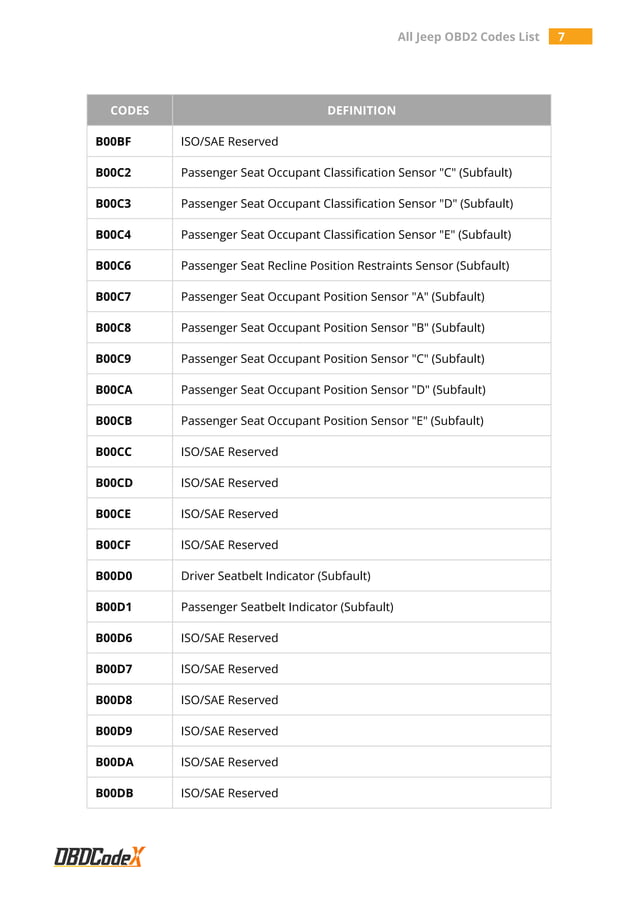
Most OBD-II codes begin with a letter followed by four numbers. The first letter identifies the vehicle area, such as powertrain, body, chassis, or network communication.
A code should never be treated as a direct order to replace a part. For example, an oxygen sensor code may result from wiring damage, vacuum leaks, fuel problems, or the sensor itself.
- ✦ P Codes
Powertrain codes relate to the engine, fuel system, ignition, and transmission.
- ✦ B Codes
Body codes cover systems such as airbags, climate controls, and interior electronics.
- ✦ C Codes
Chassis codes often involve ABS, steering, and suspension-related systems.
- ✦ U Codes
Network codes indicate communication problems between vehicle modules.
Common Jeep Fault Code Examples
Common Jeep diagnostic codes include engine misfire codes, sensor performance codes, communication errors, and emissions-related faults. The exact meaning depends on the Jeep model, year, and installed systems.
Technicians often compare stored codes with freeze-frame data, which shows vehicle conditions when the fault occurred.
- ✦ Misfire Codes
These may point to ignition, fuel delivery, compression, or sensor issues.
- ✦ Communication Codes
These require checking module connections, wiring, and network signals.
The Process of Electronic Troubleshooting in Jeep Vehicles
Effective Jeep Diagnostic Systems OBD-II Fault Codes and Electronic Troubleshooting follows a step-by-step process. Random part replacement often wastes money and does not solve the actual issue.
Professional technicians begin by confirming the customer complaint, scanning the vehicle, researching technical information, and testing the suspected system.
A good diagnosis connects the code with real vehicle behavior. This approach prevents unnecessary repairs and improves reliability.

- ✦ Step One: Scan the Vehicle
Retrieve stored codes, pending codes, and system information from Jeep modules.
- ✦ Step Two: Review Live Data
Check sensor readings and compare them with normal operating values.
- ✦ Step Three: Test Components
Use electrical tests to confirm whether parts, wiring, or modules are faulty.
Why Visual Inspection Matters
Many Jeep electronic problems come from damaged connectors, corrosion, broken wires, or poor grounds. A visual inspection can reveal issues before expensive testing begins.
Technicians often check battery voltage and ground connections first because low voltage can create multiple false fault codes.
- ✦ Battery Health
Stable voltage is important because Jeep modules depend on reliable electrical power.
- ✦ Connector Inspection
Loose or corroded connectors can interrupt signals between components.
Common Jeep Electronic Problems Diagnosed Through OBD-II
Many Jeep owners experience electronic warnings during daily driving. Jeep Diagnostic Systems OBD-II Fault Codes and Electronic Troubleshooting can help identify issues before they become larger failures.
Some problems are simple, such as a loose gas cap triggering an emissions code. Others involve complex communication problems between multiple vehicle modules.

- ✦ Check Engine Light
Often caused by emissions, fuel, ignition, or sensor-related problems.
- ✦ ABS Warning Light
May involve wheel speed sensors, brake modules, or wiring faults.
- ✦ Transmission Issues
Electronic transmission controls can store codes related to shifting and pressure control.
- ✦ Electrical Communication Errors
Network faults can prevent modules from sharing important information.
Troubleshooting Jeep Sensor Failures
Sensors provide data that Jeep computers use to make decisions. A faulty sensor can affect performance, fuel economy, emissions, and drivability.
Before replacing a sensor, technicians test power supply, ground signals, and output values.
- ✦ Sensor Signal Testing
Testing confirms whether the sensor sends accurate information.
Advanced Jeep Diagnostic Tools and Professional Testing Methods
Professional Jeep Diagnostic Systems OBD-II Fault Codes and Electronic Troubleshooting requires tools beyond basic code readers. Factory-level scanners can access deeper vehicle functions.
Advanced tools allow technicians to perform active tests, module resets, software updates, and detailed data analysis.
- ✦ Live Data Monitoring
Shows real-time sensor information while the vehicle operates.
- ✦ Module Communication Testing
Checks whether electronic modules can communicate correctly.
- ✦ Software Diagnostics
Helps identify programming and calibration-related issues.
DIY Jeep Diagnostics vs Professional Repair
DIY scanners are useful for basic checks and understanding warning lights. However, complex electrical issues often require professional equipment and experience.
A careful owner can save time by collecting code information before visiting a repair shop.
- ✦ DIY Benefits
Owners can monitor vehicle health and understand basic problems.
- ✦ Professional Benefits
Experts can perform advanced testing and accurate repairs.
Best Practices for Accurate Jeep Electronic Troubleshooting
Accurate Jeep Diagnostic Systems OBD-II Fault Codes and Electronic Troubleshooting depends on patience and proper testing. Quick fixes can create more problems when the root cause is ignored.
Keeping battery voltage stable, maintaining connectors, and addressing warning lights early can reduce repair costs.
- ✦ Record Symptoms
Note when problems happen, such as cold starts, highway driving, or heavy loads.
- ✦ Avoid Guessing Parts
Confirm failures through testing before replacing components.
- ✦ Use Reliable Information
Follow trusted repair data and model-specific diagnostic procedures.