The Jeep Wrangler is famous for open-air freedom, removable tops, and off-road ability. However, those same design features can create more wind noise and road noise than a typical SUV. Many Wrangler owners in the USA notice louder cabin sounds during highway trips, especially above 60 mph.
After working with vehicle comfort improvements, one lesson is clear: Jeep Wrangler Wind Noise Road Noise and Cabin Sealing problems usually do not come from one single issue. They often come from small gaps, worn seals, loose panels, aggressive tires, and limited factory insulation working together.

Why Jeep Wranglers Have More Wind and Road Noise Than Other SUVs
The Jeep Wrangler has a unique body design built for adventure. Removable doors, folding windshields, removable roofs, and off-road components create more areas where air and sound can enter the cabin.
Unlike luxury SUVs that focus heavily on cabin isolation, the Wrangler keeps a rugged structure. This means some level of outside noise is normal, but excessive noise often points to sealing or setup problems.
- ✦ Removable roof design
Hard tops and soft tops use multiple seals and connection points that can allow wind noise when they are not aligned correctly.
- ✦ Boxy body shape
The Wrangler shape creates more air pressure around mirrors, doors, and roof edges, increasing wind sound at highway speeds.
- ✦ Off-road tires
Large mud-terrain tires can transfer more tire hum and vibration into the cabin.
Normal Wrangler Noise vs Problem Noise
A small amount of wind sound is part of Wrangler ownership. However, sudden increases in noise, whistling sounds, or strong airflow usually mean something needs inspection.
- ✦ Normal sound
Light wind movement, tire hum, and soft top noise can be expected.
- ✦ Warning signs
Whistling doors, rattling roof panels, and strong drafts suggest sealing issues.
Common Sources of Jeep Wrangler Wind Noise
Most Jeep Wrangler Wind Noise Road Noise and Cabin Sealing complaints start with areas that move or separate. Doors, roof panels, and windows need tight contact to block airflow.
A careful inspection often reveals simple problems such as compressed rubber seals, incorrect roof installation, or loose door alignment.

- ✦ Door seals
Damaged or flattened rubber seals around doors can create air leaks and wind whistles.
- ✦ Freedom panels
Hard top front panels must sit correctly because small gaps can create noticeable wind noise.
- ✦ Windshield frame area
The Wrangler windshield design can produce wind turbulence when seals or brackets are not adjusted properly.
Checking Door and Window Alignment
A door that sits slightly low or does not compress the weather seal evenly can create noise. Closing the door and checking seal contact marks is a simple way to find alignment issues.
Many owners improve cabin comfort by adjusting hinges, striker plates, and seal positions before buying additional soundproofing products.
- ✦ Inspect rubber compression
Look for areas where the seal does not touch the door frame evenly.
How Cabin Sealing Reduces Jeep Wrangler Noise
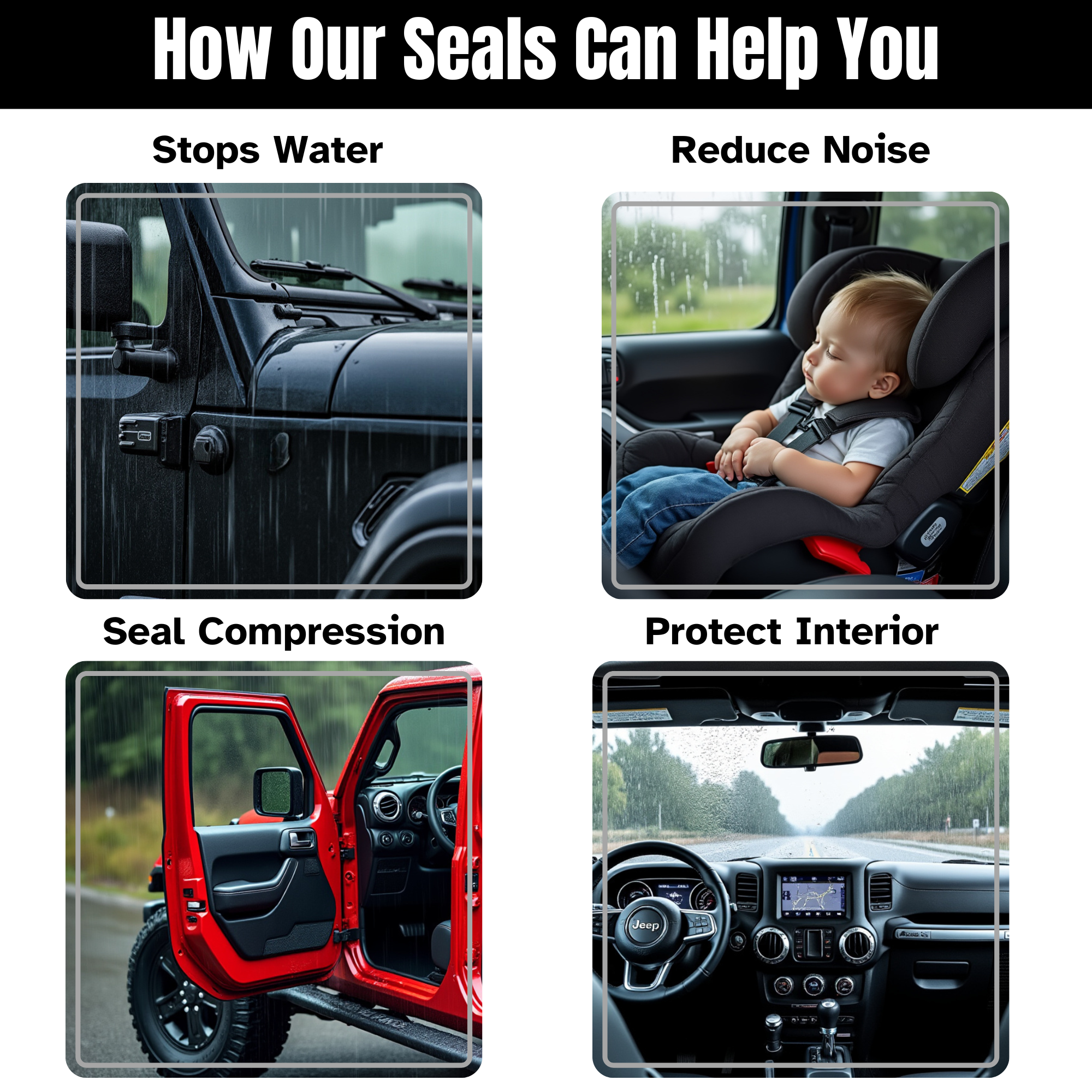
Jeep Wrangler cabin sealing focuses on stopping unwanted air movement. Good sealing reduces wind pressure changes and helps keep outside sounds from entering the interior.
The best results usually come from combining seal repairs with sound absorption. Fixing air leaks should happen before adding insulation because materials cannot fully solve open gaps.
- ✦ Replace worn weatherstripping
Fresh rubber seals restore contact between doors, roof panels, and body surfaces.
- ✦ Add foam sealing tape
Extra sealing material can help around removable roof sections and panel joints.
- ✦ Check drainage areas
Blocked or damaged areas can affect how seals sit against the body.
Hard Top vs Soft Top Cabin Sealing
Hard tops usually provide better noise control because they create a more solid barrier. Soft tops are designed for flexibility and open-air use, so they naturally allow more sound.
A well-fitted soft top with healthy seals can still provide a comfortable ride, but it will not match the quietness of a sealed SUV.
- ✦ Hard top advantage
Better structure and insulation options help reduce outside sound.
- ✦ Soft top consideration
Fabric movement and flexible panels create more cabin noise.
Reducing Jeep Wrangler Road Noise From Tires and Suspension
Road noise is different from wind noise. It comes mainly from tire contact, wheel wells, suspension parts, and vibrations moving through the body.
Many Wrangler owners upgrade tires for off-road performance but notice more highway noise afterward. Choosing the right tire type can make a major difference for daily driving.

- ✦ Choose quieter tires
Highway-terrain tires usually create less noise than aggressive mud-terrain tires.
- ✦ Add wheel well insulation
Sound absorbing materials can reduce noise entering from the tires.
- ✦ Maintain tire pressure
Incorrect pressure can increase vibration and uneven tire noise.
How Tires Affect Cabin Comfort
A Wrangler with large aggressive tires may sound louder even when every seal is working correctly. Tire choice should match how the Jeep is used.
Drivers who spend most time on highways often prefer all-terrain tires with lower road noise while keeping some off-road ability.
- ✦ Daily driving focus
Choose tires designed for balanced road comfort and traction.
Jeep Wrangler Soundproofing Methods That Actually Help
Soundproofing can improve comfort, but it should support proper cabin sealing. Adding insulation without fixing leaks usually gives limited results.
Common upgrades include floor mats, acoustic liners, door insulation, and roof insulation panels. These changes reduce vibration and absorb sound energy.

- ✦ Floor insulation
Helps block tire and road vibration entering through the Jeep floor.
- ✦ Door insulation
Reduces panel vibration and improves speaker performance.
- ✦ Roof insulation
Can reduce heat transfer and some outside noise.
Balancing Comfort With Jeep Character
The goal is not to make a Wrangler completely silent. The goal is to create a more comfortable cabin while keeping the vehicle’s rugged personality.
Many owners find that small improvements together create the biggest change.
- ✦ Focus on problem areas
Repair the loudest sources first instead of adding unnecessary materials everywhere.
Step-by-Step Jeep Wrangler Wind Noise Road Noise and Cabin Sealing Inspection
A simple inspection routine can help identify most noise sources without expensive tools. Start with the areas that receive the most airflow and movement.
Testing should happen during normal driving conditions. Highway speeds reveal problems that may not appear during slow city driving.

- ✦ Inspect seals
Check doors, roof panels, windows, and windshield areas for gaps or damage.
- ✦ Listen carefully
Different sounds point to different problems, such as whistles, hums, or rattles.
- ✦ Fix one area at a time
This makes it easier to identify which repair creates improvement.
DIY Testing Tips
A common method is using masking tape over suspected gaps during a test drive. If the noise changes, the sealed area may need attention.
Owners can also inspect rubber seals for cracks, flattening, or poor contact marks.
- ✦ Use simple tests first
Small adjustments often solve common Wrangler noise problems.