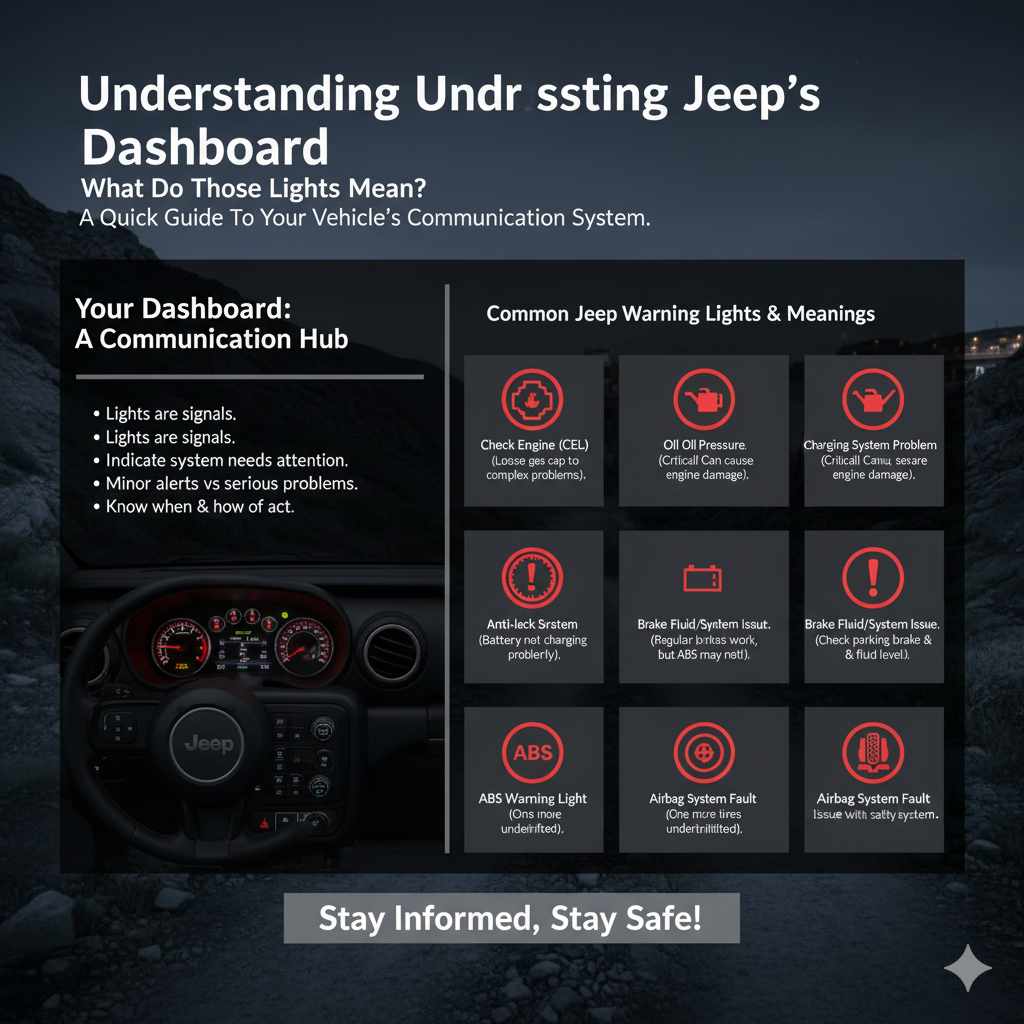
The Complete Guide to Jeep Dashboard Warning Lights and What They Indicate helps owners understand the messages their vehicle sends every day. Modern Jeep models use many sensors and control modules to monitor performance, so a warning light can appear for small issues or serious problems.
After working with vehicle diagnostics, one lesson becomes clear: ignoring dashboard warnings often turns simple repairs into expensive repairs. A driver who understands these symbols can react faster, protect the Jeep, and stay safer on American roads.
The Complete Guide to Jeep Dashboard Warning Lights and What They Indicate explains common warning symbols, their meanings, possible causes, and the right steps to take when a light appears.

How Jeep Dashboard Warning Lights Work
The Complete Guide to Jeep Dashboard Warning Lights and What They Indicate starts with understanding how these alerts work. Your Jeep uses sensors to watch systems like the engine, brakes, airbags, and traction control.
When a sensor detects an issue, the vehicle computer turns on a warning light. Some lights appear briefly during startup because the Jeep is checking its systems. A light that stays on after startup needs attention.
The meaning of each warning light depends on its color, symbol, and behavior. A flashing light is often more urgent than a steady light.
- ✦ Red warning lights
Red lights usually indicate serious issues that may affect safety or cause vehicle damage.
- ✦ Yellow or amber warning lights
Amber lights often mean a system needs inspection, diagnosis, or maintenance soon.
- ✦ Green and blue lights
These lights usually show that a feature is active, such as headlights or cruise control.
Why Jeep Warning Lights Appear
Warning lights can appear because of normal wear, low fluids, electrical faults, sensor problems, or system failures. A loose fuel cap can trigger some emissions warnings, while a brake system issue may require immediate service.
Reading the owner’s manual is helpful because symbols can vary between Jeep models and model years.
- ✦ Common causes
Low battery voltage, worn parts, sensor faults, and maintenance needs are frequent causes.
Understanding Red Jeep Dashboard Warning Lights
Red dashboard lights deserve quick attention because they often relate to systems that protect the driver and passengers. The Complete Guide to Jeep Dashboard Warning Lights and What They Indicate shows why these alerts should never be ignored.
A red light does not always mean your Jeep must stop immediately, but it means you should check the situation carefully. Continuing to drive with some red warnings can create larger problems.
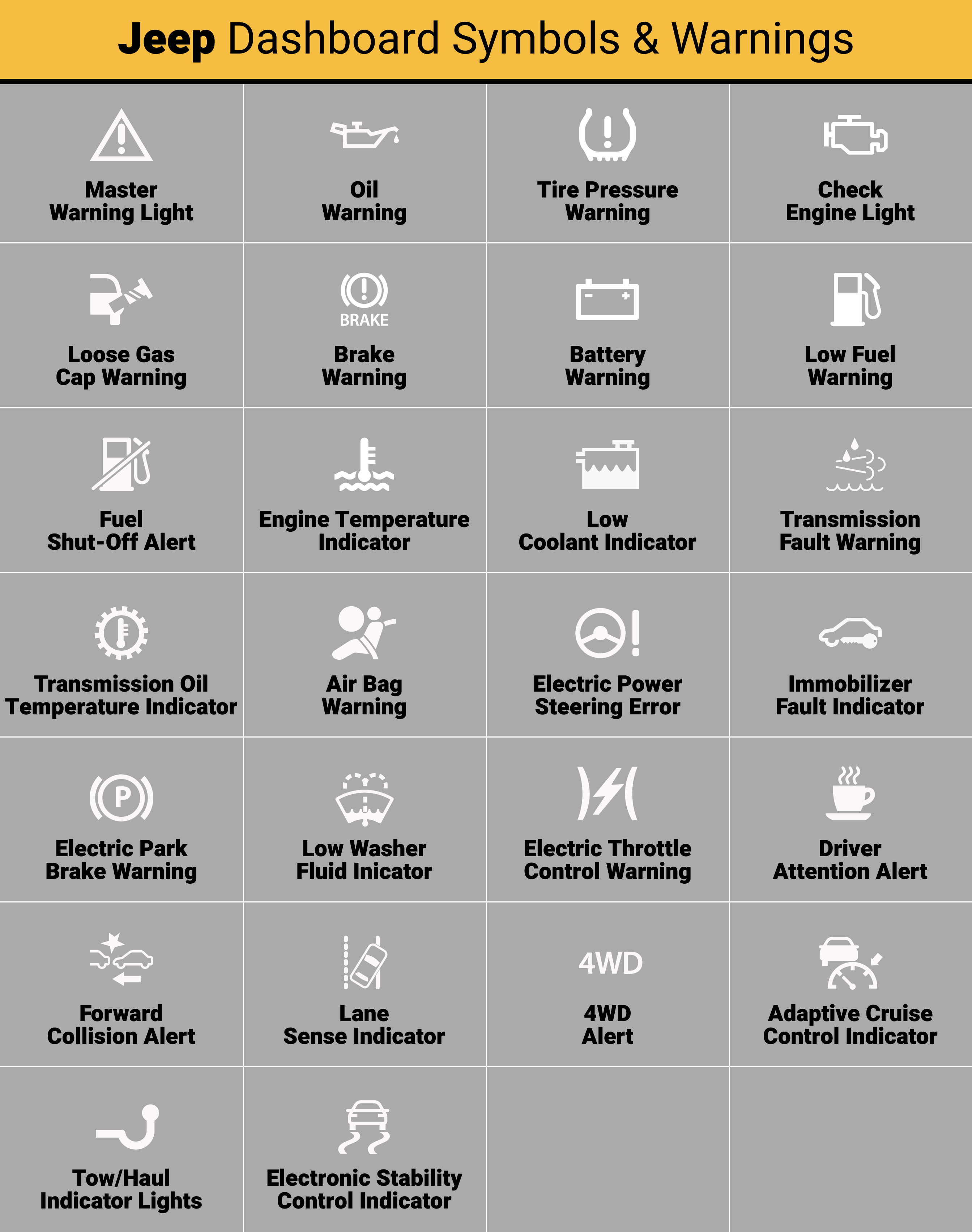
- ✦ Brake warning light
This may indicate low brake fluid, a parking brake issue, or a brake system fault.
- ✦ Oil pressure warning light
This warning can mean the engine is not receiving enough oil pressure and needs immediate attention.
- ✦ Temperature warning light
This indicates possible engine overheating caused by cooling system problems.
What To Do When a Red Light Appears
First, stay calm and check whether the Jeep feels normal. Look for unusual sounds, smoke, loss of power, or changes in handling.
If the warning relates to brakes, oil pressure, or overheating, safely stopping the vehicle may prevent major damage.
Common Yellow and Amber Jeep Warning Symbols
Yellow warning lights usually provide an early warning. They allow Jeep owners to fix problems before they become severe.
The Complete Guide to Jeep Dashboard Warning Lights and What They Indicate includes these common amber alerts because they appear often in daily driving.

- ✦ Check engine light
This light can indicate engine, emissions, ignition, or sensor problems.
- ✦ ABS warning light
The ABS light may mean the anti-lock braking system has a fault.
- ✦ Tire pressure warning light
This usually appears when one or more tires have low pressure.
- ✦ Traction control light
This can indicate traction system activity or a problem with stability control.
Why the Check Engine Light Turns On
The check engine light is one of the most misunderstood warnings. It can come from simple issues like a loose gas cap or more complex problems involving sensors or engine parts.
A diagnostic scan tool can read stored trouble codes and help identify the source of the problem.
- ✦ Flashing check engine light
A flashing light often suggests a serious issue that may damage the engine or catalytic converter.
Jeep Safety System Warning Lights Explained
Jeep vehicles include advanced safety systems that rely on sensors and electronic controls. Warning lights help drivers know when these systems may not work correctly.
The Complete Guide to Jeep Dashboard Warning Lights and What They Indicate covers safety alerts because they directly affect driving confidence.

- ✦ Airbag warning light
This may indicate a problem with airbags, seat sensors, or related safety controls.
- ✦ Electronic stability control light
This warning may appear when stability assistance has a fault or is disabled.
- ✦ Blind spot monitoring warning
This can signal a sensor issue with the driver assistance system.
Why Safety Warning Lights Matter
Safety systems work best when every sensor and module communicates correctly. A warning light may mean the system has limited function during an emergency.
Drivers should schedule inspection when these warnings remain active.
Jeep Dashboard Warning Lights Related to Four Wheel Drive and Off Road Systems
Many Jeep owners use their vehicles for trails, snow, mud, and outdoor trips. Four-wheel-drive systems have their own warning lights that help protect important components.
The Complete Guide to Jeep Dashboard Warning Lights and What They Indicate is especially useful for off-road drivers who depend on these systems.
- ✦ 4WD warning light
This may indicate a problem with four-wheel-drive engagement or system operation.
- ✦ Low range indicator issues
Problems may occur with transfer case sensors or drivetrain controls.
- ✦ Trail system warnings
These alerts may appear when off-road assistance features detect a fault.
Checking Jeep Systems After Off Road Driving
After demanding trail use, inspect for fluid leaks, unusual noises, and warning lights. Dirt, water, and impacts can affect sensors and connectors.
Regular checks help maintain reliability during future adventures.
How To Diagnose Jeep Dashboard Warning Lights
Finding the cause of a warning light starts with simple checks. Drivers can review the owner’s manual, inspect visible issues, and use a diagnostic scanner.
The Complete Guide to Jeep Dashboard Warning Lights and What They Indicate recommends avoiding guesswork because the same symbol can have different causes.

- ✦ Check basic items first
Inspect fuel caps, tire pressure, fluid levels, and battery condition.
- ✦ Use an OBD scanner
A scanner can read diagnostic trouble codes stored by the vehicle computer.
- ✦ Seek professional help
Complex electrical and safety issues should be checked by qualified technicians.
Avoid Clearing Warning Lights Without Repairs
Resetting a warning light without fixing the cause only hides the problem. The light may return and the underlying issue may become worse.
Proper diagnosis saves time and prevents repeated repairs.