Jeep Wrangler Water Leaks and Common Sources of Water Intrusion are common concerns for many owners in the United States. The Wrangler is built for open-air driving, removable tops, and off-road use, but those features also create more places where water can enter. A small gap in a seal can allow rainwater to reach carpets, electronics, and interior panels.
After working with vehicle troubleshooting topics, one lesson stands out: finding a Wrangler leak is often about patience, not guesswork. Water may enter near the roof but appear near the dashboard or floor. A proper inspection helps identify the real source before replacing parts that are still working correctly.

Why Jeep Wrangler Water Leaks Happen More Often Than Other SUVs
The Jeep Wrangler has a unique design with removable doors, removable roof panels, fold-down windshields, and flexible body components. These features create a fun driving experience, but they also mean there are more sealing points to inspect.
Jeep Wrangler Water Leaks and Common Sources of Water Intrusion often develop because seals age, parts move, or previous owners install accessories incorrectly. Even a small change in roof alignment can create a path for rainwater.
- ✦ Removable roof systems
Hardtops, Freedom Panels, and soft tops depend on tight seals to block water. Loose connections can allow leaks during heavy rain.
- ✦ Door and window movement
Doors must align correctly with seals. Small alignment problems can create water entry points.
- ✦ Off-road stress
Trail driving can create body movement that affects seals and mounting points over time.
Common Sources of Jeep Wrangler Water Leaks
When diagnosing Jeep Wrangler Water Leaks and Common Sources of Water Intrusion, start with the most common areas. Most problems come from places where rubber seals meet removable parts.
A simple water test can help. Spray water slowly over one area at a time while someone checks inside the Jeep with a flashlight.

- ✦ Hardtop and Freedom Panel seals
Worn or incorrectly placed roof seals can allow water to enter above the seats or near the center console.
- ✦ Door seals
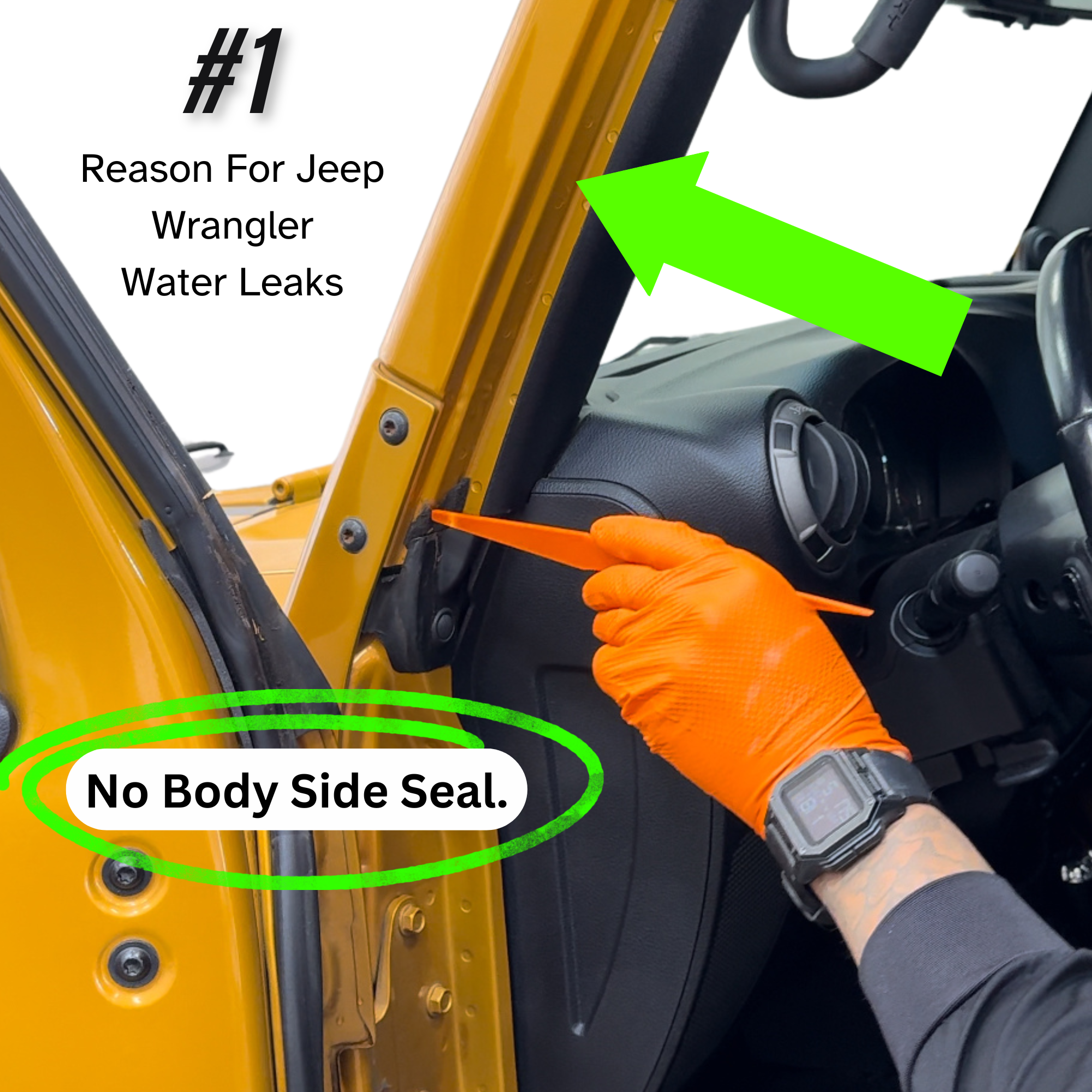
Damaged weather stripping around doors can create leaks near seats and floor areas.
- ✦ Windshield frame seals
Loose windshield seals can allow water to move behind interior trim and dashboards.
- ✦ Drain plugs and channels
Blocked drains can trap water inside the cabin instead of allowing it to escape.
Hardtop and Freedom Panel Leak Problems
Many Wrangler owners notice water dripping from the roof area after rain. The cause is often a poor seal between the hardtop panels or incorrect panel installation.
Check that panels sit evenly and that rubber seals are clean. Dirt and small debris can stop seals from creating a complete barrier.
- ✦ Panel alignment
Panels that do not sit flat can create small gaps where rainwater enters.
How to Find the Exact Location of a Jeep Wrangler Water Leak
Finding the source of Jeep Wrangler Water Leaks and Common Sources of Water Intrusion requires a methodical approach. Do not assume the wet area is directly below the leak.
Water can travel along metal panels, wiring paths, and interior trim before becoming visible. This makes diagnosis more difficult.

- ✦ Inspect after rainfall
Look for wet carpet, water marks, stains, or damp trim shortly after rain.
- ✦ Use controlled water testing
Test one section at a time instead of spraying the entire Jeep at once.
- ✦ Check inside first
Interior signs often provide clues about where water entered.
Common Leak Testing Mistakes
Many owners replace seals without confirming the leak location. This can waste money and still leave the original problem unsolved.
A slow inspection process usually saves time because it identifies the exact failure point.
Door Seals, Window Areas, and Side Water Intrusion Issues
Door-related problems are among the most common Jeep Wrangler Water Leaks and Common Sources of Water Intrusion issues. Doors need proper alignment to press evenly against rubber seals.
A damaged seal may look fine but fail during strong rain or high-pressure washing. Regular inspection helps catch problems early.

- ✦ Aged rubber seals
Old seals can become hard, cracked, or less flexible.
- ✦ Door alignment issues
A door that sits incorrectly may not create enough pressure against the weather seal.
- ✦ Window channel problems
Loose window seals can allow water into the door and cabin area.
Soft Top Water Leaks and Fabric Roof Problems
Soft top Wranglers need special attention because fabric materials and flexible frames change with weather conditions. Heat, cold, and repeated folding can affect the fit.
Jeep Wrangler Water Leaks and Common Sources of Water Intrusion in soft tops often involve stretched fabric, worn windows, or loose mounting points.

- ✦ Soft top tension
A loose soft top may allow water to collect and enter through weak areas.
- ✦ Window seals
Plastic windows and surrounding seals must stay properly connected.
Preventing Future Jeep Wrangler Water Leaks
Preventing Jeep Wrangler Water Leaks and Common Sources of Water Intrusion is easier than repairing interior damage. Regular checks keep seals working and reduce long-term problems.
Many owners focus only on repairs after a leak appears. A simple maintenance routine can prevent many water problems before they start.
- ✦ Clean seals regularly
Remove dirt and debris from rubber seals so they can close properly.
- ✦ Protect rubber components
Use suitable rubber care products to help maintain seal flexibility.
- ✦ Check roof installation
Confirm removable roof panels are locked and positioned correctly.