The Complete Guide to Jeep Wrangler Intake and Exhaust Systems explains how these two important engine systems work together. Every Jeep Wrangler needs a steady supply of fresh air and a smooth path for exhaust gases to leave the engine. When airflow is restricted, the engine may feel slow, less responsive, and less efficient.
From my experience studying and working with vehicle upgrades, many Jeep owners focus on tires and suspension first but overlook airflow improvements. A properly selected intake and exhaust setup can make daily driving more enjoyable while also supporting off-road performance. The key is choosing parts that match your Wrangler model, engine type, and driving goals.

Understanding Jeep Wrangler Intake and Exhaust Systems
The Complete Guide to Jeep Wrangler Intake and Exhaust Systems starts with understanding the basic job of each component. The intake system pulls air into the engine, filters it, and delivers it to the combustion chamber. The exhaust system carries burned gases away after combustion.
A Jeep Wrangler engine works like an air pump. More efficient airflow can help the engine breathe better. However, larger parts do not always mean better performance because airflow balance matters.
- ✦ Intake system purpose
The intake system provides clean air for combustion and helps maintain proper engine performance.
- ✦ Exhaust system purpose
The exhaust system removes combustion gases while controlling noise and emissions.
- ✦ Airflow balance
Both systems must work together because improving only one side may limit total gains.
Main Intake Components
A Jeep Wrangler intake system includes the air filter, intake tube, air box, sensors, and throttle body connection. Each part affects how smoothly air moves into the engine.
Modern Wrangler models use sensors that measure airflow and temperature. Any modification should keep sensor readings accurate to avoid engine problems.
- ✦ Air filter
The filter removes dirt and protects the engine from harmful particles.
- ✦ Intake tube
The tube directs air from the filter housing to the engine.
Jeep Wrangler Cold Air Intake Upgrades
A cold air intake is one of the most common upgrades for Jeep Wrangler owners. It replaces restrictive factory intake parts with a design that can provide cooler and smoother airflow.
The Complete Guide to Jeep Wrangler Intake and Exhaust Systems shows that cold air intakes are not magic power boosters. Their biggest benefits often include improved throttle feel, stronger engine sound, and better airflow efficiency.

- ✦ Improved airflow
A quality cold air intake can reduce restrictions and help the engine receive air more easily.
- ✦ Better throttle response
Many drivers notice quicker response when pressing the accelerator.
- ✦ Reusable filters
Some aftermarket systems use washable filters that reduce replacement costs over time.
Cold Air Intake Types
Open-element intakes allow more air movement but may pull warmer engine bay air. Closed-box systems usually offer better heat protection and more consistent performance.
For daily-driven Jeeps in hot climates, heat management is often more important than maximum airflow.
- ✦ Open intake design
Provides a louder engine sound and simple airflow path.
- ✦ Closed intake design
Helps protect incoming air from engine heat.
Jeep Wrangler Exhaust System Components Explained
The exhaust system is more than just a pipe at the back of the Jeep. It includes multiple parts that control gas flow, emissions, and sound.
A complete Jeep Wrangler exhaust upgrade requires understanding each component. Changing one part can affect noise levels, performance, and legal compliance.
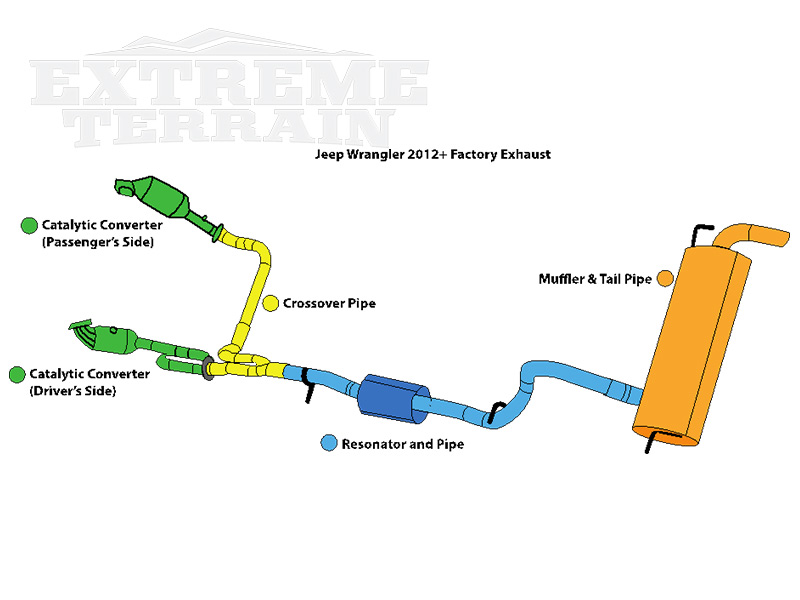
- ✦ Exhaust manifold
Collects gases from the engine cylinders and sends them into the exhaust system.
- ✦ Catalytic converter
Reduces harmful emissions before gases leave the vehicle.
- ✦ Muffler
Controls exhaust sound while allowing gases to exit.
Cat-Back Exhaust Systems
A cat-back exhaust replaces parts after the catalytic converter. It is popular because installation is simple and it usually keeps emissions equipment intact.
Many Wrangler owners choose cat-back systems for improved sound rather than large horsepower gains.
- ✦ Sound improvement
Creates a deeper and more aggressive exhaust tone.
- ✦ Easy installation
Many systems are designed as direct replacements.
Benefits of Upgrading Jeep Wrangler Intake and Exhaust Systems
Many Jeep owners upgrade intake and exhaust parts to improve the driving experience. The results depend on the engine, supporting modifications, and quality of installation.
The Complete Guide to Jeep Wrangler Intake and Exhaust Systems focuses on practical improvements rather than unrealistic performance claims.

- ✦ Improved engine breathing
Better airflow can help the engine operate more efficiently.
- ✦ Enhanced driving feel
A smoother throttle response can make city driving and trails more enjoyable.
- ✦ Custom sound
Exhaust upgrades allow owners to choose a preferred engine tone.
Performance Expectations
Airflow upgrades alone usually provide modest changes. Bigger gains often require a complete approach that includes tuning, engine upgrades, and proper maintenance.
A realistic goal is improved response and enjoyment rather than expecting a completely different vehicle.
- ✦ Daily driving focus
Choose balanced upgrades that maintain reliability and comfort.
Choosing the Right Intake and Exhaust Setup for Your Jeep Wrangler
The best setup depends on how you use your Jeep. A vehicle used for highway trips needs different priorities than a Wrangler built for rocky trails.
Before buying parts, consider your engine size, model year, budget, sound preference, and local emissions rules.

- ✦ Daily commuter
Choose quiet and reliable systems with strong heat protection.
- ✦ Off-road Jeep
Focus on durability, water protection, and safe routing.
- ✦ Performance build
Consider supporting upgrades and professional tuning.
Common Jeep Wrangler Engines
Different Wrangler engines respond differently to intake and exhaust changes. The 3.6L Pentastar V6, 2.0L turbo engine, diesel options, and older engines all have unique airflow needs.
Always select parts designed specifically for your engine and generation.
- ✦ Engine compatibility
Verify fitment before purchasing any performance component.
Maintenance Tips for Jeep Wrangler Intake and Exhaust Systems
Regular inspection helps your intake and exhaust systems last longer. Dust, mud, water crossings, and road salt can affect components over time.
Many Jeep owners discover small issues early by checking filters, clamps, exhaust hangers, and unusual noises.

- ✦ Clean air filters
Replace or clean filters based on driving conditions.
- ✦ Inspect exhaust leaks
Look for cracks, rust, or unusual sounds.
- ✦ Check mounting points
Loose exhaust hangers can create vibration and damage.
Signs of Intake or Exhaust Problems
Common warning signs include poor acceleration, strange engine sounds, reduced fuel economy, and visible exhaust damage.
Fixing small problems early can prevent more expensive repairs later.
- ✦ Reduced power
May indicate restricted airflow or damaged components.
Frequently Asked Questions about Complete Guide to Jeep Wrangler Intake and Exhaust Systems

Jeepexplorerr
Contributor