Understanding Jeep Wrangler Dashboard Warning Lights and Vehicle Messages helps drivers make better decisions when something appears on the instrument cluster. Modern Wranglers use many sensors and control modules to monitor the engine, brakes, tires, safety systems, and electrical parts.
From my experience working with vehicle troubleshooting guides, many Jeep owners panic when multiple lights appear at once. In many cases, the message may come from a weak battery, loose connection, or sensor issue rather than a major failure. Knowing the meaning behind each warning saves time and avoids unnecessary repairs.
How Jeep Wrangler Dashboard Warning Lights and Vehicle Messages Work
The Jeep Wrangler uses an electronic network called the vehicle communication system. Sensors collect data and send information to control modules. When a module detects an unusual reading, it turns on a warning light or displays a message.
Jeep Wrangler Dashboard Warning Lights and Vehicle Messages are designed to give drivers early notice before a problem becomes serious. Some alerts are reminders, while others require immediate action.
- ✦ Red warning lights
Red lights usually indicate serious issues that may affect safety or vehicle operation.
- ✦ Yellow or amber warning lights
Amber lights usually mean a system needs inspection soon but may still allow limited driving.
- ✦ Green and blue indicators
These lights normally show that a feature is active, such as headlights or cruise control.
Why warning messages appear suddenly
A warning message may appear after startup, during driving, or after changing vehicle conditions. Temperature changes, low voltage, sensor faults, and maintenance issues are common triggers.
- ✦ Battery voltage problems
A weak battery can create multiple false warnings because Jeep modules depend on stable electrical power.
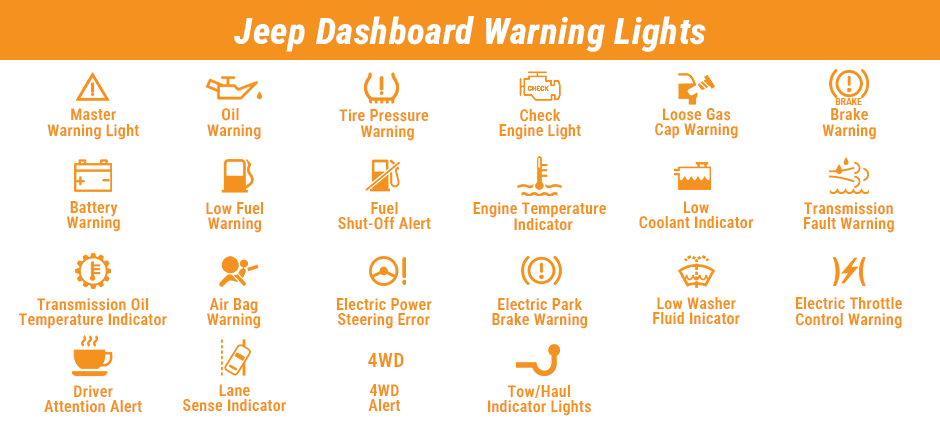
Common Jeep Wrangler Dashboard Symbols and Their Meanings
The Jeep Wrangler dashboard contains many symbols that represent different vehicle systems. Learning the most common ones helps drivers react correctly instead of guessing.
Jeep Wrangler Dashboard Warning Lights and Vehicle Messages can vary by model year, trim level, and installed equipment, so owners should always check the owner’s manual for exact meanings.

- ✦ Check Engine Light
This light means the engine control system detected a problem. Causes may include a loose gas cap, sensor failure, ignition issue, or emissions problem.
- ✦ Oil Pressure Warning
This warning may indicate low oil pressure. Stop driving when safe and check the oil level or seek professional inspection.
- ✦ Battery Warning Light
This usually points to charging system problems involving the battery, alternator, or wiring.
- ✦ Brake Warning Light
This can indicate low brake fluid, parking brake activation, or a brake system issue.
Understanding dashboard icons before an emergency
Many drivers only search for a warning symbol after a problem occurs. Learning these signs early creates a safer driving experience, especially for off-road trips or long highway drives.
Jeep Wrangler Safety System Warning Lights
Safety systems in the Jeep Wrangler depend on sensors and electronic controls. When these systems detect a problem, warning lights appear to alert the driver.
Ignoring safety warnings can reduce protection during sudden stops, slippery roads, or off-road driving conditions.

- ✦ ABS Warning Light
The ABS light indicates a problem with the anti-lock brake system. Normal braking may still work, but ABS assistance may not.
- ✦ Airbag Warning Light
This warning can mean the airbag system needs inspection to ensure proper operation during a crash.
- ✦ Electronic Stability Control Light
This system helps maintain control during slippery conditions and may need attention if the light stays on.
When to stop driving immediately
Drivers should safely stop and inspect the vehicle when they see critical red warnings such as oil pressure loss, overheating, or serious brake alerts.
Jeep Wrangler Tire Pressure and TPMS Messages
The Tire Pressure Monitoring System checks tire air pressure using sensors inside the wheels. A TPMS warning usually appears when one or more tires are below the recommended pressure.
Correct tire pressure improves handling, fuel economy, and tire life. It is especially important for Wrangler owners who drive on highways and rough terrain.

- ✦ Low tire pressure
Check all tires with a reliable gauge and adjust pressure according to the driver’s door label.
- ✦ TPMS sensor failure
A damaged sensor battery or communication issue can cause repeated warnings.
Why TPMS warnings remain after filling tires
Some Jeep models need driving time before the system updates. If the warning remains, a sensor or system fault may require diagnosis.
Electronic Messages and Control Module Warnings
Modern Jeep Wranglers use many electronic control modules. Messages like service electronic stability control, check forward collision system, or service transmission can appear when communication fails.
Jeep Wrangler Dashboard Warning Lights and Vehicle Messages are often linked to electrical health. A low battery or poor connection can create several warnings at the same time.
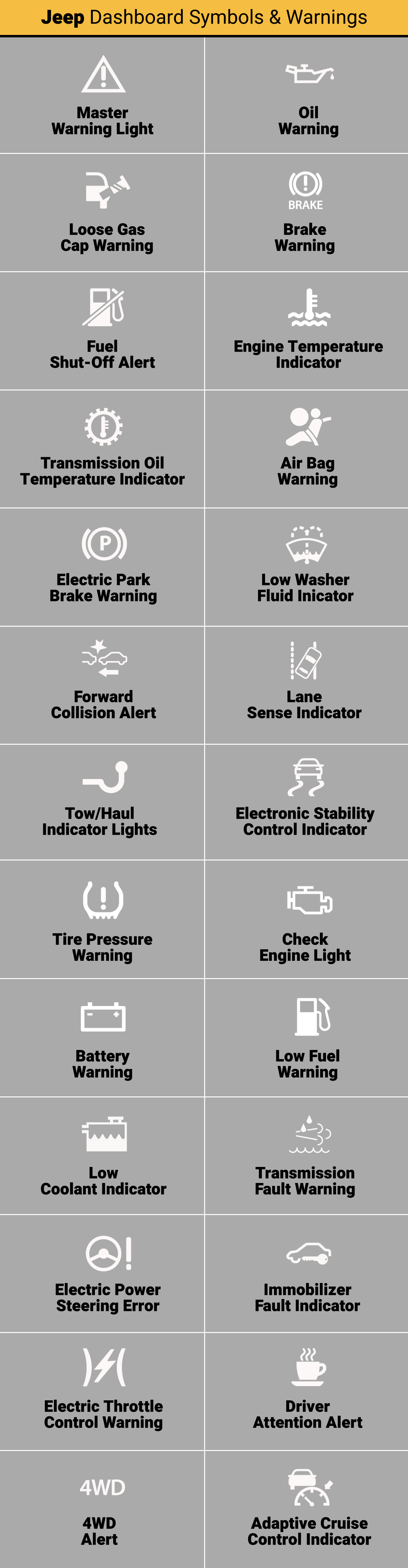
- ✦ Service Electronic Throttle Control
This message may appear when throttle sensors, wiring, or control systems detect an issue.
- ✦ Service 4WD message
This can indicate problems with four-wheel-drive components, switches, sensors, or control modules.
- ✦ Transmission warnings
These messages may require quick inspection to prevent possible drivetrain damage.
The role of diagnostic scanning
A professional scan tool can read stored fault codes from Jeep modules. The code helps identify the system involved but does not always reveal the exact failed part.
Common Causes Behind Multiple Jeep Warning Lights
Seeing several dashboard lights at once can feel alarming. However, multiple warnings often share one root cause.
Many Jeep owners discover that electrical issues create a chain reaction because every control module depends on reliable power and communication.

- ✦ Weak battery
A failing battery can cause unstable voltage and trigger multiple dashboard messages.
- ✦ Loose wiring connections
Corroded or loose connectors may interrupt signals between sensors and modules.
- ✦ Faulty sensors
A failed sensor can send incorrect information and activate warning systems.
- ✦ Software issues
Some problems may require module updates or recalibration.
Simple checks before visiting a repair shop
Drivers can check tire pressure, fuel cap installation, battery terminals, fluid levels, and visible wiring before paying for diagnosis.