The Jeep Wrangler Exhaust System and Emissions Components are designed to handle one of the most important jobs in your vehicle. They move burned gases away from the engine, reduce harmful pollutants, and help the engine run smoothly. For American Jeep owners who use their Wrangler for daily driving, highway trips, and off-road adventures, a healthy exhaust system is essential.
After working with vehicle systems and repair information, I have learned that many Wrangler issues start with small exhaust problems. A loose heat shield, damaged sensor, or weak catalytic converter can slowly affect fuel economy, engine power, and emissions performance. Understanding each part helps owners make smarter maintenance decisions.

How the Jeep Wrangler Exhaust System Works
The Jeep Wrangler Exhaust System and Emissions Components work together as a complete path from the engine to the tailpipe. Exhaust gases leave the combustion chamber through the exhaust manifold, travel through pipes, pass through emissions devices, and exit behind the vehicle.
The system does more than remove smoke. It manages heat, reduces sound levels, and helps control pollutants such as carbon monoxide, hydrocarbons, and nitrogen oxides.

- ✦ Exhaust gas movement
The exhaust system safely moves combustion gases away from the engine and passengers.
- ✦ Noise control
The muffler and resonator reduce harsh engine sounds and create a smoother driving experience.
- ✦ Emission control
Catalytic converters and sensors help reduce harmful gases before they leave the tailpipe.
Main Exhaust Flow Path
A Wrangler exhaust path usually starts at the exhaust manifold or header. From there, gases move through the catalytic converter, intermediate pipes, muffler, and tailpipe. Each section has a specific purpose and affects overall vehicle performance.
Major Jeep Wrangler Exhaust System and Emissions Components
The Jeep Wrangler Exhaust System and Emissions Components include several parts that work together to maintain performance and meet emissions standards. Knowing these parts makes troubleshooting easier.
Different Wrangler generations, including TJ, JK, JL, and newer models, use different designs, but the basic functions remain similar.
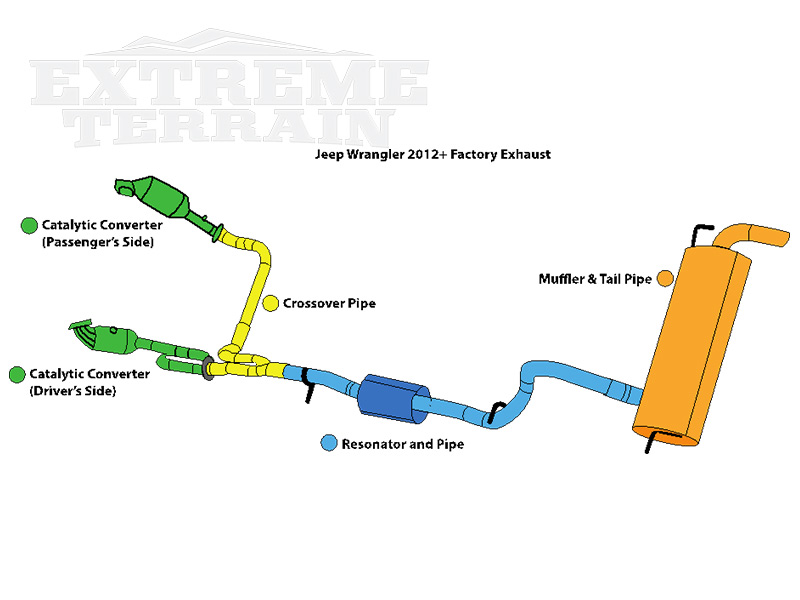
- ✦ Exhaust manifold
Collects gases from engine cylinders and sends them into the exhaust system.
- ✦ Catalytic converter
Converts harmful gases into less harmful emissions through chemical reactions.
- ✦ Muffler
Reduces exhaust noise while allowing gases to flow out.
- ✦ Oxygen sensors
Monitor oxygen levels in exhaust gases and help the engine computer adjust fuel mixture.
Understanding Catalytic Converters and Emission Control
The catalytic converter is one of the most important Jeep Wrangler Exhaust System and Emissions Components. It sits in the exhaust path and uses special materials to reduce harmful pollutants.
A failing catalytic converter can trigger warning lights, reduce engine power, and create poor exhaust flow. In many cases, replacing this part requires professional diagnosis because other problems can cause similar symptoms.

- ✦ Common catalytic converter problems
Clogging, overheating, physical damage, and contamination from engine issues can reduce converter performance.
- ✦ Warning signs
Reduced acceleration, check engine lights, unusual smells, and lower fuel efficiency may indicate problems.
Why Emissions Components Matter
Emissions components protect air quality and help vehicles meet federal and state regulations. They also allow the engine control module to maintain better fuel and air balance.
Common Jeep Wrangler Exhaust Problems and Symptoms
The Jeep Wrangler Exhaust System and Emissions Components can experience wear due to age, weather, road salt, and off-road use. Many Wrangler owners drive in rough conditions where exhaust parts face impacts and corrosion.
Finding problems early can prevent larger repairs. A small leak can become a major exhaust failure if ignored.

- ✦ Exhaust leaks
Leaks may create louder sounds, lower efficiency, and allow gases to enter unsafe areas.
- ✦ Broken hangers
Damaged hangers can cause exhaust pipes to move, hit the vehicle frame, or create vibration.
- ✦ Sensor failures
Bad oxygen sensors may cause incorrect fuel adjustments and engine performance issues.
- ✦ Rust damage
Corrosion can weaken pipes, mufflers, and connection points over time.
Jeep Wrangler Exhaust Upgrades and Performance Options
Many Jeep owners upgrade the Jeep Wrangler Exhaust System and Emissions Components to improve sound, appearance, or airflow. Popular upgrades include cat-back exhaust systems, performance mufflers, and stainless steel components.
A quality upgrade should match your driving goals. A daily driver may need a quiet system, while an off-road build may prioritize durability and ground clearance.
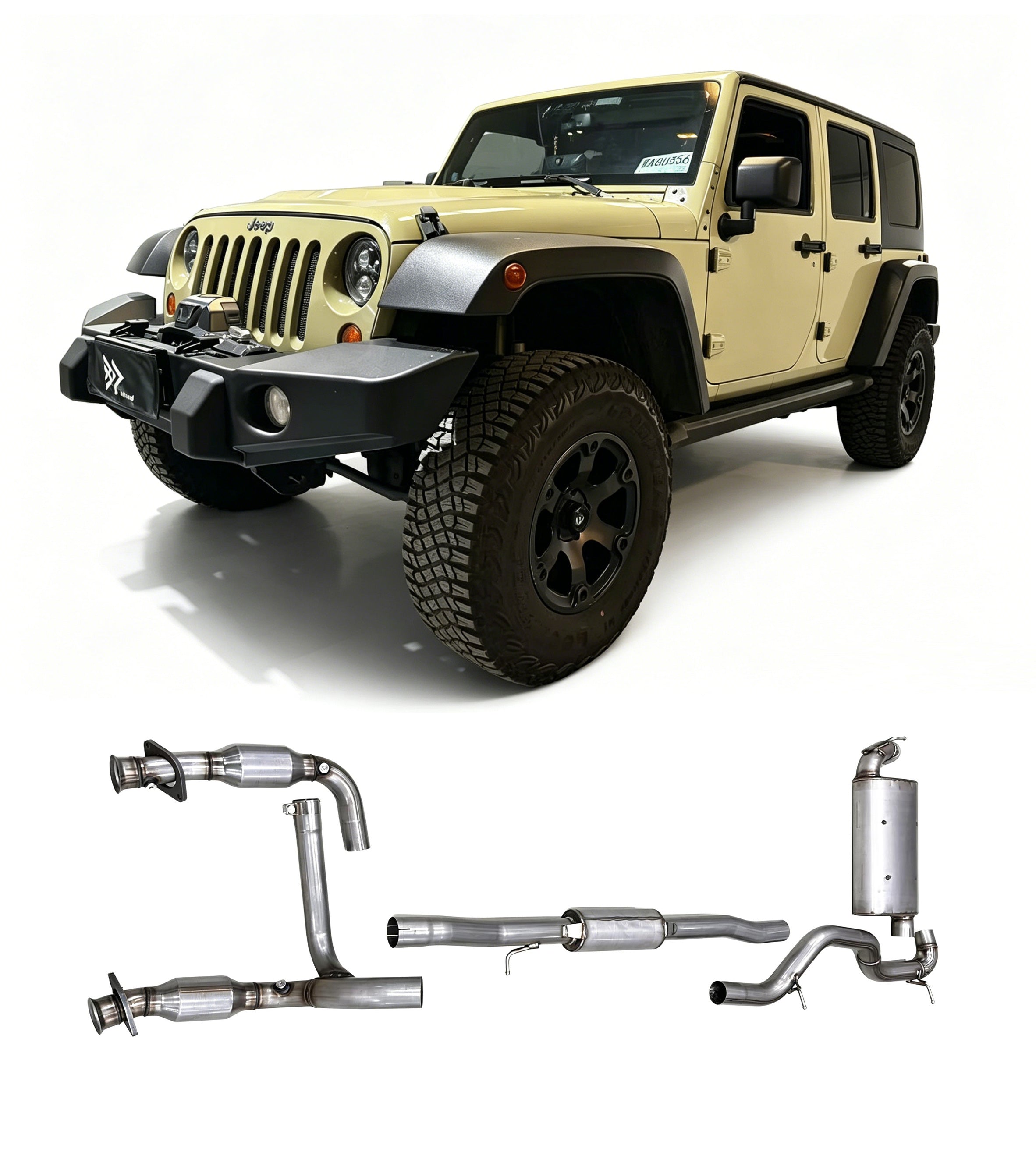
- ✦ Cat-back exhaust systems
These replace exhaust parts after the catalytic converter and can change sound and airflow.
- ✦ Stainless steel exhaust
Stainless materials resist corrosion and are useful for vehicles exposed to harsh environments.
- ✦ Performance headers
Headers can improve exhaust flow but must be selected carefully for compatibility and legal requirements.
Maintenance Tips for Jeep Wrangler Exhaust System and Emissions Components
Routine checks help keep the Jeep Wrangler Exhaust System and Emissions Components working properly. Jeep owners who drive through mud, water, and rocky trails should inspect exhaust parts more often.
Simple maintenance habits can extend exhaust life and reduce unexpected repair costs.
- ✦ Inspect exhaust connections
Check clamps, joints, and pipes for damage, rust, or loose connections.
- ✦ Watch dashboard warnings
A check engine light may indicate sensor or emissions problems that need attention.
- ✦ Clean after off-road use
Removing mud and debris can reduce corrosion and protect exhaust parts.