Start with a quick test: disconnect negative cable, connect a multimeter in series, and measure current under sleep.
I’ve spent years troubleshooting Jeep electrical gremlins in shops and on trail repairs. This guide on how to find parasitic battery drain in jeep walks you through symptoms, tools, step-by-step testing, common problem parts, fixes, and real-world tips. Read on and you’ll be able to find the drain, isolate the circuit, and make an informed repair or next-step decision.

Why parasitic battery drain happens in Jeeps
Jeeps, like other modern vehicles, have many always-on systems. These include alarm modules, body control modules, infotainment memory, and convenience features. When one of these systems draws more current than normal after the vehicle is off, the battery will slowly discharge. Learning how to find parasitic battery drain in jeep helps you avoid being stranded and prolongs battery life.
Jeep models are similar, but different years and trims can have different modules and relays. Aftermarket accessories and poor repairs often add extra draw. If you know how to test and find the source, you can save time and repair costs.

Signs your Jeep has a parasitic battery drain
A few simple signs point to a parasitic drain. Check these before testing.
- Car struggles to start after sitting overnight or for a day.
- Dashboard lights dim or electronics reset without engine running.
- A recently replaced battery dies quickly again within days.
- The battery is older than three years and now shows frequent low-voltage.
If you see these signs, learning how to find parasitic battery drain in jeep is your next step. Start with a healthy, fully charged battery for accurate testing.

Tools and preparation you need
You do not need a full shop to find a drain. Gather a few reliable tools.
- Digital multimeter capable of measuring amps in the 10 A range and milliamps.
- Quality battery charger or jumper and optionally a known-good battery.
- Wrench or socket to remove the negative battery terminal.
- Fuse puller or needle-nose pliers to pull fuses safely.
- A helper for locking/unlocking doors and toggling systems during tests.
Prepare by charging the battery fully and parking the Jeep in a dry, well-lit area. Close all doors, remove keys, and let the vehicle enter sleep mode before measuring. This avoids false positives from modules that remain awake.
Step-by-step: how to find parasitic battery drain in jeep
Follow a clear, safe process. Keep sentences short and actions clear.
-
Charge and rest the battery
- Fully charge the battery. Let the vehicle sit with doors and hood closed for at least 30 minutes so modules sleep.
-
Set up the multimeter
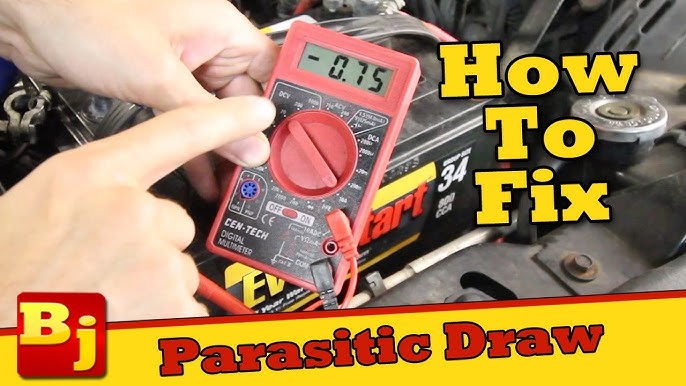
- Turn off the multimeter. Move the lead to the amp jack rated for the expected draw. Use the 10 A range first for safety.
-
Disconnect the negative cable
- Remove the negative battery terminal. Do not let the terminal touch the battery post.
-
Connect the multimeter in series
- Attach the multimeter between the negative battery post and the negative cable. One lead on the post, the other on the cable clamp.
-
Read the resting current
– With all doors closed and keys out, note the current. A normal draw is typically under 50 mA for many Jeeps. Values above 50 to 100 mA often indicate a parasitic drain. -
Isolate by pulling fuses
- Pull one fuse at a time while watching the multimeter. When the current drops significantly, the circuit associated with that fuse is the likely source.
-
Test relays and modules
- If pulling a fuse doesn’t change the draw, pull relays or test grounds and harnesses. Remember to replace each fuse or relay after testing to avoid confusion.
-
Confirm and repair
- Once you find the circuit, inspect wiring, connectors, and modules. Look for aftermarket wiring, shorts to ground, or modules that fail to go to sleep.
Safety tips
- Never measure current with the meter in the wrong jack or range. That can blow the meter fuse or cause sparks.
- If the drain is very large, disconnect battery and inspect major accessories first.
- Use gloves and eye protection when working near batteries.
These steps show exactly how to find parasitic battery drain in jeep with a cheap meter and patience. Repeat tests after repairs to confirm success.

Common culprits in Jeep models and systems
Some parts are more likely to cause parasitic drain than others. Watch these first.
- Alarm and remote start modules that are poorly installed or faulty.
- Aftermarket audio amplifiers and subwoofers with constant power.
- Body Control Module (BCM) or Central Electronic Module that fails to sleep.
- Glove box or trunk lights that stay on due to faulty switches.
- Shorted wiring harnesses, especially near doors and tailgates.
- Charging system faults or a bad alternator diode that drains the battery when off.
Older Jeeps may show specific patterns. For example, some model years have known issues with module reprogramming after battery disconnect. When you learn how to find parasitic battery drain in jeep, check forums and service bulletins for your year and trim for common failure points.

How long tests take and acceptable draw levels
Testing often takes 30 minutes to two hours depending on how deep you dig. Initial setup and resting time take about 30–60 minutes. Circuit isolation with fuse pulls can be fast if you’re systematic.
- Acceptable draw for most modern Jeeps is under 50 mA at rest.
- Draw between 50 and 100 mA is marginal and worth tracking.
- Draw over 100 mA usually indicates a clear parasitic drain that needs repair.
If the draw fluctuates, let the vehicle sit longer so modules enter sleep mode. Some modules take up to an hour to fully sleep after recent activity.

Fixes and next steps after you find the drain
Once you locate the offending circuit, follow a repair path. Prioritize quick wins and safety.
- Inspect connectors for corrosion, water intrusion, or rodent damage.
- Replace faulty modules or relays that do not go to sleep.
- Remove or relocate poorly installed aftermarket accessories.
- Repair short circuits or frayed wiring with proper connectors and heat-shrink.
- If uncertain, pull the fuse for the circuit until a proper fix is applied.
After repairs, fully charge the battery and repeat the test. Make sure the resting draw returns to normal. If the issue persists, consider professional diagnosis or dealer service for complex control modules.

Personal experience and tips from the field
I once diagnosed a 2014 Jeep that would die after two days. The meter showed a 400 mA draw. Pulling fuses pointed to the interior lights circuit. A crushed dome light switch from a gear bag was the cause. A small fix, big relief.
Key tips I use every day
- Always start with a fully charged battery. Half-charged batteries hide problems.
- Label fuses as you pull them to speed reassembly.
- Use a clamp-style DC amp meter for quick scans before a full series connection test.
- Beware aftermarket alarms; they often cause trouble if not installed correctly.
These real-world lessons show practical ways to simplify how to find parasitic battery drain in jeep.

Frequently Asked Questions of how to find parasitic battery drain in jeep
How much current draw is normal when my Jeep is off?
Normal draw for most modern Jeeps is under 50 mA once systems go to sleep. Values above 100 mA typically mean a parasitic drain.
Can a bad alternator cause a parasitic drain?
Yes. A failed alternator diode can allow current to leak back into the battery when the vehicle is off. Test alternator diodes if you suspect charging system issues.
Will disconnecting the negative cable erase memory or cause problems?
Disconnecting the negative cable can reset radio presets and some module memory. Use a memory saver if you want to retain settings during testing.
Is it safe to use a clamp meter instead of putting a multimeter in series?
A clamp meter is safe and quick for scanning AC or DC current without disconnecting the battery. For precise low-current measurements, an in-series multimeter is more accurate.
When should I seek professional help for a parasitic drain?
If the draw is complex, involves multiple modules, or you cannot isolate the circuit after systematic testing, seek a professional. Dealer-level diagnostics may be needed for module-level faults.
Conclusion
You now have a clear, practical plan for how to find parasitic battery drain in jeep. Start with a full charge, let systems sleep, measure in series, and isolate circuits by pulling fuses. Use the tools and tips here to find the source and make a safe repair.
Take action: test your Jeep today. If you fix the drain, share your results in a forum or comment below. If you need help, consider a trusted mechanic or shop to confirm complex module issues.