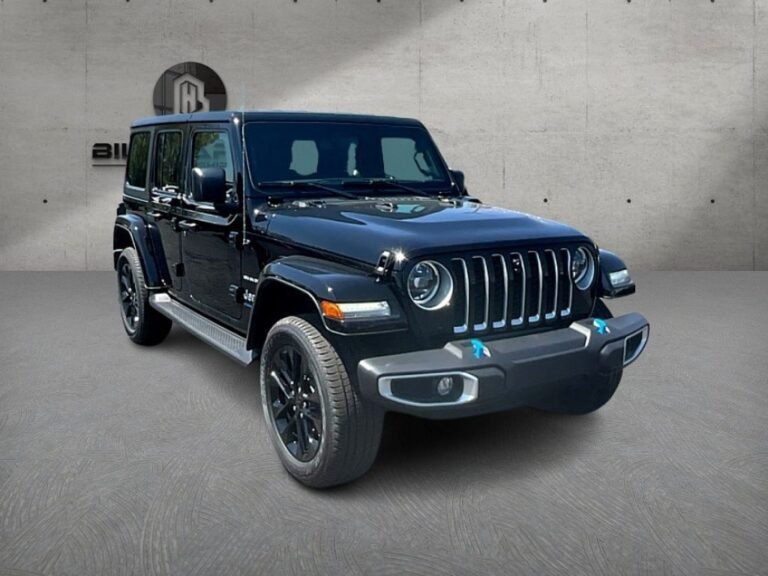
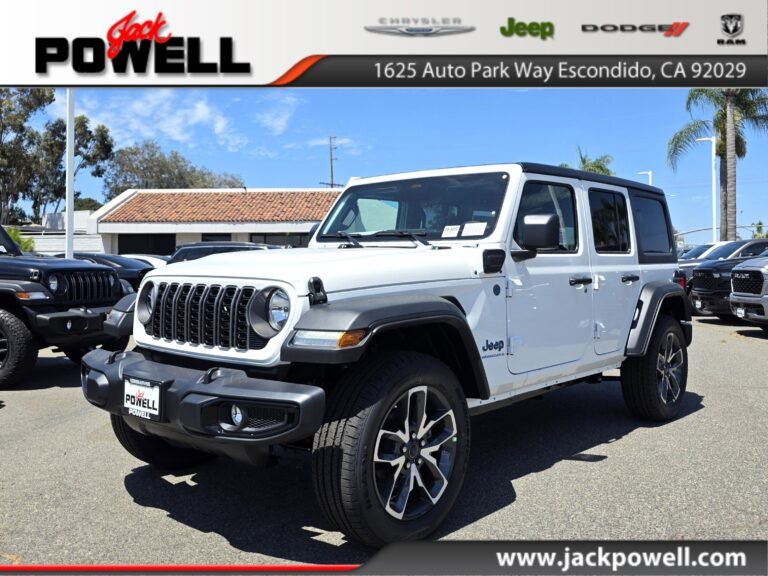
Most stock Jeep Wranglers run tires around 30–33 inches; up to 33" fits without major mods.
I’ve spent years wrenching on Wranglers and testing tire swaps on trails and street. This guide breaks down exactly how big of tires on stock Jeep Wrangler you can run, why size matters, and what to check before buying. You’ll get clear, step-by-step advice, real-world examples, and easy rules to follow so you can pick tires that fit, perform, and keep your Jeep reliable. Read on to avoid costly mistakes and choose the right tire for your Wrangler.
What is the stock tire size for Jeep Wrangler?
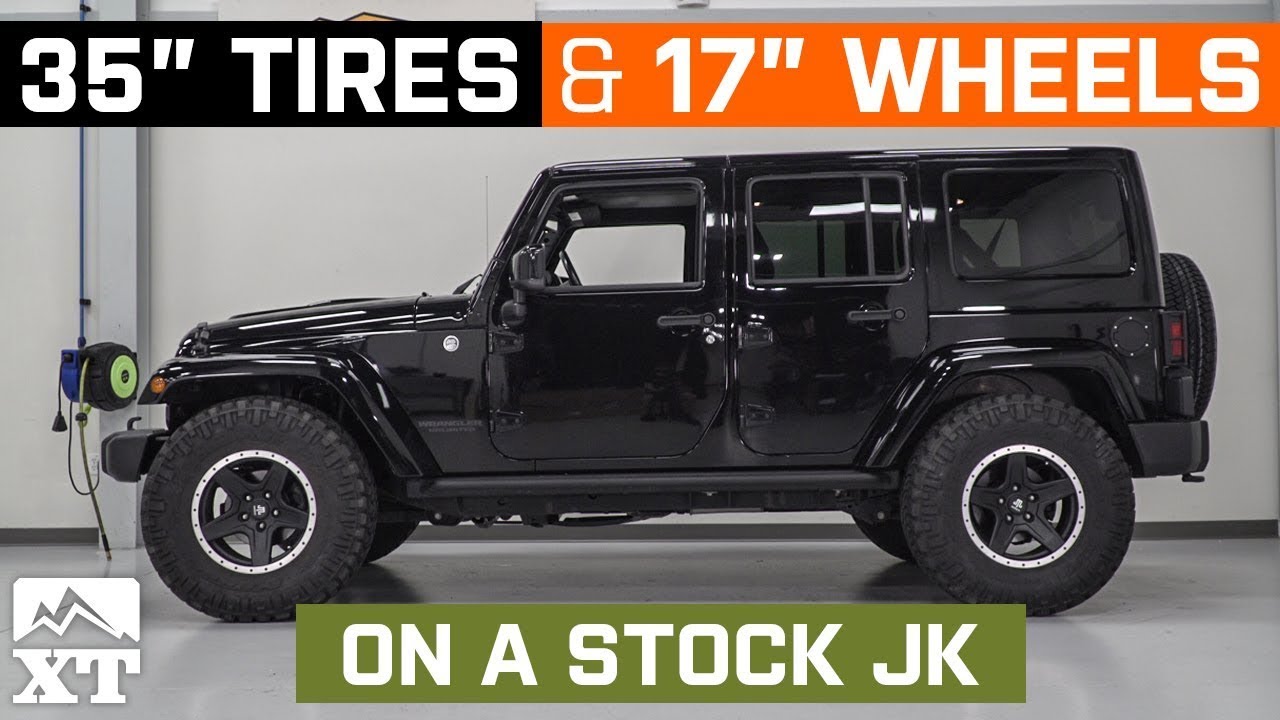
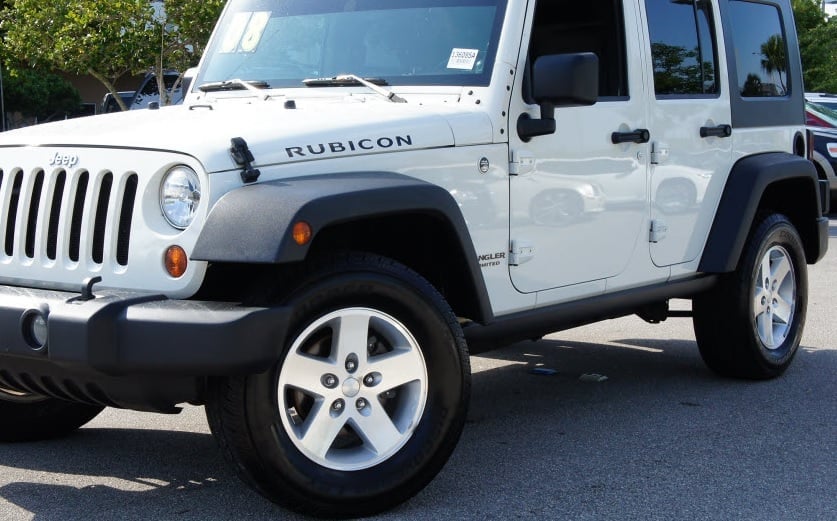
Stock tire sizes vary by model year and trim. Most modern Wrangler Sport, Sahara, and Rubicon trims come with tires that measure between 30 and 33 inches in overall diameter. Smaller older models may ship with 29–31 inch tires.
Common factory sizes and rough diameters:
- 225/75R16 is about 29.7 inches.
- 245/75R17 is about 31.6 inches.
- 255/70R17 or 255/75R17 is about 32–33 inches.
Factory wheel width, backspacing, and flare shape affect fit as much as tire height. Always check your specific model’s sticker inside the driver door for the original tire size.
How big of tires on stock jeep wrangler can you fit without a lift?
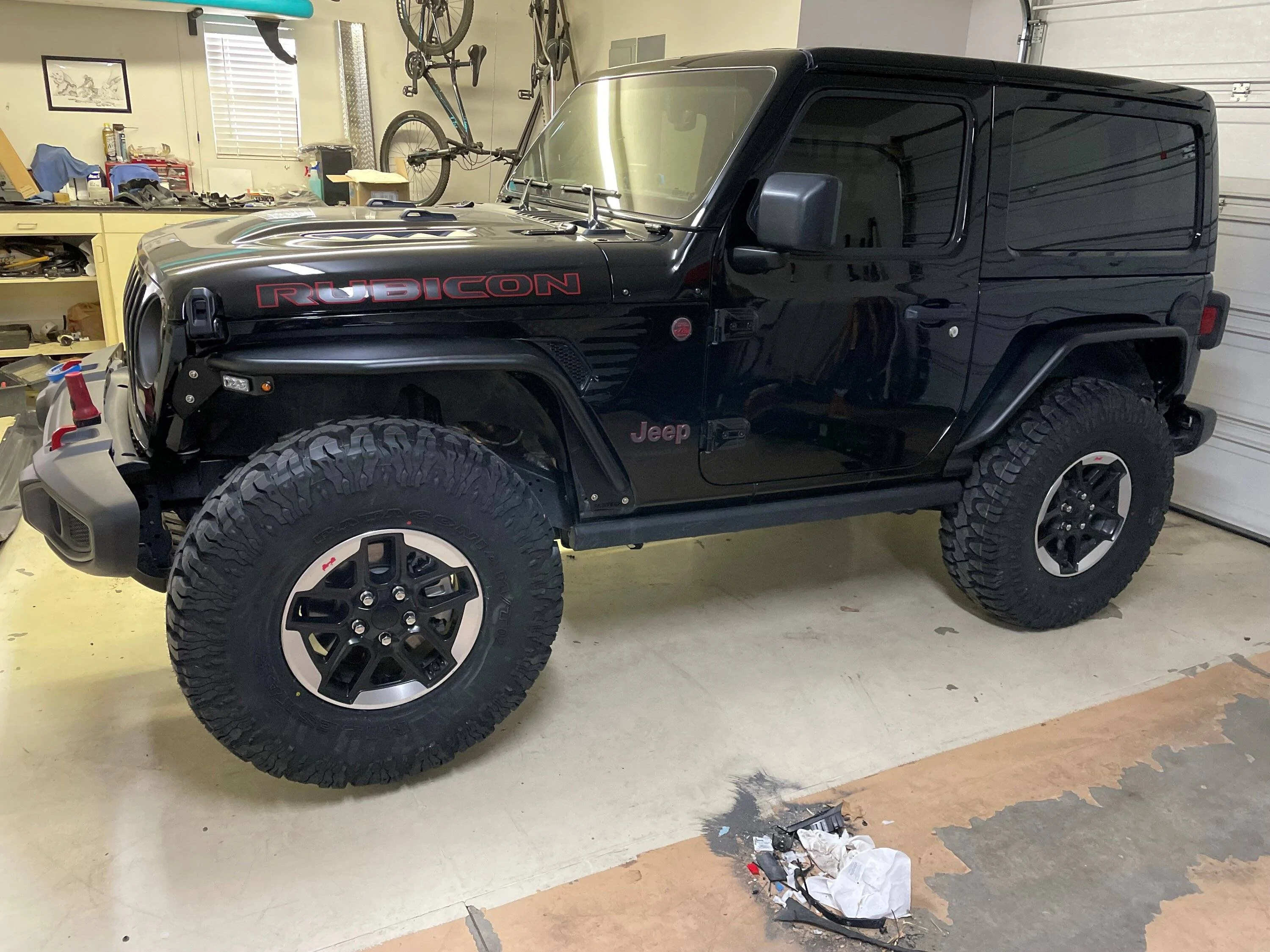
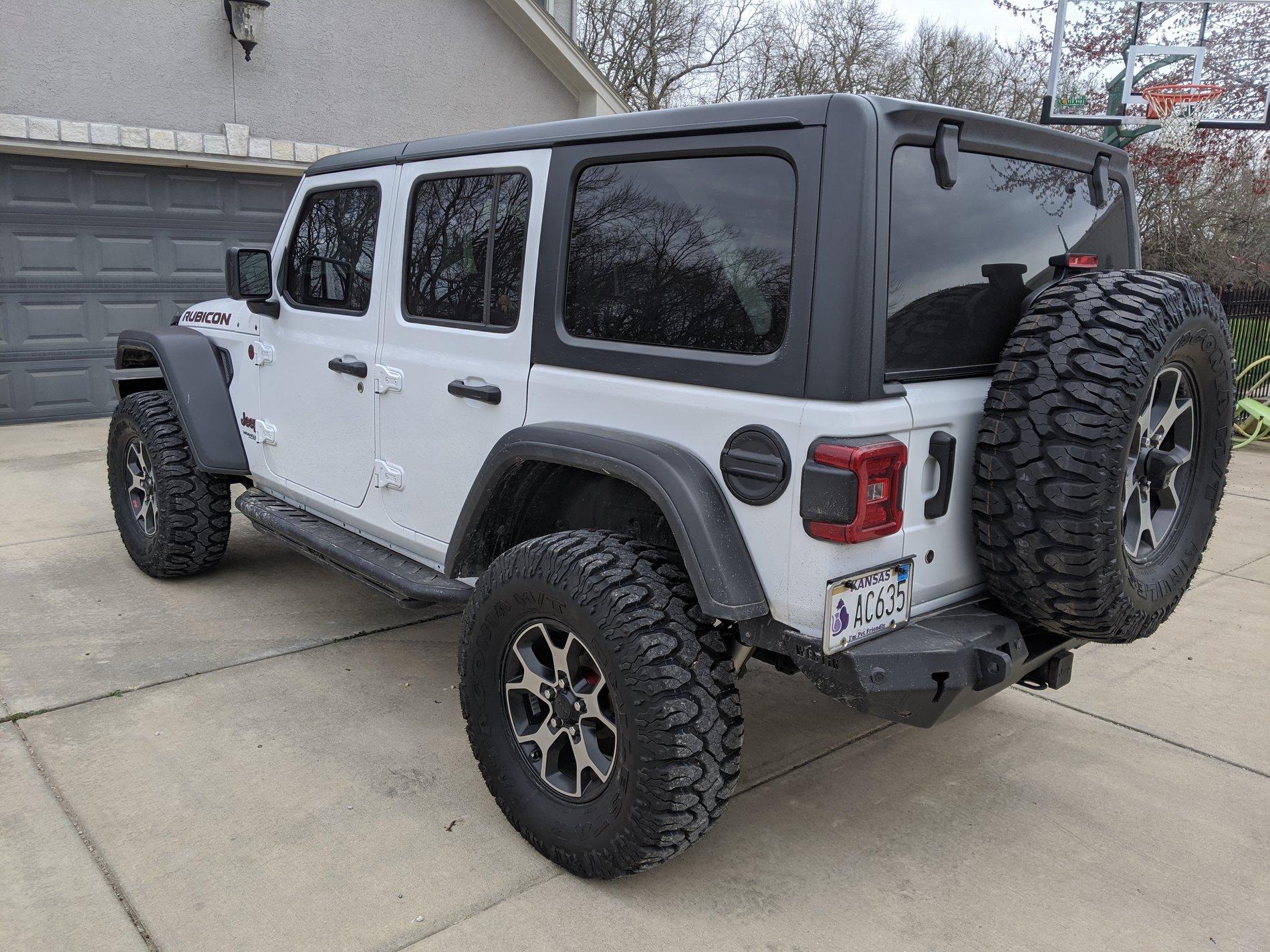
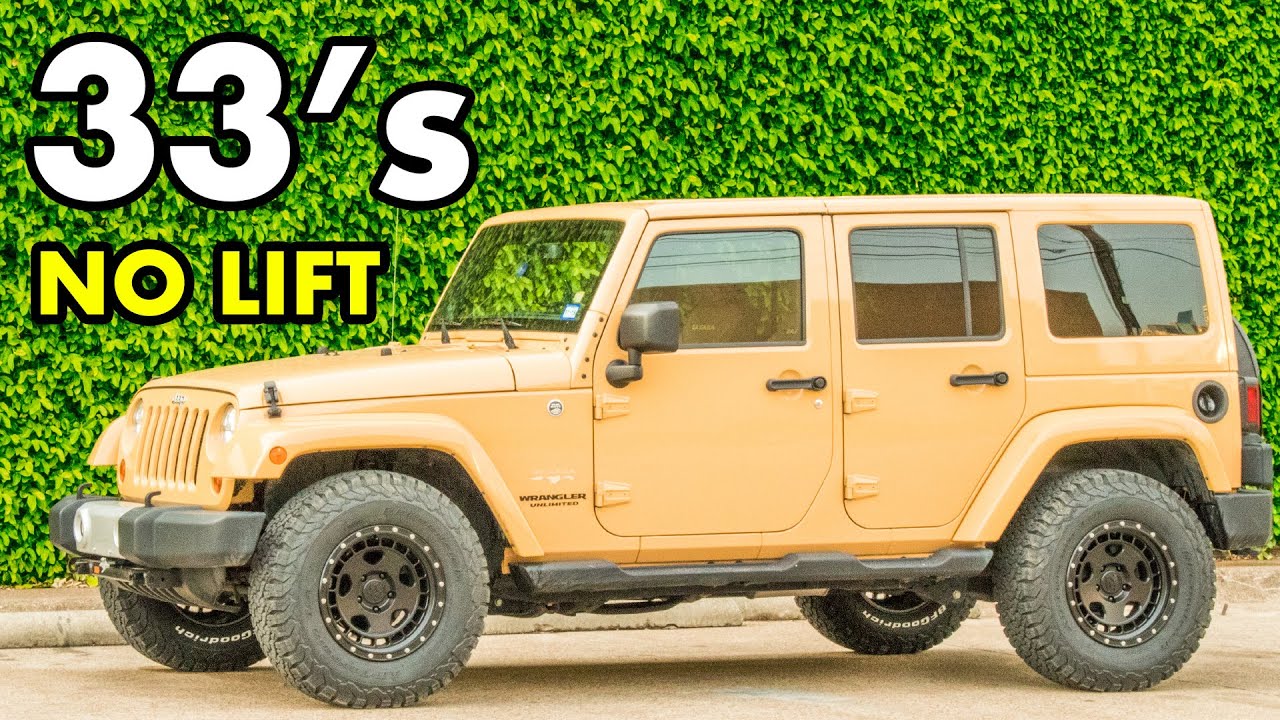
Most stock Wranglers can safely run up to 33-inch tires with no lift and no trimming. That makes 33-inch tires the practical limit in many cases. Trying 35-inch tires on a true stock Jeep usually causes rubbing on full steering lock and during suspension compression.
Key fit rules:
- Up to 33 inches: usually bolt-on and driveable with stock suspension and rims.
- 34–35 inches: may need trimming, rolling fenders, or slight lift and wheel change.
- 35+ inches: typically requires a 2–3 inch lift, wheel spacers, or long-arm suspension.
Why this matters:
- Wheel backspacing and tire width change how a tire sits under the flare.
- A wider tire on the same diameter increases rubbing risk.
- Trimming can fix fit, but it reduces resale and alters aesthetics.

Factors that determine how big of tires on stock jeep wrangler you can run
Tire diameter isn’t the only factor. Several vehicle and wheel details affect fit and function.
Important factors:
- Wheel backspacing and width affect where the tire sits relative to the fender.
- Brake caliper clearance limits wheel width and offset choices.
- Fender flares and inner liners set physical clearance.
- Suspension travel and steering geometry determine rubbing during articulation.
- Gear ratios affect performance when you increase tire diameter.
Practical tip from experience: measure tire clearance at full lock and while the suspension is compressed. A static fit check alone can miss rubbing that only happens on the trail.
Effects of larger tires: speedometer, gearing, fuel, and handling
Bigger tires change how your Jeep behaves. Expect these consequences when you increase tire diameter.
What changes:
- Speedometer and odometer read low with larger tires; a 33" tire vs 32" can change speed by a few percent.
- Acceleration slows and low-end torque drops because larger tires increase effective gear ratio.
- Fuel economy usually drops with heavier, larger tires.
- Steering feel becomes heavier with wider, larger tires on stock steering setups.
Solutions:
- Reprogram speedometer with a tune or a gear recalibration module.
- Change axle gear ratios if you add 2+ inches in diameter to restore performance.
- Choose lighter tires and wheels to reduce added rotational mass.

How to upgrade safely: steps to fit bigger tires on a stock Wrangler
Follow these steps to increase tire size without surprises.
Step-by-step:
- Measure current tire diameter and wheel backspacing.
- Decide target tire size and width; check clearance at full lock.
- Fit a trial tire and drive short routes to feel for rubbing.
- If rubbing occurs, try different wheel offset or minor trimming before lifting.
- Reprogram speedometer and consider gear ratio change for big jumps.
- Balance wheels and check tire rotation pattern for even wear.
Real-world note: I once installed 33×12.5 tires on a JK with stock suspension and stock rims. They fit but required a wheel with slightly less backspacing. No trimming was needed. The Jeep felt heavier but acceptable for daily driving.

Common tire sizes, examples, and swap recommendations
Here are common tire sizes and real-feel guidance for stock Wranglers.
Examples:
- 30 inch class (225/75R16): fits all stock Wranglers comfortably.
- 31–32 inch class (245/75R17 or 255/70R17): factory on many trims; no mods needed.
- 33 inch class (285/70R17 or 33×12.5R17): fits many stock Wranglers with the right wheel offset.
- 35 inch class (35×12.5R17): usually requires a 2-inch lift and sometimes trimming.
Recommended tire types for stock fit:
- All-terrain tires for mixed use and good on-road manners.
- Mud-terrain only if you plan to off-road frequently; they are louder and heavier.

Gear ratios and why they matter when sizing tires
Changing tire diameter without changing axle gears changes effective gearing. This impacts acceleration and towing ability.
Quick math principle:
- Bigger tires increase final drive ratio proportionally to their diameter.
- Going from 32" to 35" reduces effective engine torque at the wheels by about 9%.
When to re-gear:
- If you increase tire diameter by more than 2 inches, consider re-gearing.
- If you tow or drive steep terrain often, re-gearing improves drivability.
Personal experience: three lessons from fitting tires on Wranglers
I’ve swapped tires and wheels on several Wranglers. These are the key lessons that save time and money.
Lessons learned:
- Measure twice, buy once. Always mock-fit tires before final purchase when possible.
- Choose wheels first, then tires. The right offset fixes many rub issues.
- Balance comfort and function. Bigger isn’t always better for daily driving.
A mistake I made early on was buying very heavy 35-inch tires for a daily driver JK. Fuel economy dropped and handling felt sluggish. After switching to lighter 33s, the Jeep felt livelier and returned better mpg.
PAA-style quick questions
Q: Can I put 35s on a stock Jeep Wrangler?
A: You can physically mount 35s, but on most stock Wranglers they will rub and need a 2-inch lift and wheel adjustments to fit properly.
Q: Will larger tires hurt my transmission?
A: Larger tires increase stress on the drivetrain. For modest increases (up to 33"), effects are small. Big jumps without re-gearing can cause extra strain over time.
Q: Does tire width matter more than height?
A: Width affects rubbing and steering more. A taller but narrow tire may fit better than a wide tire of the same diameter.
Frequently Asked Questions of how big of tires on stock jeep wrangler
What is the largest tire a stock Jeep Wrangler can handle?
Most stock Wranglers can handle up to 33 inches without major mods. Anything above 33 inches often requires a lift, wheels with different backspacing, or trimming.
Will 35-inch tires fit on a stock Wrangler without lift?
35-inch tires usually do not fit well on a completely stock Wrangler. You’ll likely experience rubbing and need at least a small lift or body modification.
How do I check if a tire will rub before buying?
Test fit by mounting the tire and turning the wheel to full lock, then bounce the suspension. Measure clearance at the inner fender and outer flare to confirm fit.
Do bigger tires affect my speedometer accuracy?
Yes. Larger tires make your speedometer read lower than actual speed. A reprogram or tune can correct speedometer readings.
Do I need to re-gear if I go from 32" to 35" tires?
It’s recommended. A jump from 32" to 35" reduces effective low-end torque and impacts acceleration. Re-gearing restores driveability, especially for towing or off-road use.
Conclusion
Choosing how big of tires on stock Jeep Wrangler comes down to balance: fit, performance, and purpose. For most people, 33-inch tires provide the best mix of off-road capability and daily drivability without major mods. If you want 35s or larger, plan for lifts, wheel changes, and possible re-gearing. Test fit, measure clearance, and pick tires and wheels that match your driving style.
Take action: measure your current setup, pick a target size, and mock-fit before buying. If you found this helpful, leave a comment with your Wrangler model and planned tire size, or subscribe for more practical upgrade guides.