The Complete Guide to Jeep Wrangler Defrost Ventilation and Cabin Airflow explains how the HVAC system moves air, why airflow problems happen, and how owners can keep their Jeep comfortable. A Wrangler faces unique conditions because many owners drive with removable tops, dusty trails, and changing weather.
From my experience studying Jeep HVAC layouts, most airflow complaints are not caused by the blower motor alone. Small issues like broken vent doors, vacuum leaks, clogged passages, or worn controls can greatly change how air moves inside the cabin.
A properly working defrost system is important for safety. In cold U.S. winters, a clear windshield helps drivers see better, while strong cabin airflow keeps passengers comfortable during long highway trips or off-road adventures.

How Jeep Wrangler Defrost Ventilation and Cabin Airflow Systems Work
The Complete Guide to Jeep Wrangler Defrost Ventilation and Cabin Airflow starts with understanding the basic HVAC path. Air enters through the intake area, passes through filters or ducts, moves through the heater and air conditioning components, then exits through selected vents.
The Wrangler uses airflow doors inside the HVAC housing. These doors decide whether air goes toward the floor vents, dashboard vents, or windshield defrost vents. When these doors move correctly, the driver can quickly change cabin temperature and airflow direction.

- ✦ Blower Motor
The blower pushes air through the HVAC system. A weak blower can reduce airflow from every vent.
- ✦ Air Distribution Doors
These doors control whether air reaches the windshield, face vents, or floor area.
- ✦ Heater and Cooling Components
The heater core warms air while the evaporator removes heat and moisture during cooling.
Why Air Direction Matters
The defrost setting is designed to send warm, dry air toward the windshield. This helps remove fog and ice buildup. If the system cannot change airflow direction, visibility may suffer during rain or cold weather.
A common Wrangler issue is air staying stuck in one position. This often points to a control problem rather than a blower problem.
Common Jeep Wrangler Defrost Ventilation Problems and Symptoms
Many Wrangler owners notice airflow problems slowly. The fan may still work, but air may not reach the correct vents. Recognizing early signs can prevent larger repairs.
The Complete Guide to Jeep Wrangler Defrost Ventilation and Cabin Airflow highlights several common symptoms found across different Wrangler generations, including TJ, JK, and JL models.
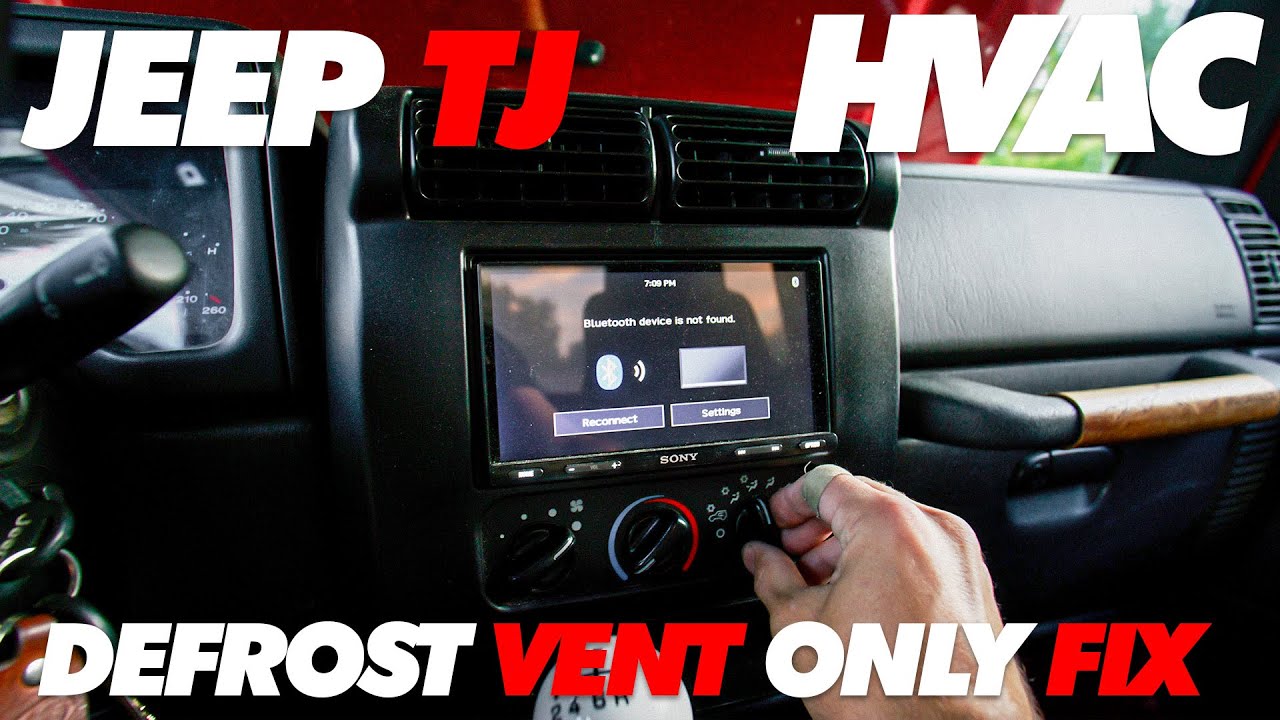
- ✦ Air Only Comes From Defrost Vents
A stuck mode door or vacuum-related issue may prevent airflow from switching to other vents.
- ✦ Weak Airflow
A dirty filter, blocked duct, failing blower motor, or damaged fan resistor can reduce air pressure.
- ✦ Windshield Fogging Problems
Poor defrost performance may happen when warm dry air cannot reach the windshield properly.
Signs of a Broken HVAC Door
A clicking sound behind the dashboard can indicate a damaged actuator or broken plastic door. Some Wrangler models use vacuum controls, while newer versions use electronic actuators.
When the airflow door cannot move fully, the cabin receives air from the wrong location.
- ✦ Dashboard Clicking
Repeated clicking can signal a failing actuator trying to move a door.
Jeep Wrangler Defrost Problems Caused by Vacuum Systems and Controls
Older Jeep Wrangler models often use vacuum-operated HVAC controls. These systems rely on engine vacuum to move airflow doors. A small leak can stop the system from changing vent positions.
The Complete Guide to Jeep Wrangler Defrost Ventilation and Cabin Airflow includes vacuum checks because they are simple and often overlooked during diagnosis.

- ✦ Vacuum Line Damage
Cracked or disconnected lines can prevent proper airflow control.
- ✦ Control Panel Failure
A damaged climate control switch may not send the correct signal.
Basic Vacuum Inspection Steps
Start by checking visible vacuum hoses near the engine area and HVAC connections. Look for cracks, loose fittings, or disconnected lines.
If the system loses vacuum under acceleration, vent switching problems may become more noticeable.
Improving Jeep Wrangler Cabin Airflow Performance
Good airflow depends on clean components and correct system operation. Simple maintenance can improve comfort without expensive repairs.
Owners who use their Wrangler for outdoor activities should inspect the HVAC system more often because dust, mud, and debris can affect airflow.

- ✦ Clean Air Passages
Remove dust and debris from accessible vents to improve air movement.
- ✦ Check Cabin Filters
Some Wrangler models have cabin air filters while others do not, so confirm your model specifications.
- ✦ Inspect Vent Controls
Make sure airflow changes correctly between floor, dash, and defrost modes.
Seasonal HVAC Maintenance Tips
Before winter arrives, test the defrost system and heater output. Before summer, check air conditioning performance and airflow strength.
A quick inspection before extreme weather can help avoid uncomfortable drives and visibility problems.
Troubleshooting Jeep Wrangler Defrost Ventilation Step by Step
A careful troubleshooting process saves time and prevents replacing parts that still work. Start with the easiest checks before removing dashboard components.
The Complete Guide to Jeep Wrangler Defrost Ventilation and Cabin Airflow recommends checking airflow behavior first because symptoms often reveal the faulty area.

- ✦ Step One
Test every HVAC mode and note where air exits.
- ✦ Step Two
Check blower speed and listen for unusual noises.
- ✦ Step Three
Inspect controls, hoses, actuators, and vent doors.
When Professional Repair Is Needed
Dashboard HVAC repairs can require removing trim panels and accessing hidden components. If the problem involves internal doors or actuators, professional help may save time.
A qualified technician can test vacuum pressure, electrical signals, and HVAC movement.
Differences Between Jeep Wrangler Generations and Airflow Systems
Jeep Wrangler HVAC systems have changed over the years. Older TJ models often use simpler mechanical and vacuum controls, while newer JL models use more advanced electronic systems.
Understanding your Wrangler generation helps you choose the correct repair method and replacement parts.
- ✦ TJ Models
Known for simple HVAC designs with vacuum controls and mechanical components.
- ✦ JK Models
Improved comfort features with updated HVAC layouts.
- ✦ JL Models
Use modern electronic controls and advanced climate features.
Frequently Asked Questions about Complete Guide to Jeep Wrangler Defrost Ventilation and Cabin Airflow

Jeepexplorerr
Contributor