The Complete Guide to Jeep Track Bars Drag Links and Steering Linkage explains the parts that keep a Jeep stable on highways, trails, and daily drives. Many Jeep owners focus on tires and lift kits, but steering components often decide how safe and predictable the vehicle feels.
From my experience working around Jeep suspension systems, small issues in steering joints can quickly become large problems. A loose track bar bolt, worn drag link end, or incorrect steering angle can change how a Jeep responds behind the wheel.

Understanding Jeep Track Bars and Their Purpose
A Jeep track bar is a suspension control arm that keeps the solid axle centered under the vehicle. One end connects to the frame and the other connects to the axle housing. It controls side-to-side axle movement while allowing the suspension to move up and down.
The track bar becomes even more important after installing a lift kit. Raising the Jeep changes suspension geometry and can pull the axle away from the center position. A properly adjusted track bar helps restore balance and steering feel.

- ✦ Axle positioning
The track bar prevents unwanted side movement and keeps the axle aligned with the Jeep body.
- ✦ Steering stability
A strong track bar helps reduce wandering and improves driver confidence on rough roads.
- ✦ Lift kit support
Adjustable track bars help correct axle placement after suspension changes.
Signs of a Damaged Jeep Track Bar
A failing track bar often creates steering problems that feel like alignment issues. The Jeep may wander, shake, or feel loose when driving over bumps.
Many owners replace tires or adjust alignment before checking the track bar. A quick inspection of bushings, bolts, and mounting holes can reveal the real problem.
- ✦ Common symptoms
Look for clunking sounds, steering play, uneven movement, and vibration during driving.
How Jeep Drag Links Work With the Steering System
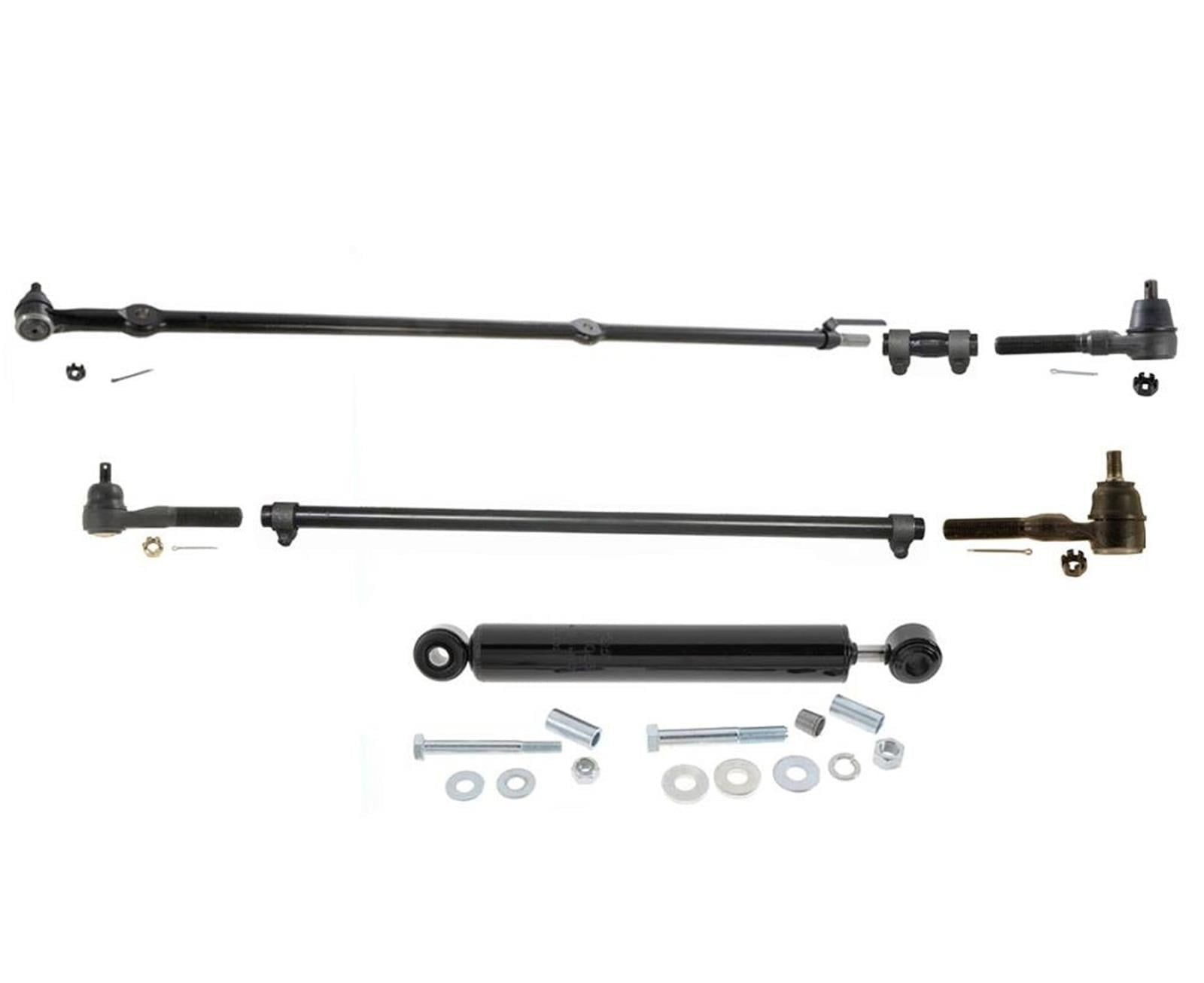
The drag link is a key part of the steering linkage system. It connects the steering box or pitman arm to the steering knuckle, allowing driver input to turn the front wheels.
Unlike the track bar, the drag link does not locate the axle. Its main job is to transfer steering force. A worn drag link can create steering delay, loose movement, and poor control.

- ✦ Steering transfer
The drag link carries movement from the steering wheel system to the front wheels.
- ✦ Joint movement
Tie rod ends and ball-style joints allow suspension travel while maintaining steering control.
Drag Link Wear and Failure Symptoms
A worn drag link usually shows up as extra steering wheel movement before the Jeep changes direction. You may also notice knocking sounds from the front suspension.
Off-road use can speed up wear because rocks, mud, and hard impacts place extra force on steering parts.
- ✦ Inspection tip
Have someone move the steering wheel while checking for movement in the drag link joints.
Jeep Steering Linkage Components Explained
Jeep steering linkage includes several parts that work together to control wheel direction. These parts include the drag link, tie rod, steering knuckles, ball joints, and steering box connections.
The Complete Guide to Jeep Track Bars Drag Links and Steering Linkage shows why every component matters. One worn part can affect the entire steering system because these parts share the forces created by driving.

- ✦ Tie rod
The tie rod connects the front wheels and helps maintain proper toe alignment.
- ✦ Ball joints
Ball joints allow steering movement while supporting suspension loads.
- ✦ Steering box
The steering box converts steering wheel movement into mechanical steering action.
Why Steering Geometry Matters
Correct steering geometry keeps the track bar and drag link working together smoothly. When angles become incorrect, steering behavior can become unpredictable.
This is especially important on lifted Jeeps. Proper setup helps reduce bump steer, where the Jeep changes direction as the suspension moves.
- ✦ Geometry correction
Lifted Jeeps may need adjustable components or relocation brackets to restore factory-like movement.
Common Jeep Steering Problems and Their Causes
Many Jeep steering complaints come from worn or incorrectly installed components. Problems may appear slowly, making regular inspections important.
The most common issues include loose steering, pulling, vibration, and front-end shaking. Finding the source early can prevent more expensive repairs.
- ✦ Loose steering
Often caused by worn joints, loose bolts, or damaged steering components.
- ✦ Death wobble symptoms
Severe front-end shaking can involve multiple worn parts, including track bar connections and steering joints.
- ✦ Uneven tire wear
Poor alignment or loose steering parts can change tire contact with the road.
Checking Jeep Steering Components at Home
A basic inspection can reveal many problems before they become unsafe. Check for loose bolts, cracked bushings, damaged boots, and unusual movement.
Always inspect steering parts with the Jeep safely supported. Steering components carry major forces and should never be ignored.
- ✦ Simple checks
Look for visible damage and have a helper turn the steering wheel while observing movement.
Upgrading Jeep Track Bars and Steering Linkage for Off-Road Use
Many Jeep owners upgrade steering parts when adding larger tires, lift kits, or preparing for tougher trails. Stronger components can improve durability under higher loads.
A good upgrade should match the Jeep’s use. A daily driver needs reliable street manners, while a trail Jeep may need stronger joints and reinforced brackets.
- ✦ Heavy duty track bars
Upgraded track bars often use stronger materials and improved joints for demanding conditions.
- ✦ High clearance drag links
Some designs improve ground clearance and reduce damage risk on rocky trails.
- ✦ Correct installation
Proper torque and alignment are required for safe steering performance.
Choosing the Right Steering Parts
The best parts depend on tire size, suspension height, driving style, and terrain. A weekend trail Jeep and a highway commuter have different needs.
Quality parts should fit correctly and maintain proper steering angles. Cheap parts can create new problems if they do not match the vehicle setup.
- ✦ Match components
Choose steering upgrades based on your Jeep model, lift height, and driving conditions.
Frequently Asked Questions about Complete Guide to Jeep Track Bars Drag Links and Steering Linkage

Jeepexplorerr
Contributor