The Complete Guide to Jeep Sand Driving Tire Pressure Momentum and Recovery starts with understanding how sand changes vehicle behavior. Unlike hard trails, sand moves under your tires and can quickly bury a Jeep when traction disappears. I have found that patience, preparation, and small driving adjustments make a bigger difference than aggressive throttle use.
Many Jeep owners in the United States enjoy beach trails, desert routes, and open dune areas. A successful sand trip depends on knowing your tire pressure, managing speed, and carrying the right recovery tools. The goal is not to fight the sand but to work with it.
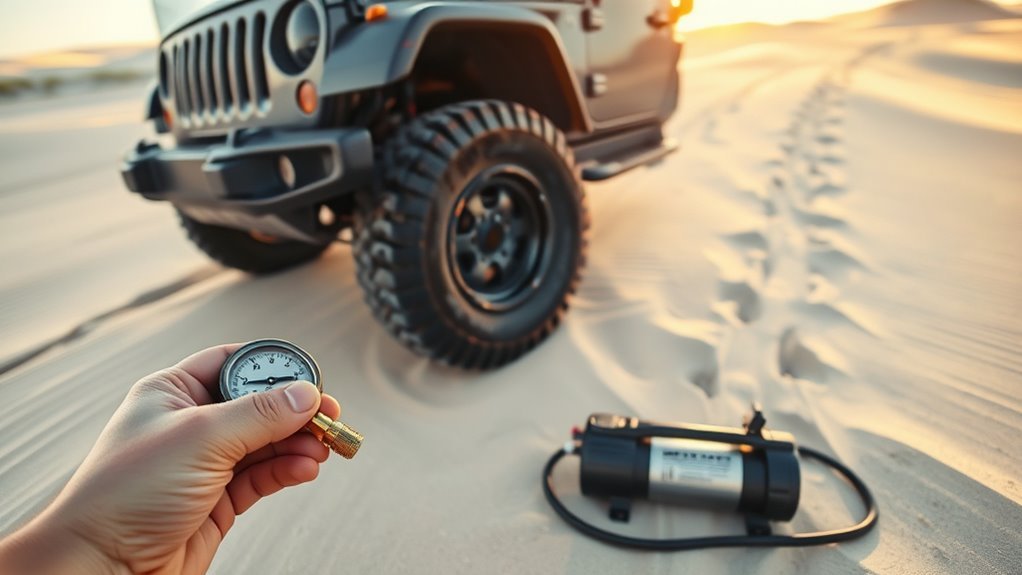
Understanding How Sand Changes Jeep Driving
Sand creates a unique challenge because the surface moves under the tires. A Jeep that performs well on rocks or mud may struggle on soft sand because the tires can dig down instead of moving forward.
The Complete Guide to Jeep Sand Driving Tire Pressure Momentum and Recovery begins with learning that traction comes from balance. Too much wheel spin creates holes, increases heat, and can quickly turn a simple crossing into a recovery situation.
- ✦ Soft sand behavior
Soft sand requires more flotation because the surface cannot support heavy pressure from a small contact patch.
- ✦ Vehicle weight impact
Heavy accessories, roof racks, and extra cargo increase the chance of sinking.
- ✦ Driving style importance
Smooth inputs help maintain traction better than sudden acceleration or braking.
Why Jeep Sand Driving Requires Different Skills
Sand rewards drivers who plan ahead. A steady approach often works better than trying to power through difficult sections.
Small mistakes can become larger problems because a stuck Jeep loses momentum quickly.
- ✦ Avoid unnecessary stops
Stopping on soft sand can make restarting much harder because tires may sink under load.
Choosing the Correct Jeep Sand Driving Tire Pressure
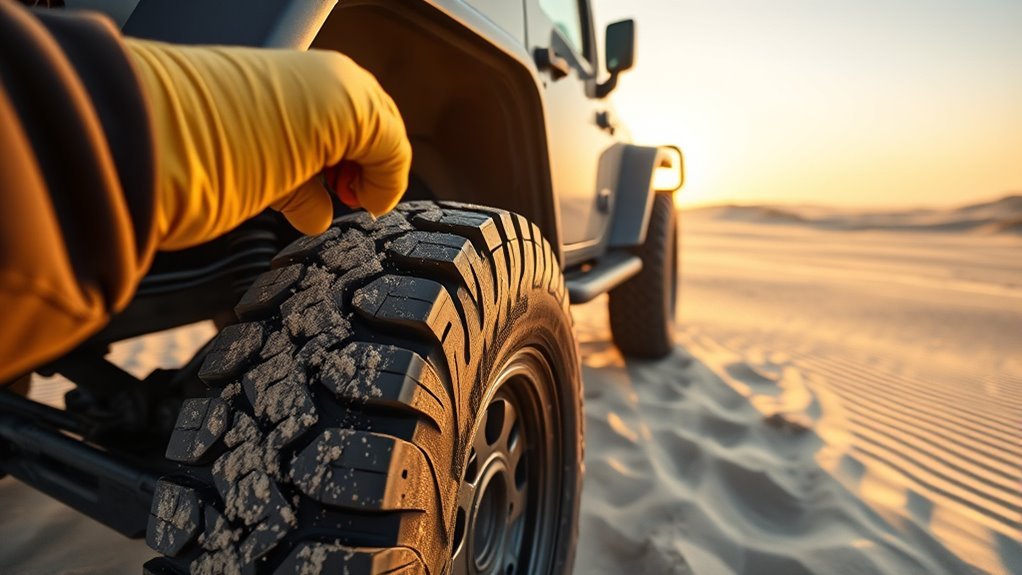
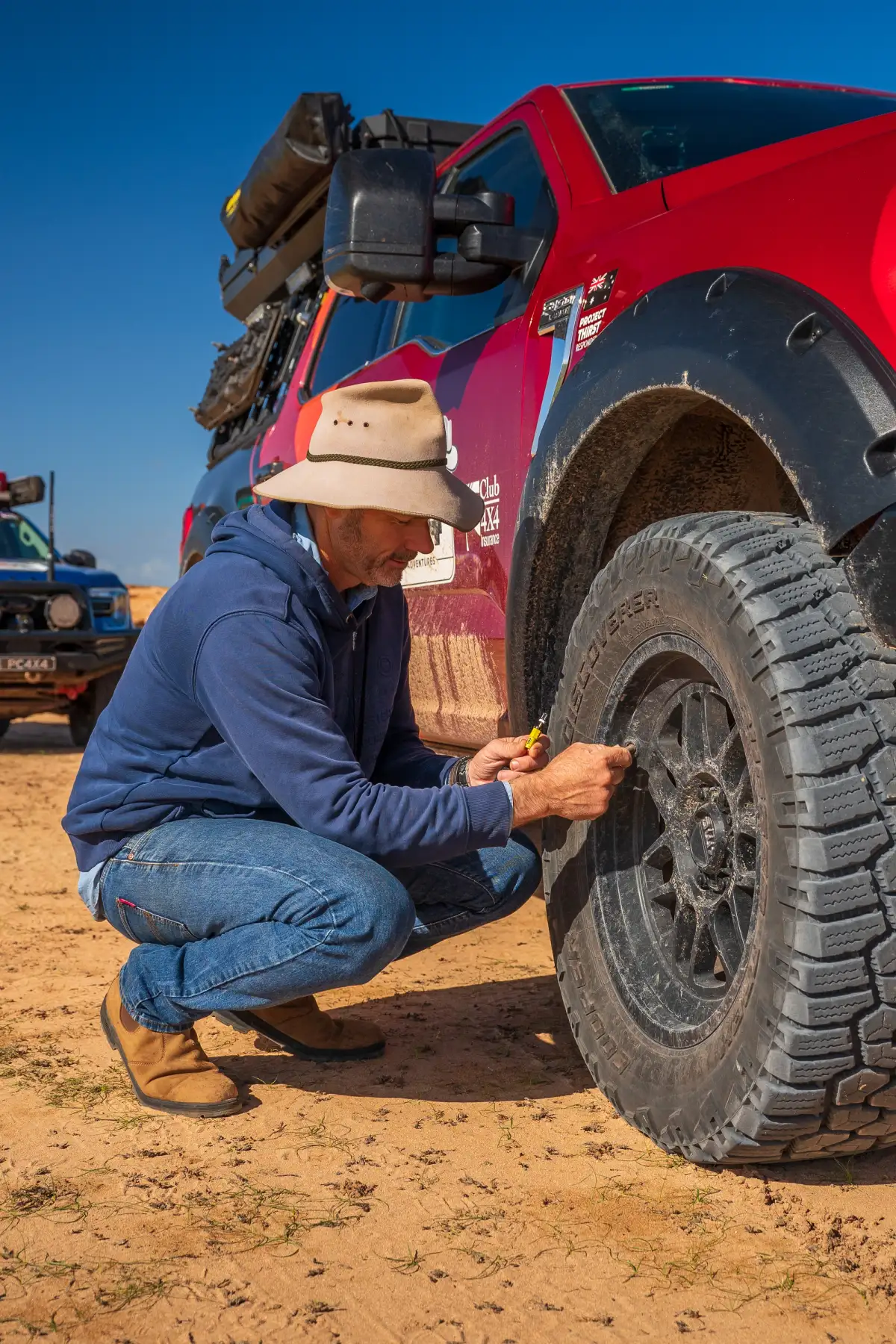
Tire pressure is one of the most important factors in sand performance. Lower pressure allows the tire to spread wider and create a larger footprint on loose surfaces.
The Complete Guide to Jeep Sand Driving Tire Pressure Momentum and Recovery recommends adjusting pressure based on tire size, vehicle weight, sand type, and driving conditions. There is no single PSI number that works for every Jeep.
- ✦ Start with a safe reduction
Many Jeep drivers reduce pressure from normal road settings and test traction before lowering further.
- ✦ Carry a quality gauge
An accurate tire gauge helps prevent running pressures that are too low or too high.
How Lower PSI Improves Sand Traction
A softer tire can spread across the sand surface. This reduces how deeply the tire cuts into loose ground.
Lower pressure also improves comfort because the tire absorbs small bumps instead of transferring every impact into the Jeep.
- ✦ Better flotation
A wider footprint helps the Jeep stay closer to the top layer of sand.
Building Momentum Without Losing Control
Momentum is one of the most valuable tools when driving a Jeep on sand. The goal is steady movement, not high speed.
The Complete Guide to Jeep Sand Driving Tire Pressure Momentum and Recovery teaches drivers to use gentle throttle and avoid sudden changes. Smooth movement keeps tires working on top of the sand.

- ✦ Maintain steady speed
Consistent speed prevents the Jeep from sinking during soft sections.
- ✦ Look ahead
Planning your line helps avoid deep holes and sudden terrain changes.
Throttle Control on Loose Sand
Hard acceleration often causes tire spin. Spinning tires remove sand from under the Jeep and reduce available traction.
A gentle throttle keeps the tires moving while preserving the surface beneath them.
- ✦ Use controlled inputs
Small steering and throttle changes create more predictable movement.
Jeep Sand Driving Techniques for Different Conditions
Not all sand behaves the same. Wet beach sand, dry dunes, and deep desert sand each require different approaches.
A skilled driver changes technique based on the surface instead of using one method everywhere.
- ✦ Beach sand
Firm wet sand usually allows easier travel, but drivers should watch for soft patches near dunes.
- ✦ Dry dune sand
Loose dunes require careful momentum and proper tire pressure.
- ✦ Deep sand tracks
Existing tracks may contain soft sections that demand extra attention.
Using Four Wheel Drive Systems Properly
Most Jeep models have systems designed to improve traction on loose surfaces. Understanding when to use different drive modes helps prevent unnecessary stress.
Drivers should follow their Jeep manual and understand how their specific drivetrain responds before entering remote areas.
- ✦ Know your controls
Practice shifting modes before the trip so adjustments are simple on the trail.
Recovery Methods When a Jeep Gets Stuck in Sand
Getting stuck is common during sand driving, even for experienced Jeep owners. The key is staying calm and avoiding actions that make the situation worse.
The Complete Guide to Jeep Sand Driving Tire Pressure Momentum and Recovery focuses on recovery methods that protect the vehicle and reduce damage.

- ✦ Stop spinning tires
Wheel spin creates deeper holes and makes recovery harder.
- ✦ Reduce tire pressure carefully
A small pressure adjustment may improve flotation when conditions allow.
- ✦ Use recovery boards
Traction boards provide a surface for tires to climb out of loose sand.
Essential Sand Recovery Equipment
A prepared Jeep should carry recovery equipment before entering remote sand areas. Simple tools can save hours of effort.
Recovery gear should be rated correctly and inspected often.
- ✦ Recovery boards
Portable boards help create traction under buried tires.
- ✦ Air compressor
A compressor allows safe tire pressure adjustments after leaving sand.
Preventing Jeep Damage During Sand Adventures
Sand can enter sensitive areas of a Jeep if drivers ignore maintenance. After a trip, cleaning and inspection help prevent long-term issues.
The Complete Guide to Jeep Sand Driving Tire Pressure Momentum and Recovery includes prevention because avoiding damage is easier than repairing it later.

- ✦ Check underbody areas
Remove trapped sand around suspension parts and protective plates.
- ✦ Inspect brakes
Sand can affect braking components if not cleaned properly.
- ✦ Restore tire pressure
Return tires to road pressure before highway driving.
Post Trip Jeep Maintenance
A quick inspection after every sand trip protects your investment. Pay attention to fluids, filters, and moving parts.
Regular care keeps a Jeep ready for the next adventure.
- ✦ Clean equipment
Wash recovery gear and remove sand before storage.
Frequently Asked Questions about Complete Guide to Jeep Sand Driving Tire Pressure Momentum and Recovery

Jeepexplorerr
Contributor