The Complete Guide to Jeep Maintenance in Cold and Freezing Weather helps Jeep owners prepare for snow, ice, and low temperatures. A Jeep is built for tough conditions, but freezing weather creates unique challenges for engines, batteries, tires, and moving parts.
From my experience reviewing vehicle care practices, many winter problems happen because owners wait until the first snowstorm. A simple seasonal checklist can prevent starting issues, poor traction, and expensive repairs while keeping your Jeep ready for daily driving or weekend adventures.

Why Cold Weather Requires Special Jeep Maintenance
The Complete Guide to Jeep Maintenance in Cold and Freezing Weather starts with understanding how low temperatures affect your vehicle. Cold air slows chemical reactions in batteries and makes engine oil thicker during startup.
Snow, ice, and road salt also create extra stress. These conditions can affect brakes, suspension parts, electrical connections, and the Jeep underbody if you do not inspect them often.

- ✦ Battery performance drops
Freezing temperatures reduce battery strength and make engine starting harder.
- ✦ Fluids move slower
Cold weather can make oil and other fluids thicker until the vehicle warms up.
- ✦ Road salt causes corrosion
Salt buildup can damage metal parts and electrical connections over time.
How Winter Conditions Affect Daily Jeep Use
Short trips in freezing weather can be harder on your Jeep because the engine may not reach full operating temperature. Moisture can also build inside the exhaust system and engine oil.
A good winter routine includes longer drives when possible, regular cleaning, and quick inspections after heavy snow or salt exposure.
- ✦ Warm-up habits
Allow your Jeep to run briefly before driving, but avoid long idle periods.
Battery Care for Freezing Weather Jeep Reliability
Battery care is one of the most important parts of the Complete Guide to Jeep Maintenance in Cold and Freezing Weather. A weak battery may work during mild weather but fail when temperatures drop.
Check your battery before winter begins. Look for corrosion, loose terminals, and signs of aging. A battery tester can show whether your battery still has enough starting power.

- ✦ Clean battery terminals
Remove corrosion buildup to improve electrical flow.
- ✦ Test battery health
Measure battery strength before extreme cold arrives.
- ✦ Inspect charging system
Check the alternator and charging connections for proper operation.
Signs Your Jeep Battery Needs Attention
Slow engine cranking, dim lights, and clicking sounds during startup are common warning signs. These issues become more noticeable during freezing weather.
Replacing an old battery before winter can prevent being stranded in a parking lot or remote trail area.
- ✦ Slow starts
A weak battery may struggle to turn the engine in cold temperatures.
Engine Oil and Fluid Maintenance Before Winter
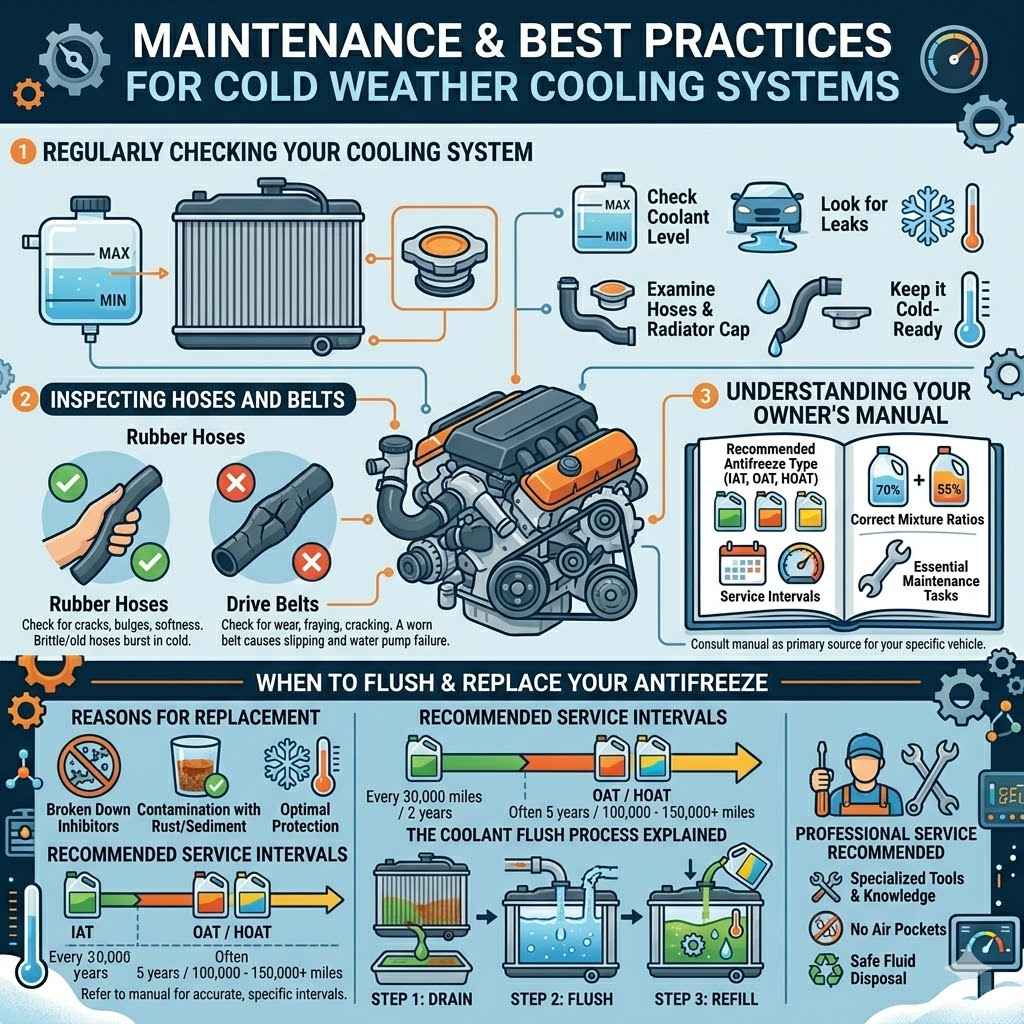
Fluids play a major role in the Complete Guide to Jeep Maintenance in Cold and Freezing Weather. Proper oil, coolant, transmission fluid, and washer fluid help your Jeep operate smoothly in freezing conditions.
Always follow the maintenance schedule in your Jeep owner’s manual. The correct fluid type matters because different Jeep models have different requirements.
- ✦ Use correct engine oil
Winter-friendly oil grades help engines start easier in cold temperatures.
- ✦ Check coolant protection
Coolant should protect against freezing and overheating.
- ✦ Fill winter washer fluid
Use fluid designed for freezing temperatures to avoid frozen spray systems.
Cooling System Protection
The cooling system works all year, even in winter. Low coolant levels or weak antifreeze protection can lead to serious engine problems.
Inspect hoses, the radiator, and coolant levels before extreme weather arrives.
- ✦ Antifreeze inspection
Test coolant strength to confirm winter protection.
Winter Tire Care and Traction Management
Tires are a critical part of the Complete Guide to Jeep Maintenance in Cold and Freezing Weather because they control how your Jeep connects with icy roads.
Cold temperatures reduce tire pressure naturally. Check pressure often and inspect tread depth before winter driving begins.

- ✦ Maintain proper tire pressure
Correct pressure improves traction, handling, and tire life.
- ✦ Inspect tire tread
Good tread helps move snow and water away from the contact surface.
- ✦ Consider winter tires
Winter tires can provide better grip in severe cold and snow.
Four-Wheel Drive Winter Tips
Four-wheel drive helps your Jeep move through challenging conditions, but it does not replace careful driving. Braking and cornering still depend on tire grip.
Know when to use different Jeep drive modes before you face deep snow or ice.
- ✦ Learn your Jeep system
Understand 4WD settings before winter conditions appear.
Brake, Suspension, and Undercarriage Protection
Winter roads create extra challenges for Jeep brakes and suspension parts. Snow, ice, and salt can speed up wear if you ignore regular checks.
The Complete Guide to Jeep Maintenance in Cold and Freezing Weather includes cleaning and inspecting areas that collect road debris.

- ✦ Inspect brake components
Check pads, rotors, and brake fluid before winter travel.
- ✦ Clean the underbody
Remove salt buildup to reduce corrosion risk.
- ✦ Check suspension parts
Look for worn joints, bushings, and damaged components.
Protecting Your Jeep After Snow Driving
A quick rinse after driving on salted roads can protect your Jeep’s frame and metal components. Focus on wheel wells and the underside.
Regular cleaning is especially important for Jeep owners who enjoy winter trails.
- ✦ Wash after salt exposure
Remove corrosive materials before they damage metal surfaces.
Frequently Asked Questions about Complete Guide to Jeep Maintenance in Cold and Freezing Weather

Jeepexplorerr
Contributor