A water crossing can be one of the most exciting parts of Jeep ownership. It also creates hidden risks that many drivers miss. Water can enter places that look sealed and slowly damage expensive parts if you ignore proper care.
This Complete Guide to Jeep Maintenance After Water crossings is based on common trail lessons from Jeep owners and off-road technicians. A quick inspection after a muddy trail or river crossing can prevent small issues from becoming major repairs.
In the United States, many Jeep owners use their vehicles for weekend trails, hunting trips, camping, and daily driving. That mix makes proper post-water care important because your Jeep must perform both on the trail and on the highway.

Why Water Crossings Require Immediate Jeep Maintenance
Water is not only a surface problem. It can reach axle vents, electrical connectors, bearings, brakes, and other parts that depend on protection from moisture. The deeper and slower the crossing, the more time water has to find weak points.
The Complete Guide to Jeep Maintenance After Water Crossings starts with understanding that prevention is easier than repair. A few minutes of inspection after leaving the trail can protect your Jeep from rust, wear, and mechanical failure.

- ✦ Hidden water entry
Water can enter areas that are not easy to see, including axle housings, connectors, and wheel components.
- ✦ Long-term damage
Moisture left inside mechanical parts can mix with fluids and reduce protection against wear.
- ✦ Safety concerns
Wet brakes, damaged sensors, or contaminated fluids can affect how your Jeep performs.
How Deep Water Changes Jeep Maintenance Needs
A shallow splash may only need a basic wash and inspection. A deep crossing requires more attention because water pressure can push moisture past seals and covers.
Experienced Jeep owners learn that the depth, speed, and time spent in water all matter. A careful inspection should always follow a serious crossing.
- ✦ Shallow water
Check for mud buildup and clean areas around brakes, wheels, and underbody parts.
- ✦ Deep water
Inspect fluids, vents, and electrical systems because deeper water creates higher risk.
Inspect Jeep Fluids After a Water Crossing
Fluid checks are one of the most important steps in the Complete Guide to Jeep Maintenance After Water Crossings. Water contamination can reduce the ability of oil and gear fluids to protect moving parts.
A clean-looking fluid does not always mean it is safe. Water mixed with oil may create a cloudy or milky appearance, which signals possible contamination.

- ✦ Engine oil check
Look for unusual color changes or a cloudy appearance after a deep crossing.
- ✦ Differential fluid check
Inspect axle fluids because water can enter through axle vents during deep water use.
- ✦ Transmission and transfer case
Check these systems when the Jeep has been exposed to water above normal trail levels.
When Should You Change Jeep Fluids After Water Exposure?
Not every splash requires immediate fluid replacement. However, deep crossings where water reaches vents or seals deserve a careful inspection.
Many off-road drivers choose preventive fluid changes after major water events because repair costs are much higher than routine service.
- ✦ Signs of contamination
Watch for cloudy fluid, unusual noises, leaks, or changes in drivetrain operation.
Check Brakes and Wheel Components After Water Crossings
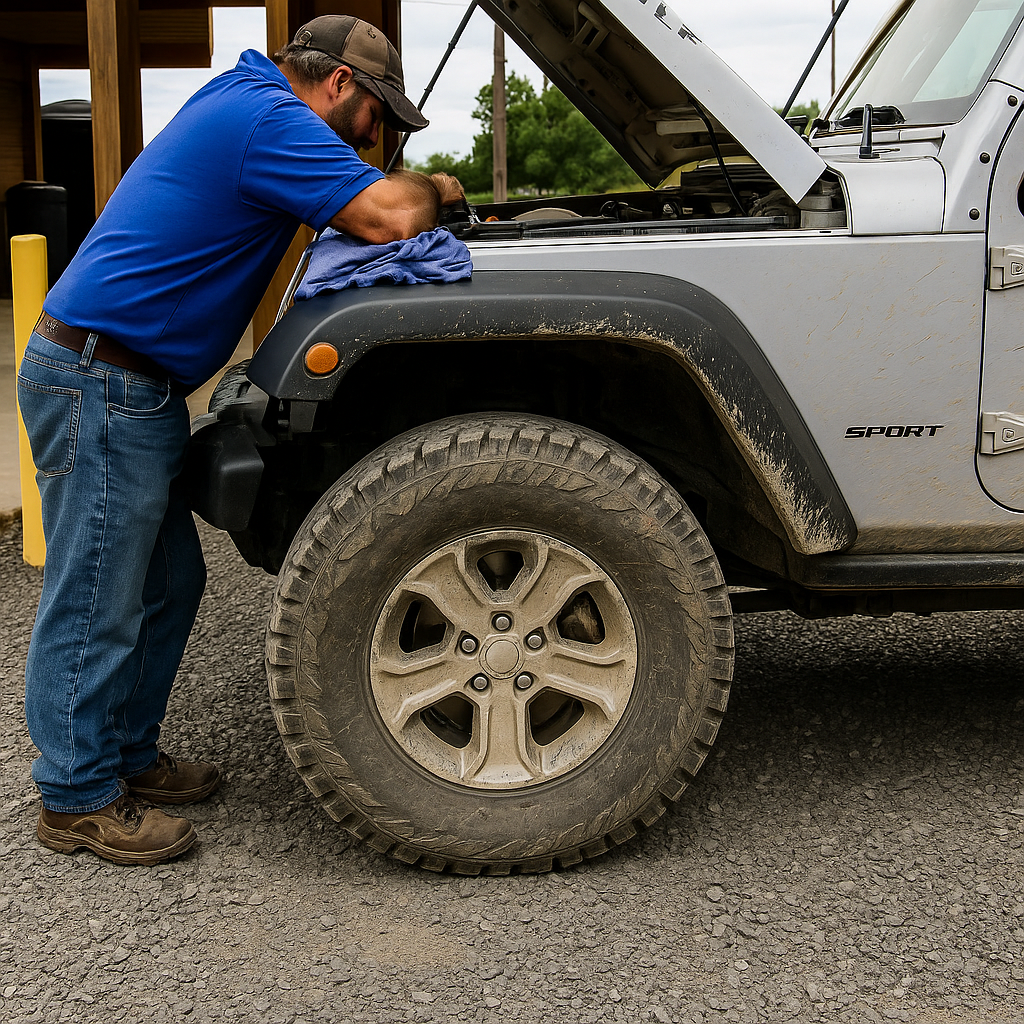
Water and mud can affect brake performance for a short time after a crossing. Wet brake parts may not provide the same stopping power until they dry.
The Complete Guide to Jeep Maintenance After Water Crossings includes brake inspection because safety should come before the next adventure. Cleaning and testing brakes helps confirm they are ready for normal driving.
- ✦ Brake testing
Apply the brakes gently after leaving water to remove moisture and confirm normal operation.
- ✦ Mud removal
Wash mud from calipers, rotors, and wheels to reduce corrosion risk.
- ✦ Wheel bearing inspection
Deep water exposure may require checking wheel bearings for moisture entry.
Cleaning the Undercarriage After a Trail Run
Mud holds moisture against metal surfaces. A thorough underbody rinse removes dirt that can speed up rust and wear.
Pay special attention to suspension parts, skid plates, and areas where mud collects.
- ✦ Use clean water
A gentle rinse removes debris without forcing dirt deeper into seals.
Protect Jeep Electrical Systems After Water Exposure
Modern Jeeps use many electronic systems, including sensors, modules, and connectors. Water intrusion can create problems that appear days or weeks after a trail trip.
A key part of the Complete Guide to Jeep Maintenance After Water Crossings is checking electrical areas before corrosion begins.
- ✦ Inspect connectors
Look for moisture, dirt, or corrosion around exposed electrical connections.
- ✦ Check lights and sensors
Confirm that all lighting, warning systems, and dashboard functions work normally.
- ✦ Dry wet areas
Allow trapped moisture to escape before storing the Jeep.
Preventing Electrical Corrosion
Keeping connectors clean and dry helps maintain reliable electrical performance. Some owners use protective products designed for electrical connections.
Avoid ignoring small electrical problems because water-related corrosion can slowly become more expensive.
- ✦ Early action
Finding moisture early reduces the chance of connector damage.
Lubricate and Inspect Jeep Moving Parts
Water crossings remove protective grease from some moving parts. Regular lubrication helps reduce friction and wear after off-road use.
The Complete Guide to Jeep Maintenance After Water Crossings recommends checking grease points, hinges, and suspension areas after wet trail conditions.

- ✦ Grease fittings
Apply fresh grease where recommended to push out moisture and restore protection.
- ✦ Door hinges
Clean and lubricate hinges because mud and water can create stiffness.
- ✦ Suspension parts
Inspect joints and bushings for dirt buildup after muddy crossings.
Creating a Post-Water Maintenance Routine
A simple routine makes Jeep ownership easier. Many experienced off-road drivers inspect their vehicles after every major trip instead of waiting for problems.
Keeping a small checklist in your garage or recovery kit helps you remember important steps.
- ✦ After every trip
Clean, inspect, and check for leaks or unusual sounds.
Frequently Asked Questions about Complete Guide to Jeep Maintenance After Water Crossings

Jeepexplorerr
Contributor