The Complete Guide to Jeep Idle Airflow and electronic Idle-Speed Control explains how modern Jeep engines maintain a steady idle when you stop at a light, start the engine, or run accessories. The engine needs precise air control even when your foot is away from the accelerator pedal.
From my experience studying vehicle control systems, many idle problems come from small airflow changes that drivers overlook. A dirty throttle body, weak idle actuator, or incorrect sensor signal can change how the entire engine behaves.

Understanding Jeep Idle Airflow and Electronic Idle-Speed Control
The Complete Guide to Jeep Idle Airflow and Electronic Idle-Speed Control starts with understanding why airflow matters at idle. When the throttle plate closes, the engine still needs oxygen to continue combustion.
Older Jeep models often use an Idle Air Control valve, while newer models use electronic throttle control systems. Both systems perform the same basic job by adjusting airflow based on engine needs.
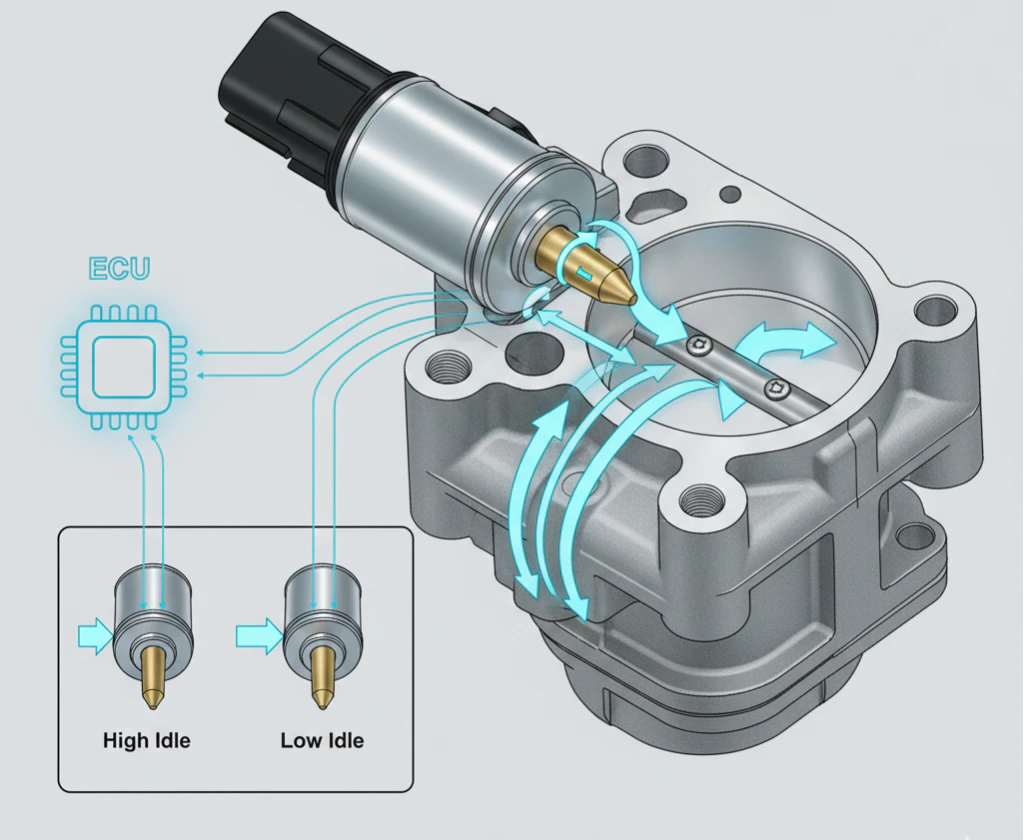
- ✦ Idle airflow purpose
The system allows controlled air into the engine when the driver is not pressing the accelerator.
- ✦ Engine computer role
The powertrain control module changes airflow based on temperature, load, and sensor information.
Why idle speed must stay controlled
A stable idle keeps the engine running during stops and reduces vibration. The computer adjusts airflow many times to match changing conditions.
- ✦ Accessory loads
Air conditioning, headlights, and electrical systems can increase engine load.
How Jeep Idle Air Control Systems Work
Many Jeep engines use an Idle Air Control valve mounted near the throttle body. This valve opens and closes an air passage to adjust idle speed.
The engine computer monitors RPM and compares it with the target idle speed. It then commands the valve to add or reduce airflow.

- ✦ Air passage control
The idle valve changes bypass air volume without moving the main throttle plate.
- ✦ RPM correction
The system raises or lowers airflow to maintain the correct idle speed.
Common Jeep models using idle air control valves
Many older Jeep Cherokee, Wrangler, and Grand Cherokee models use mechanical idle air control designs. These systems are reliable but need clean airflow paths.
- ✦ Older Jeep systems
They often depend on a separate idle control valve and throttle position sensor.
Electronic Throttle Control and Modern Jeep Idle Management
Modern Jeeps often replace a separate idle valve with electronic throttle control. The throttle motor moves the throttle plate directly to manage airflow.
The Complete Guide to Jeep Idle Airflow and Electronic Idle-Speed Control includes electronic systems because they combine throttle control, sensors, and software.

- ✦ Electronic throttle motor
The motor adjusts throttle opening based on computer commands.
- ✦ Position sensors
Sensors tell the computer the exact throttle position.
Benefits of electronic idle control
Electronic systems provide smoother control during cold starts and changing driving conditions. They also work with cruise control and stability systems.
- ✦ Improved response
The system reacts quickly to engine load changes.
Common Symptoms of Jeep Idle Airflow Problems
Idle airflow problems usually appear as changes in engine behavior. Drivers may notice shaking, unstable RPM, or engine stalling.
These symptoms do not always mean the idle valve is bad. A full diagnosis should check airflow, sensors, and engine conditions.

- ✦ Rough idle
The engine may shake or feel uneven while stopped.
- ✦ High idle speed
Extra airflow can cause RPM to stay higher than normal.
- ✦ Engine stalling
The engine may shut off when airflow drops below the required level.
Idle problems after cleaning or repairs
Some Jeeps need time for the computer to relearn idle settings after battery removal or throttle cleaning. A short relearn process may restore normal operation.
- ✦ Idle relearn
The computer adjusts stored values to match current airflow conditions.
Causes of Jeep Idle Airflow and Idle-Speed Control Failures
The Complete Guide to Jeep Idle Airflow and Electronic Idle-Speed Control shows that idle failures often come from airflow restrictions or incorrect signals.
Finding the root cause saves money because replacing parts without testing can create unnecessary repairs.

- ✦ Dirty throttle body
Carbon buildup can reduce airflow and disturb idle control.
- ✦ Vacuum leaks
Unwanted air entering the engine can create unstable idle conditions.
- ✦ Faulty sensors
Incorrect sensor data can cause poor computer adjustments.
Carbon buildup and airflow restriction
A dirty throttle area can limit the small airflow needed during idle. Cleaning may restore normal operation when buildup causes the problem.
- ✦ Regular inspection
Checking airflow paths during maintenance helps prevent idle issues.
How to Diagnose Jeep Idle Airflow Problems
Proper testing starts with basic checks before replacing components. A technician should inspect air leaks, scan computer data, and test related systems.
The Complete Guide to Jeep Idle Airflow and Electronic Idle-Speed Control recommends a step-by-step approach because several faults can create similar symptoms.

- ✦ Scan trouble codes
Diagnostic tools can reveal stored engine control problems.
- ✦ Inspect airflow parts
Check throttle bodies, valves, connectors, and hoses.
- ✦ Check sensor readings
Compare sensor data with expected engine conditions.
Professional diagnostic approach
A good diagnosis combines scan data with physical inspection. Computer codes help guide testing but do not always identify the failed part.
- ✦ Test before replacing
Verification prevents unnecessary parts replacement.
Frequently Asked Questions about Complete Guide to Jeep Idle Airflow and Electronic Idle-Speed Control

Jeepexplorerr
Contributor