The complete Guide to Jeep Check Engine Lights Fault Codes and Diagnostic Procedures helps Jeep owners understand what the warning light means and what steps to take next. In my experience working with vehicle diagnostics, many drivers replace parts too quickly because they do not fully understand fault codes.
Modern Jeeps use many sensors and computer modules to control engine performance, fuel use, emissions, and safety systems. A check engine light is not a direct diagnosis. It is a signal that the vehicle computer found a condition that needs attention.
For drivers in the United States, a Jeep is often used for daily commuting, highway trips, towing, and off-road adventures. A reliable diagnostic process helps prevent small issues from becoming expensive repairs.
Understanding What a Jeep Check Engine Light Means
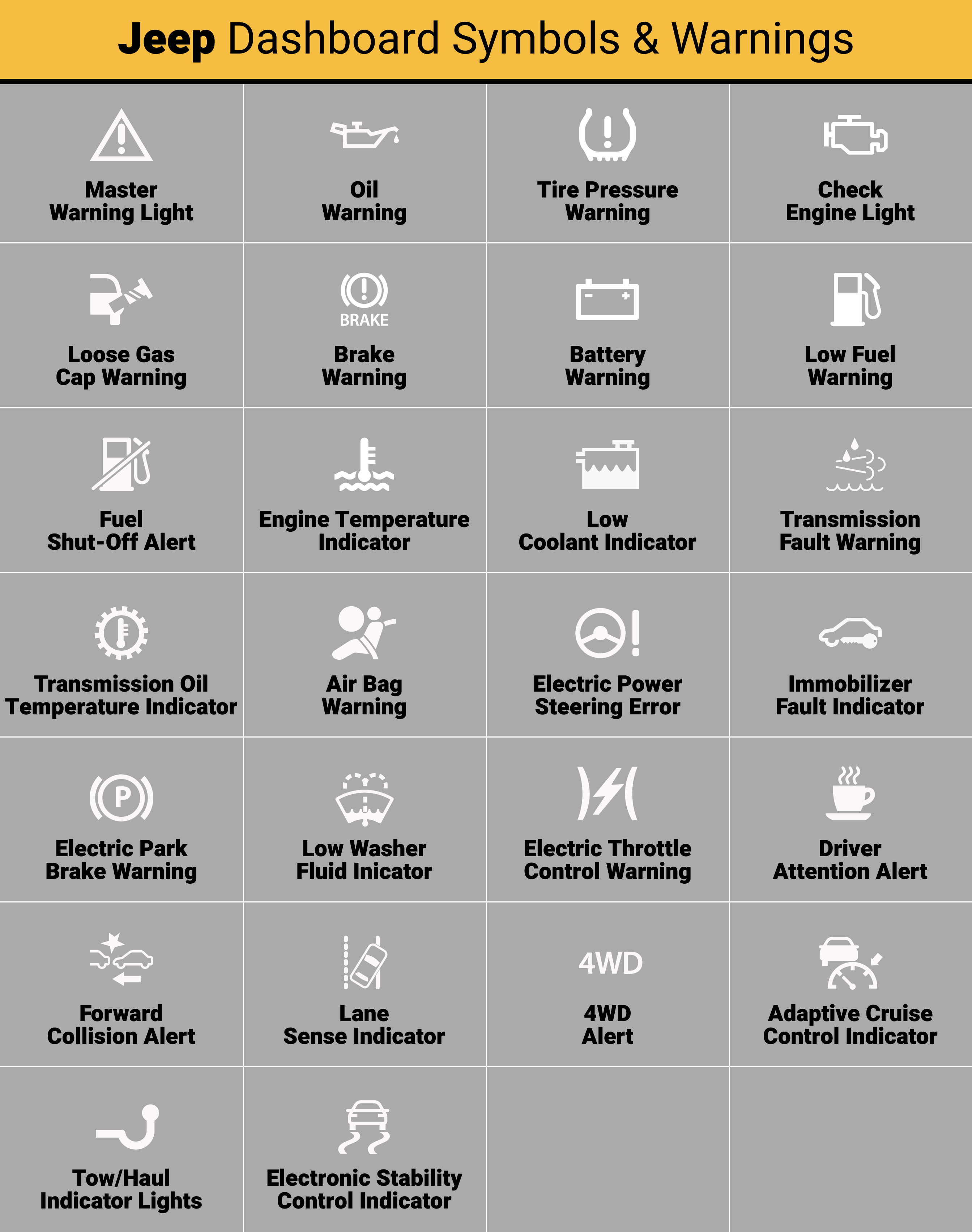
The Complete Guide to Jeep Check Engine Lights Fault Codes and Diagnostic Procedures starts with understanding the warning light itself. The check engine light, also called the malfunction indicator lamp, appears when the engine computer detects a problem.
A steady light usually means the vehicle can still operate, but the issue should be checked soon. A flashing light often means a serious problem, such as an active engine misfire that may damage the catalytic converter.
- ✦ Steady check engine light
A steady light often indicates an emissions, sensor, fuel, or engine control issue that requires diagnosis.
- ✦ Flashing check engine light
A flashing light can indicate a severe misfire or condition that needs immediate attention.
Why Jeep Computers Trigger Warning Lights
Jeep vehicles use electronic control modules to monitor engine operation. These modules compare sensor readings with programmed limits and store fault codes when readings fall outside normal ranges.
- ✦ Engine sensors
Sensors measure air flow, oxygen levels, temperature, pressure, and engine position.
- ✦ Control modules
Modules process data and adjust fuel, ignition, and emissions systems.
Common Jeep Check Engine Light Causes
Many Jeep owners search for the Complete Guide to Jeep Check Engine Lights Fault Codes and Diagnostic Procedures because the same warning light can come from many different systems. Finding the exact cause requires testing instead of guessing.
Some problems are simple, while others need professional repair. The code provides a direction, but additional checks confirm the real failure.

- ✦ Loose or damaged gas cap
A poor fuel cap seal can trigger evaporative emissions codes and turn on the check engine light.
- ✦ Faulty oxygen sensors
Oxygen sensor problems can affect fuel mixture control and emissions performance.
- ✦ Engine misfires
Bad spark plugs, ignition coils, or fuel problems can cause misfires and warning lights.
Common Jeep Wrangler and Cherokee Issues
Jeep Wrangler and Cherokee models may show check engine lights because of sensor faults, emissions system issues, wiring problems, or normal component wear. The exact cause depends on the model year and engine type.
A good diagnostic process checks the code history, live data, and physical condition of related parts before repairs begin.
- ✦ Model differences
Different Jeep engines use different sensors and control strategies.
How to Read Jeep Fault Codes With an OBD2 Scanner
A major part of the Complete Guide to Jeep Check Engine Lights Fault Codes and Diagnostic Procedures is learning how to retrieve diagnostic trouble codes. All Jeep vehicles sold in the United States since 1996 use OBD2 systems.
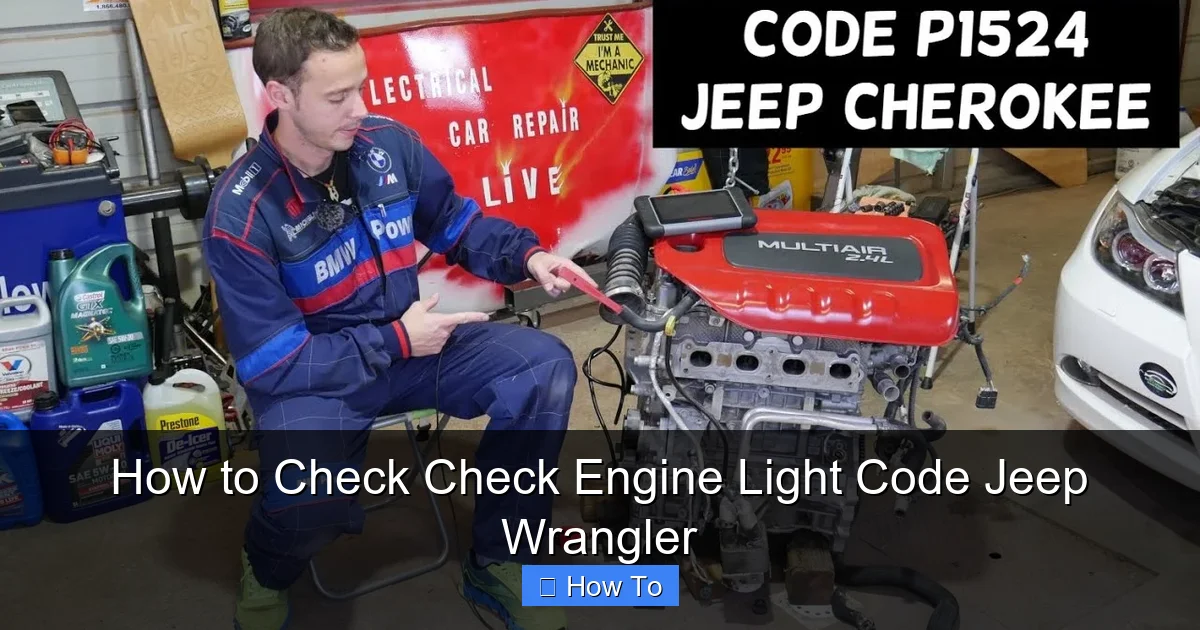
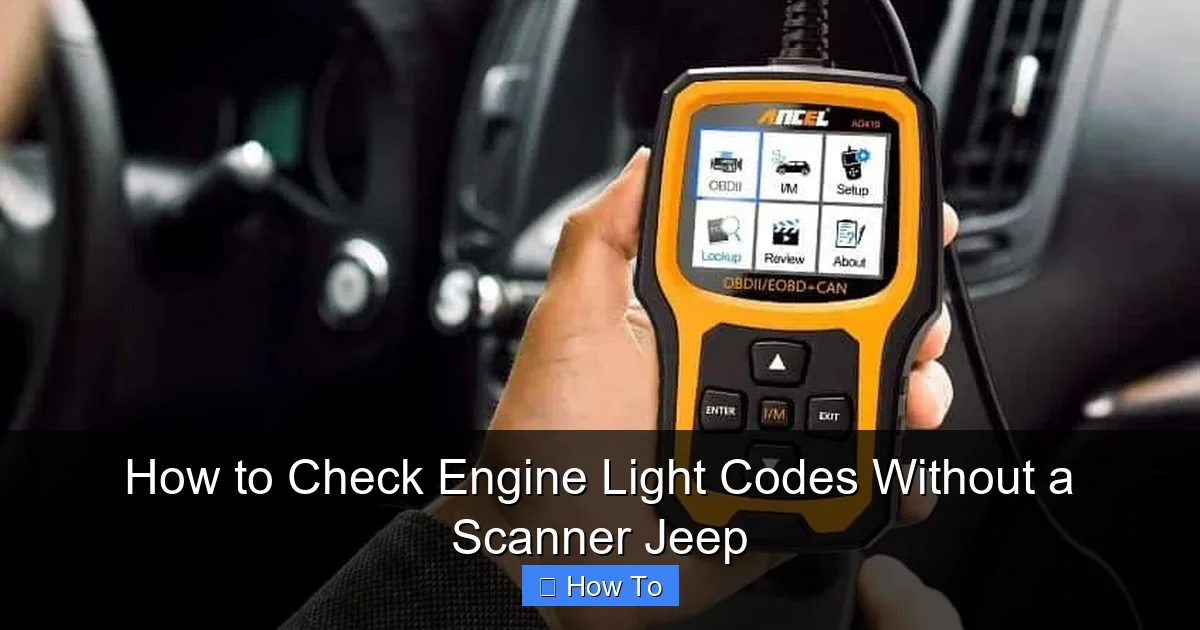
An OBD2 scanner connects to the diagnostic port and communicates with the vehicle computer. The scanner displays codes that help identify possible problem areas.
- ✦ Connect the scanner
Plug the OBD2 scanner into the diagnostic port under the dashboard.
- ✦ Record stored codes
Write down all codes before clearing anything from the computer.
- ✦ Check live data
Review sensor readings to confirm whether a component is working correctly.
Understanding Jeep Diagnostic Trouble Code Letters
Jeep fault codes usually begin with a letter. P codes relate to the powertrain, B codes relate to body systems, C codes relate to chassis systems, and U codes relate to communication problems.
- ✦ P codes
These commonly involve engine, transmission, and emissions systems.
- ✦ U codes
These often involve communication between electronic modules.
Step-by-Step Jeep Diagnostic Procedures
The Complete Guide to Jeep Check Engine Lights Fault Codes and Diagnostic Procedures focuses on a careful testing method. A code alone does not always mean the listed part has failed.
Professional technicians follow a process that confirms the issue before repairs. This approach saves time and avoids unnecessary part replacement.

- ✦ Step 1: Inspect the vehicle
Check for obvious issues such as loose connections, damaged wires, leaks, or unusual sounds.
- ✦ Step 2: Scan for codes
Use an OBD2 scanner to collect stored and pending fault codes.
- ✦ Step 3: Test related systems
Use measurements and inspections to confirm the suspected problem.
Why Clearing Codes Is Not a Repair
Some drivers clear the check engine light after a code appears. This may remove the warning temporarily, but it does not fix the cause.
A proper repair solves the condition that created the fault code in the first place.
- ✦ Temporary reset
The light may return if the original problem remains.
How to Diagnose Jeep Fault Codes Without Guessing
The Complete Guide to Jeep Check Engine Lights Fault Codes and Diagnostic Procedures requires more than reading a scanner result. Skilled diagnosis combines computer information with hands-on inspection.
A mechanic may test wiring, electrical signals, vacuum systems, fuel pressure, and sensor operation depending on the code.
- ✦ Check service information
Factory repair information helps identify known issues and correct testing methods.
- ✦ Compare data readings
Live scanner data helps determine if sensors report realistic values.
Tools Used for Jeep Diagnostics
Basic tools include an OBD2 scanner, multimeter, inspection light, and repair information. Advanced shops may use factory-level scan tools for deeper testing.
- ✦ OBD2 scanner
Reads and monitors vehicle computer information.