The Complete Guide to Jeep Brake Service intervals and Component Inspection helps Jeep owners understand when brake parts need attention and what technicians look for during inspections. In the United States, many Jeep owners use their vehicles for daily driving, road trips, towing, and off-road adventures. Each type of use creates different demands on the braking system.
After years of working with vehicle maintenance routines, I have found that brake problems rarely appear without warning. Small signs like a soft pedal, uneven stopping, or unusual sounds often appear before major repairs are needed. A careful inspection schedule can protect your Jeep and help avoid expensive damage.

Understanding Jeep Brake Service Intervals and Why They Matter
The Complete Guide to Jeep Brake Service Intervals and Component Inspection starts with understanding that brake service timing depends on many factors. Jeep does not have one universal brake replacement schedule because driving habits change brake wear. A Jeep used for highway commuting may need fewer repairs than one used for towing or trails.
Brake inspections are usually recommended during regular maintenance visits. Many owners check brake condition during tire rotations, oil changes, or scheduled service appointments. This approach helps catch problems early.

- ✦ Normal driving conditions
Daily city and highway driving often allows longer brake component life when the vehicle is maintained properly.
- ✦ Heavy-use conditions
Towing, mountain roads, off-road use, and frequent stops can increase brake wear and require more frequent inspections.
- ✦ Weather effects
Salt, moisture, and extreme temperatures can affect brake parts and speed up corrosion.
Common Jeep Brake Inspection Timing
A practical approach is to inspect brakes at least once each year or around every 12,000 miles. This interval gives technicians a chance to measure pad thickness and check the full brake system.
Drivers who tow trailers, drive in hills, or spend time on dirt trails should inspect brakes more often. Extra weight and rough terrain place more stress on brake components.
Jeep Brake Pad Inspection and Replacement Guidelines
Brake pads create the friction needed to slow your Jeep. They are designed to wear down over time, making regular checks one of the most important parts of brake maintenance.
During a brake inspection, a technician measures pad thickness and checks for uneven wear. Uneven wear can point to problems with calipers, hardware, or brake alignment.

- ✦ Thin brake pads
Pads with very little friction material left may reduce braking performance and should be replaced.
- ✦ Uneven pad wear
Different wear levels between inner and outer pads can indicate caliper or slide issues.
- ✦ Brake noise
Squealing, grinding, or clicking sounds can signal worn pads or damaged brake parts.
Signs Your Jeep Brake Pads Need Attention
Common warning signs include longer stopping distances, vibration during braking, and visible damage through the wheel area. Ignoring these symptoms can allow worn pads to damage rotors.
Many modern Jeeps also include brake warning systems that alert drivers when service may be needed.
Inspecting Jeep Brake Rotors, Calipers, and Hardware
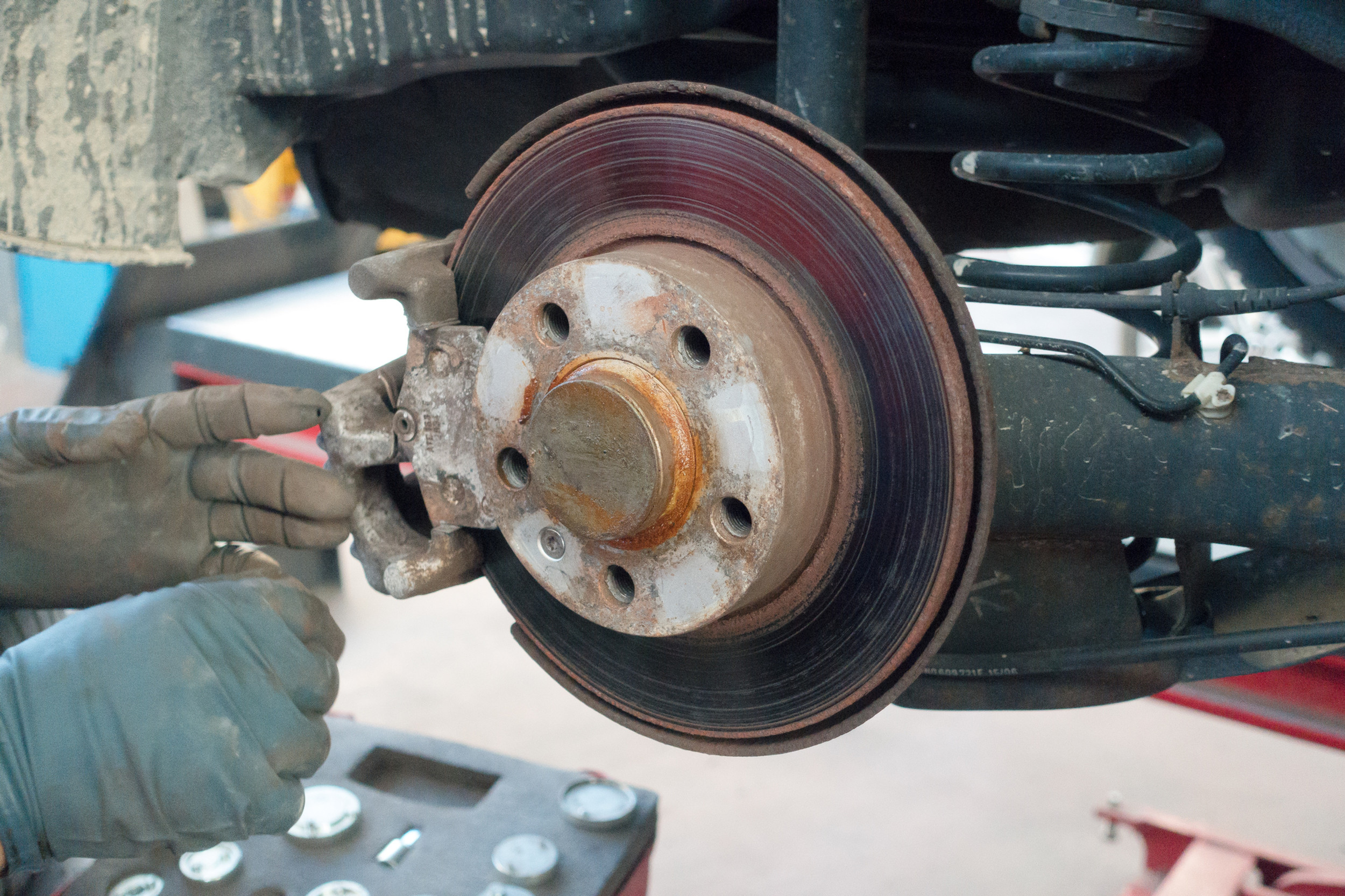
Brake rotors work with pads to create stopping power. Over time, rotors can develop grooves, hot spots, rust buildup, or thickness problems that affect braking performance.
Calipers are another important part of the system. A sticking caliper can cause uneven pad wear, pulling during braking, and extra heat around the wheel.
- ✦ Rotor surface inspection
Technicians check rotors for scoring, cracks, rust, and uneven surfaces.
- ✦ Caliper inspection
Calipers should move correctly and apply pressure evenly to both sides of the rotor.
- ✦ Brake hardware check
Clips, pins, and mounting parts must remain secure for smooth brake operation.
Why Rotor Condition Matters
A damaged rotor can create vibrations through the steering wheel or brake pedal. This is especially noticeable during highway braking.
Replacing pads without checking rotor condition can reduce brake performance and shorten new pad life.
Jeep Brake Fluid Service and Hydraulic System Checks
Brake fluid transfers force from the pedal to the brake components. Over time, it can absorb moisture and lose performance. This is why fluid condition matters even when the vehicle still stops normally.
The Complete Guide to Jeep Brake Service Intervals and Component Inspection includes brake fluid checks because hydraulic problems can affect pedal feel and braking response.

- ✦ Fluid condition
Dark or contaminated brake fluid may indicate that service is needed.
- ✦ Brake lines and hoses
Technicians inspect lines and hoses for leaks, cracks, and damage.
- ✦ Pedal feel
A soft or sinking brake pedal can indicate air or hydraulic system problems.
When to Change Jeep Brake Fluid
Many manufacturers recommend checking brake fluid during scheduled maintenance and replacing it based on vehicle needs. Owners should follow the maintenance guide for their specific Jeep model.
Vehicles exposed to water, mud, or severe weather may need closer monitoring because moisture can affect brake fluid quality.
How Driving Conditions Affect Jeep Brake Wear
A Jeep’s brake service needs depend heavily on how it is driven. A Wrangler used for weekend trails experiences different stress compared with a Grand Cherokee used mainly for highway trips.
American drivers often face mixed conditions, including traffic congestion, long road trips, snow, rain, and towing demands. Each situation changes brake workload.

- ✦ City driving
Frequent stops create more heat and can increase brake pad wear.
- ✦ Off-road use
Mud, dust, and uneven terrain can affect brake components and require extra inspections.
- ✦ Towing
Extra weight increases stopping demands and can accelerate brake wear.
Maintaining Jeep Brakes After Off-Road Trips
After trail use, owners should check for mud buildup, damaged hoses, and unusual brake behavior. Cleaning the brake area can help prevent debris-related problems.
A quick inspection after demanding trips can reveal issues before the next adventure.
Frequently Asked Questions about Complete Guide to Jeep Brake Service Intervals and Component Inspection

Jeepexplorerr
Contributor