Replace the Jeep window regulator by removing the door panel, disconnecting power, swapping the old regulator with the new unit, and testing.
I have fixed many Jeep windows over the years and I know how to replace Jeep window regulator step by step. This guide walks you through the job with clear steps, tool lists, safety tips, and real-world advice. Read on to learn how to replace Jeep window regulator safely, save money, and avoid common mistakes.

Which Jeep Models Does This Window Regulator Guide Apply To?
This guide covers the general process for replacing a window regulator on most Jeep models, including the Wrangler, Cherokee, Grand Cherokee, and Liberty. The core steps—removing the door panel, disconnecting the glass, and swapping the regulator—are similar across models, but the regulator mounting method and number of fasteners can vary.
Older full-steel-door Wranglers, such as the CJ and YJ, commonly use rivets, while later Wranglers, including the TJ, JK, and JL, and most Grand Cherokee models typically use bolts. Cherokee and Liberty models can also vary by generation and model year. If you’re unsure which mounting method your Jeep uses, you can usually identify it once the door panel and moisture barrier are removed.
What is a window regulator and why it fails
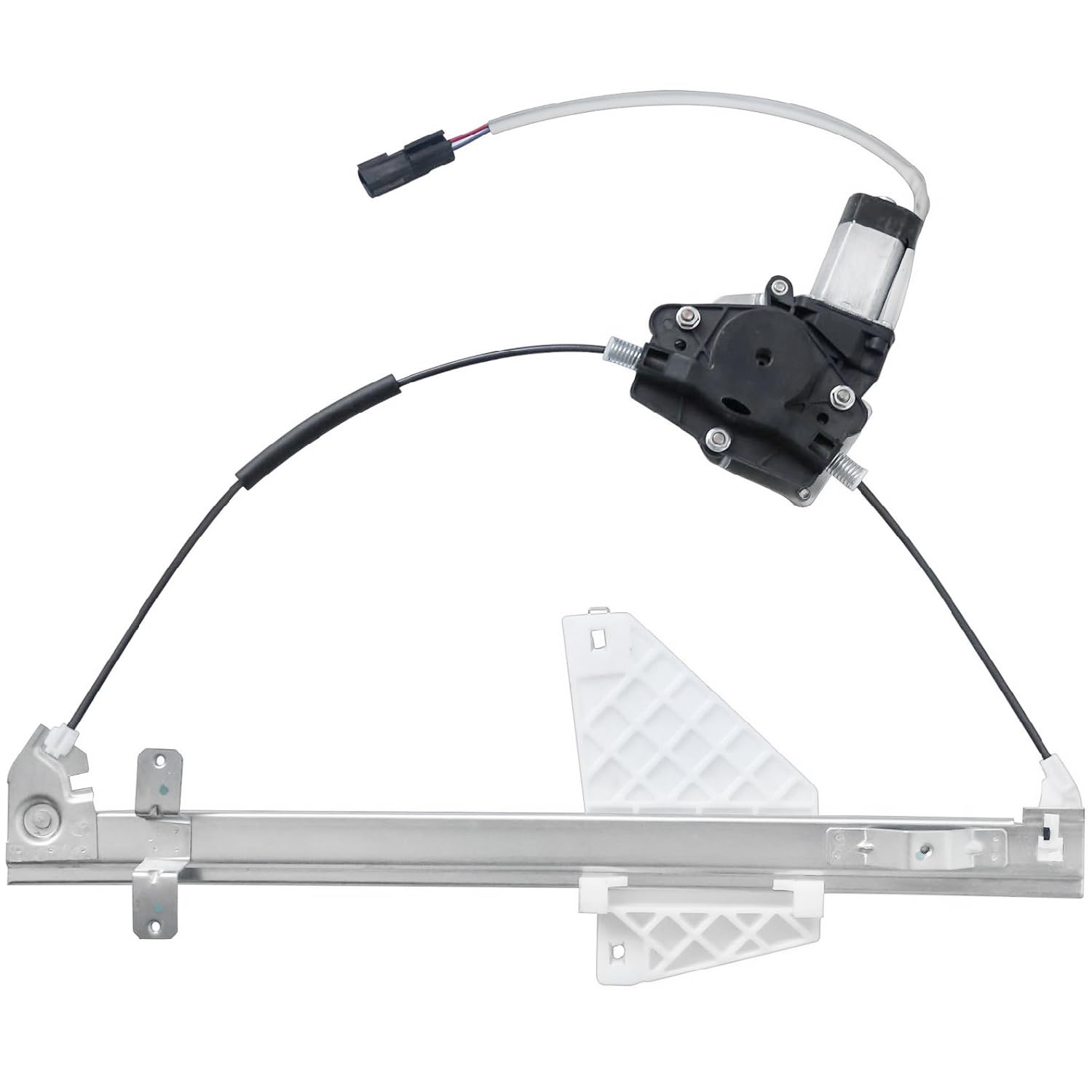
A window regulator is the mechanism that moves the glass up and down. It can be manual or electric. On most Jeeps, the power regulator uses a motor, gears, and cables.
Common causes of failure include wear, rust, broken cables, stripped gears, and seized tracks. Heat, water intrusion, and heavy use speed up wear. Knowing the cause helps when you replace the part and avoid repeat failures.
Common signs your window regulator needs attention include:
- The window doesn’t respond at all when you press the switch
- The glass drops suddenly into the door
- The window moves slower than usual or only partway
- The window travels at an angle instead of straight up and down
- You hear grinding, clicking, or clunking from inside the door when the window moves
Tools and parts you will need
- Replacement regulator and motor compatible with your Jeep model.
- Torx and metric sockets.
- Screwdrivers: flat and Phillips.
- Trim panel removal tools or a plastic pry tool.
- Needle-nose pliers and a ratchet.
- Masking tape and a small magnet or tray for screws.
- Protective gloves and safety glasses.
- Optional: grease, contact cleaner, and dielectric grease.
I always keep a small parts tray and a marker to label connectors. That saves time when reassembling.

Source: youtube.com
How to replace Jeep window regulator: step-by-step
Before you start, find a quiet level place. Work when it’s dry and warm. Gather tools and the replacement regulator.
- Prepare the vehicle
- Park the Jeep and set the parking brake.
- Disconnect the negative battery terminal. This prevents the motor from moving unexpectedly.
- Remove the door panel
- Pry off trim and remove visible screws.
- Use trim tools to pop the panel off. Work slowly to avoid breaking clips.
- Lift the panel away and disconnect the power window switch connector.
- Position the glass
- If the window is stuck up, gently tape the glass in place to the door frame.
- If the window is down, carefully raise it by hand until you can secure it with tape.
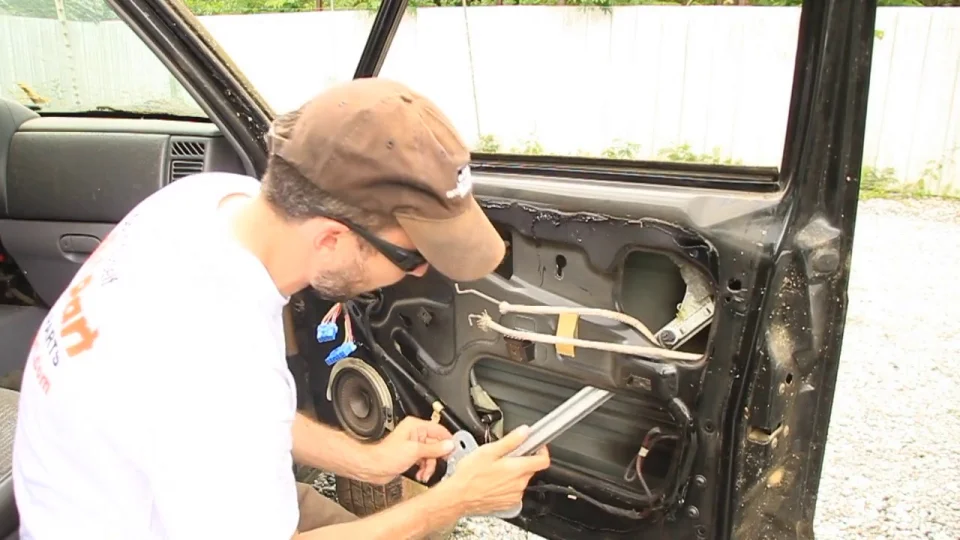
- Remove the old regulator. If your regulator is held in with rivets rather than bolts, drill through the center of each rivet with a bit slightly smaller than the rivet’s shaft, then punch or tap the remaining flange free. Many owners replace rivets with bolts and nuts (or with sheet-metal screws) when reinstalling, which makes any future regulator swap easier — just be sure the bolt heads sit on the side facing the regulator, not the glass, so nothing interferes with the window’s travel.
- Peel back the water barrier but do not tear it beyond repair.
- Unplug the motor electrical connector.
- Remove bolts or rivets holding the regulator and motor. Some Jeeps use rivets; drilling them out may be required.
- Support the glass while you free the regulator. Carefully lift the glass out of the regulator track if needed.
- Install the new regulator
- Compare the new regulator to the old part. Make sure mounting points align.
- Mount the regulator and loosely install bolts. If the old unit had rivets, use bolts where possible or follow OEM guidance.
- Reconnect the motor but keep bolts loose until alignment is checked.
- Test the operation
- Reconnect the battery briefly and operate the switch to test movement.
- If the glass binds, adjust regulator position until travel is smooth.
- Disconnect battery again before final tightening.
- Finalize assembly
- Tighten all bolts snugly with a torque wrench rather than an impact driver — over-tightening can strip the regulator’s mounting holes. If your Jeep’s service manual lists a torque spec for your specific model and year, use it; otherwise, snug each bolt until it stops turning freely, then add a small final turn.
- Reapply the water barrier and reconnect the switch.
- Reinstall the door panel and trim.
- Reconnect the battery and test several up-and-down cycles.
I once forgot to tape the glass and it shifted. That added an hour to the job. Tape the glass every time.
Source: amazon.com
Tips, tricks, and common mistakes
- Label connectors and screws. Small bits look the same later.
- Use dielectric grease on electrical connectors to prevent corrosion.
- If the door used rivets, carry a backup plan: a bolt kit or rivets and a rivet gun.
- Do not force the glass. Forcing can break it.
- Keep the regulator aligned before tightening bolts. Misalignment causes binding.
- If the motor hums but glass does not move, inspect the regulator gears or cable.
- Clean the track and apply a light spray of silicone lubricant for smooth travel.
From experience, replacing both door regulators in a pair often prevents uneven wear. If one failed, the other may follow soon.

Source: youtube.com
Time, cost, and difficulty
- Time: Expect 1.5 to 3 hours per door for a DIY job. Complexity varies by model.
- Cost: Actual cost varies more than this range suggests — it depends on your Jeep’s model, model year, and which door (front, rear, driver, or passenger) needs the repair, so it’s worth getting a quote for your specific vehicle before budgeting.
- Difficulty: Moderate. Basic tools and patience are the main needs. Knowing how to replace Jeep window regulator makes this job doable for most DIYers.
Budget for a little extra hardware like bolts or clips. That avoids wasted shop runs.
Source: upullandpay.com
Cheaper Fix: Repair Kit vs. Full Regulator Replacement
Before buying a complete window regulator assembly, check whether the failure is limited to a broken roller, clip, or motor. On some Jeep models, a regulator arm’s roller wheel can crack or break while the rest of the mechanism remains serviceable. In that case, a repair kit that replaces the roller and its fastener may cost less than replacing the entire regulator.
If the regulator mechanism moves smoothly by hand but the window motor does not operate, the motor may be the failed component. Some Jeep applications allow the motor to be replaced separately from the regulator, although the mounting method varies by model and year.
Inspect the regulator, rollers, clips, cables, and motor before ordering parts. Replacing only the failed component can be a cheaper fix when the remaining parts are in good condition, but a complete regulator assembly is usually the better choice when the mechanism is bent, the cable is damaged, or multiple components have failed.
Troubleshooting and maintenance after replacement
- Window moves slowly: Check battery voltage and motor connections. Clean and lube tracks.
- Window binds at one spot: Check track alignment and regulator mounting. Tighten or reposition as needed.
- Motor works but window won’t move: Likely a detached cable or broken gear inside the regulator. Replace the regulator.
- Noise during travel: Look for loose bolts, worn rollers, or debris in the track.
Regularly clean and lubricate the window tracks. That extends regulator life.

Source: youtube.com
When to seek professional help
- If the door uses factory rivets and you are not equipped to drill and replace them.
- If the window glass is cracked or shattered.
- If the electrical system shows other faults, like blown fuses or intermittent power.
- If you prefer warranty-backed work and OEM parts.
A pro can also reprogram automatic features and ensure exact alignment.

Source: amazon.com
Related concepts and parts to consider
- Window motor: The electric motor that drives the regulator.
- Window track and glass run: Channels that guide the glass. Replacing worn runs can fix noise and misalignment.
- Switches and wiring: A bad switch can appear as regulator failure. Test before replacing parts.
- Door latch and cable system: Check these if door feels different after work.
Understanding these parts helps when you replace the regulator and want durable results.

Source: youtube.com
Personal experience: lessons learned
I replaced regulators on several late-model Jeeps. One time I ordered the wrong motor. I recommend verifying part numbers before buying. I also learned to test the new assembly on the bench before final install. That cut my rework time. Finally, keeping bolts and clips in labeled bags saved many headaches.
PAA-style questions you may have
- Can I replace the regulator myself?
Yes. Most owners can do it with basic tools and patience. Follow safety steps and vehicle-specific guides. - How long will a new regulator last?
It depends on use, climate, and maintenance. A quality regulator often lasts many years with proper care. - Does the glass need removal?
Sometimes. Many jobs let you lift the glass out of the track without full removal. Tape the glass for safety.
Frequently Asked Questions of how to replace jeep window regulator
How long does it take to replace a Jeep window regulator?
A DIY replacement usually takes 1.5 to 3 hours per door. Experience and tools can shorten the time.
Do I need to remove the door to replace the regulator?
Most jobs do not require removing the door. You will remove the door panel and work from inside the door cavity.
Can I reuse the old motor with a new regulator?
Sometimes. The motor is usually attached to the regulator arm by two or three of its own screws, separate from the regulator’s mounting bolts, so it can often be removed, tested, and reused if it still runs smoothly. Match mounting points and test the motor before final install.
Are aftermarket regulators reliable?
Many aftermarket regulators work well. Choose parts from known brands and read fitment notes for your Jeep model.
Will replacing the regulator reset window programming?
Some Jeeps have auto-up features that may need recalibration. Check your owner’s manual for the reset procedure.
Can I fix a window regulator without replacing the whole assembly?
Sometimes. If the failure is limited to a cracked roller, broken clip, or another replaceable component, a repair kit may fix the problem without replacing the entire regulator. If only the motor has failed and the regulator mechanism remains in good condition, some Jeep models also allow the motor to be replaced separately. Inspect the regulator, cable, rollers, clips, and motor before ordering a complete replacement.
Conclusion
Replacing a Jeep window regulator is a practical DIY task when you follow clear steps, use the right tools, and take safety measures. You can save money and learn useful skills by doing it yourself. If you prefer a hands-off approach, a trusted shop will handle rivet work and electrical issues. Now that you know how to replace Jeep window regulator, pick the right part, set aside a few hours, and tackle the job with confidence. If this guide helped, share your experience or ask a question below.