The Complete Guide to Jeep Heater Core Operation Leaks and Cabin Heating explains how one small part controls winter comfort inside your Jeep. The heater core works with the engine cooling system to move heat from the engine into the passenger area.
From my experience studying Jeep repair patterns, many heating complaints start with simple warning signs. A sweet coolant smell, foggy windows, wet carpet, or weak heat often points toward a heater core or cooling system issue.

How a Jeep Heater Core Works
The heater core acts like a small radiator inside the Jeep dashboard. Hot engine coolant flows through tiny tubes inside the core while the blower fan pushes air across its heated surface.
The warm air then travels through HVAC doors and vents into the cabin. This process allows drivers in the USA to stay comfortable during cold mornings, winter trips, and off-road adventures.

- ✦ Coolant flow
Engine coolant carries heat from the engine to the heater core through supply and return hoses.
- ✦ Air movement
The blower motor pushes cabin air across the heater core to create warm airflow.
Main Heater Core Components
A Jeep heater core contains small coolant passages, aluminum or copper fins, inlet tubes, and outlet tubes. These parts must stay clean and sealed for proper heat transfer.
- ✦ Heater hoses
These hoses move hot coolant between the engine and heater core.
Common Jeep Heater Core Leak Symptoms
A leaking heater core can create both comfort and safety problems. Many Jeep owners first notice a strange smell inside the cabin before seeing visible coolant loss.
The Complete Guide to Jeep Heater Core Operation Leaks and Cabin Heating helps drivers recognize these early signs before a small leak becomes a larger repair.

- ✦ Sweet coolant smell
A sweet odor inside the Jeep often indicates leaking coolant near the heater core.
- ✦ Foggy windows
Coolant vapor from a leaking heater core can create oily moisture on the windshield.
- ✦ Wet passenger carpet
Coolant leaking from the heater core may collect under the dashboard or passenger floor.
Why Heater Core Leaks Happen
Corrosion, old coolant, damaged seals, and excessive cooling system pressure can weaken heater core materials. Poor coolant maintenance is one common reason these failures appear.
- ✦ Internal corrosion
Dirty or incorrect coolant can damage metal surfaces inside the heater core.
Signs Your Jeep Has Weak Cabin Heat
A Jeep with poor cabin heat may have more than a heater core problem. Low coolant, trapped air, a stuck thermostat, or HVAC door issues can also reduce heat output.
A proper diagnosis checks the complete system instead of replacing parts without testing. This approach saves time and avoids unnecessary repair costs.
- ✦ Cold air from vents
Low coolant flow or a blocked heater core can prevent warm air from reaching the cabin.
- ✦ Uneven heating
Different temperatures from vents may show airflow or blend door problems.
Checking Coolant Level First
Always check coolant level when the engine is cold. A low coolant level can stop the heater core from receiving enough hot fluid.
- ✦ Cold engine inspection
Open the coolant reservoir only after the engine cools to avoid pressure injuries.
How to Diagnose a Jeep Heater Core Problem
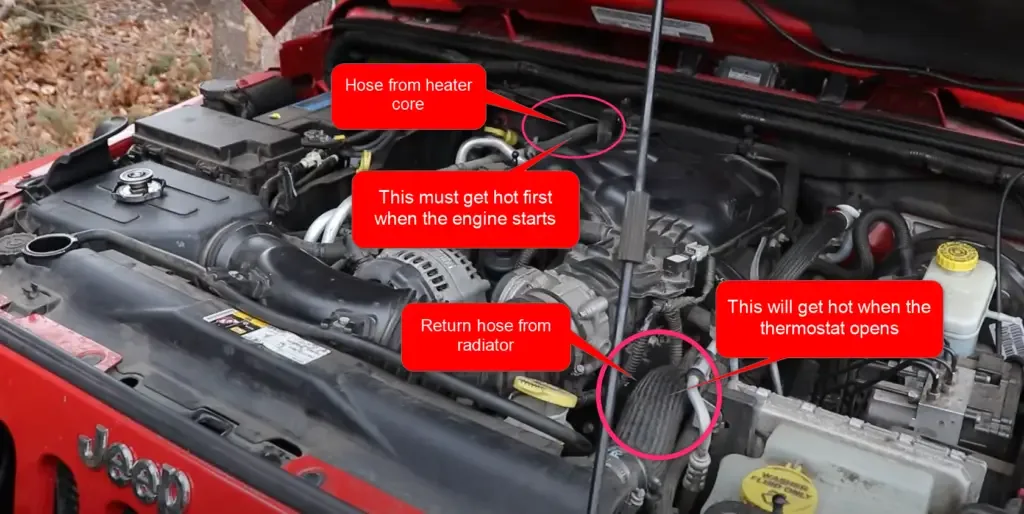
Diagnosis starts with simple checks. A technician usually inspects coolant levels, heater hoses, temperature differences, and signs of leaks.
The Complete Guide to Jeep Heater Core Operation Leaks and Cabin Heating recommends testing before replacement because heater core access can require significant dashboard work.

- ✦ Inspect heater hoses
Hot and cold hose temperatures can reveal restricted coolant flow.
- ✦ Pressure test cooling system
A pressure test can reveal hidden leaks in the heater core and cooling system.
Heater Core Flush Testing
A heater core flush can remove deposits and restore coolant movement in some cases. It cannot repair physical cracks or severe corrosion.
- ✦ Possible benefit
Flushing may improve heat output when blockage causes poor circulation.
Jeep Heater Core Replacement Considerations
Replacing a heater core can be a detailed repair because the component sits behind the dashboard. Labor time depends on Jeep model, access design, and technician experience.
Older Jeep models may require more interior removal compared with newer designs. Proper installation is important because small leaks can damage interior parts.

- ✦ Replacement parts
Choose quality heater cores that match the Jeep model and engine configuration.
- ✦ Cooling system refill
After replacement, remove trapped air and refill coolant correctly.
After Replacement Checks
After repair, check for leaks, confirm heater output, and monitor coolant levels during the first few drives.
- ✦ Final inspection
A complete inspection confirms the heating system works safely.
Frequently Asked Questions about Complete Guide to Jeep Heater Core Operation Leaks and Cabin Heating

Jeepexplorerr
Contributor