The Complete Guide to Jeep Winch Line Inspection Maintenance and Replacement helps Jeep owners understand one of the most important parts of recovery equipment. A winch can provide powerful pulling force, but the line connecting your Jeep to the recovery point must stay strong and reliable.
After years of working with off-road equipment, I have learned that many winch problems start with small signs. A few damaged fibers, hidden corrosion, or poor storage can turn into a serious issue during a recovery. A simple inspection routine can prevent many failures.
The Complete Guide to Jeep Winch Line Inspection Maintenance and Replacement focuses on practical steps for U.S. Jeep drivers who use their vehicles for trails, camping, mud, snow, and emergency recovery.

Understanding Jeep Winch Lines and Their Role in Recovery
A Jeep winch line transfers pulling force from the winch drum to a stuck vehicle or recovery point. It must handle heavy loads while staying flexible and controlled during recovery work.
The Complete Guide to Jeep Winch Line Inspection Maintenance and Replacement starts with knowing your line type. Most Jeep owners use either synthetic winch rope or steel cable, and each option has different strengths and care needs.
- ✦ Synthetic winch rope
Synthetic rope is lightweight, easy to handle, and popular among trail drivers because it stores less energy if it fails.
- ✦ Steel winch cable
Steel cable offers strong abrasion resistance but requires careful handling because broken wires can cause sharp damage.
- ✦ Recovery safety connection
The winch line, hook, shackle, and anchor point work together as one recovery system.
Why Winch Line Condition Matters
A damaged winch line can fail under load without much warning. Dirt, heat, sharp rocks, and repeated stress slowly reduce strength over time.
Regular checks help Jeep owners find problems before a difficult trail recovery becomes dangerous.
How to Inspect a Jeep Winch Line Before and After Trail Use
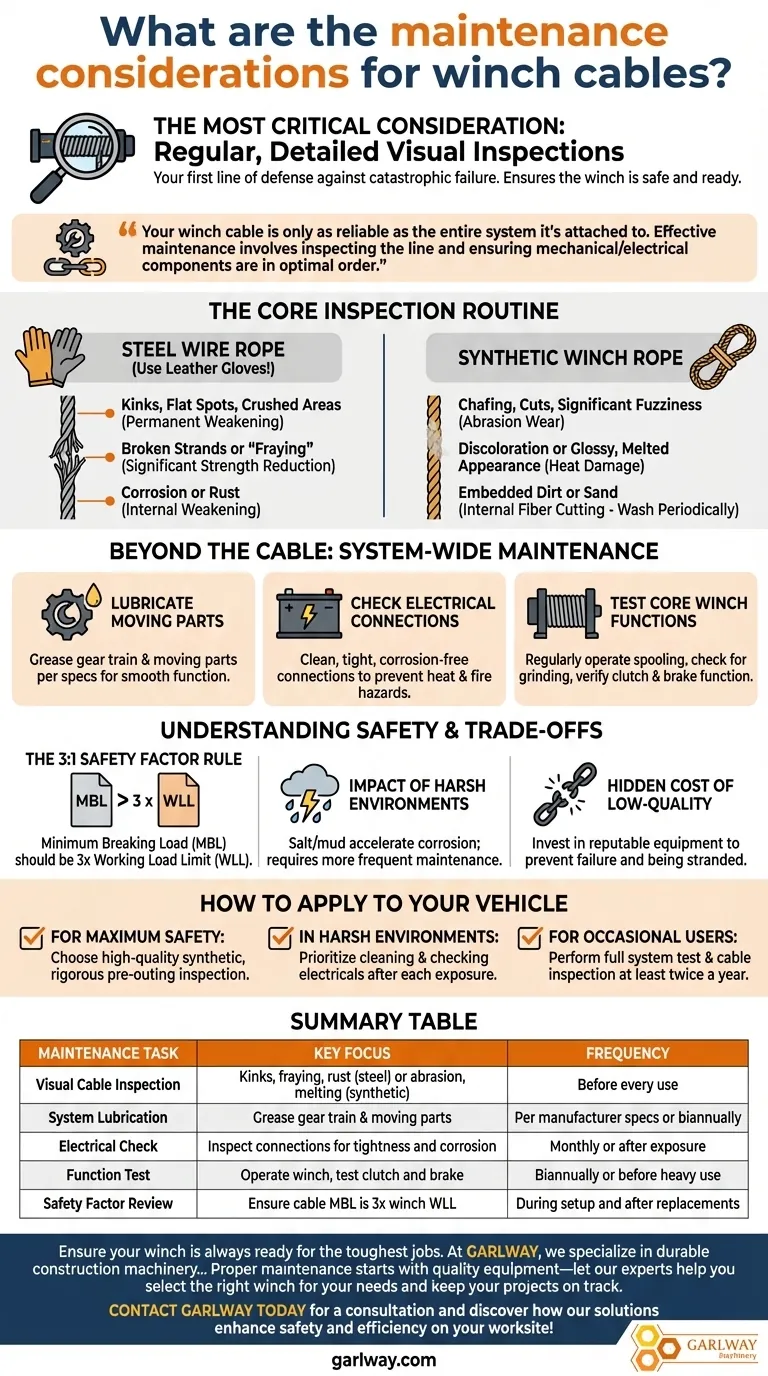
The Complete Guide to Jeep Winch Line Inspection Maintenance and Replacement recommends checking your winch line before every serious recovery trip. A quick inspection takes only a few minutes and can reveal major problems.
Look at the full length of the line while slowly pulling it from the drum. Do not inspect only the visible section because hidden damage often appears near the first layers on the drum.
- ✦ Check for cuts and fraying
Look for broken synthetic fibers, flattened areas, or deep cuts that weaken the rope structure.
- ✦ Look for cable corrosion
Steel cable should not have rust spots, broken strands, kinks, or crushed sections.
- ✦ Inspect connection points
Check the hook, eye splice, protective sleeve, and drum attachment area for wear.
Signs That Require Immediate Attention
A winch line should not be used if it has serious damage. Small surface marks may be acceptable, but deep cuts and broken strands require action.
Many experienced Jeep owners replace a questionable line instead of risking failure during a remote recovery.
- ✦ Synthetic rope warning signs
Excessive fuzzing, melted sections, exposed inner fibers, and severe abrasion indicate replacement may be needed.
Cleaning and Maintaining Synthetic Winch Rope
Synthetic rope collects sand, mud, and small particles during off-road use. These particles can work into the fibers and create internal wear.
The Complete Guide to Jeep Winch Line Inspection Maintenance and Replacement includes regular cleaning because a clean rope lasts longer and works more safely.

- ✦ Wash after muddy recovery
Use clean water to remove dirt and avoid harsh chemicals that may damage rope fibers.
- ✦ Dry before storage
Allow synthetic rope to dry fully before winding it back onto the drum.
- ✦ Avoid heat damage
Keep rope away from exhaust heat and surfaces that can melt synthetic materials.
Proper Rope Rewinding Technique
A winch rope should be stored under even tension. Loose layers can create crushing points and make future recoveries harder.
Pull the rope tight while rewinding and keep each layer organized across the drum.
Maintaining Steel Winch Cable on a Jeep
Steel cable remains common for many Jeep recovery setups because it handles abrasion well. However, it needs careful inspection because broken wires can create serious hazards.
The Complete Guide to Jeep Winch Line Inspection Maintenance and Replacement explains that steel cable maintenance focuses on corrosion control, proper winding, and damage detection.

- ✦ Wear gloves during inspection
Broken cable strands can create sharp edges that may cut your hands.
- ✦ Remove dirt buildup
Clean cable regularly to reduce trapped moisture and corrosion.
- ✦ Check for kinks
Kinks permanently weaken cable and may require replacement.
Steel Cable Storage Tips
Store steel cable tightly on the drum with even layers. Poor winding can create pressure points and shorten cable life.
Apply suitable protection products when recommended by the manufacturer.
When to Replace Your Jeep Winch Line
The Complete Guide to Jeep Winch Line Inspection Maintenance and Replacement shows that replacement depends on condition, use, and exposure. There is no single replacement date for every Jeep.
A Jeep used every weekend on rocky trails will need more frequent inspections than a Jeep that uses a winch only for occasional emergencies.

- ✦ Replace damaged synthetic rope
Replace rope with deep cuts, melted areas, exposed core fibers, or major abrasion.
- ✦ Replace damaged steel cable
Replace cable with many broken wires, heavy rust, crushing, or permanent bends.
- ✦ Replace after severe recovery events
Extreme pulls and shock loads may damage a line even when damage is not obvious.
Choosing a Replacement Winch Line
Choose a replacement line that matches your winch capacity and drum size. The wrong size can create poor fit and unsafe operation.
Consider your driving style, trail conditions, and maintenance habits before selecting synthetic rope or steel cable.
Best Practices for Long-Term Jeep Winch Line Care
Good maintenance habits keep recovery equipment ready when you need it. The Complete Guide to Jeep Winch Line Inspection Maintenance and Replacement encourages Jeep owners to treat the winch line as safety equipment, not just an accessory.
Store recovery gear properly, inspect it often, and replace worn parts before heading into remote areas.

- ✦ Keep recovery records
Track major recoveries, cleaning dates, and replacement history.
- ✦ Protect from weather
Use covers and proper storage methods to reduce sun and moisture damage.
- ✦ Practice safe recovery
Use rated equipment and follow safe recovery methods every time.
Frequently Asked Questions about Complete Guide to Jeep Winch Line Inspection Maintenance and Replacement

Jeepexplorerr
Contributor