The Complete Guide to Jeep Flat-Towing Requirements Across Different Drivetrains helps RV owners understand what makes a Jeep suitable for four-wheel towing. Many Jeep owners choose flat towing because it keeps all four wheels on the road and avoids carrying a second trailer. The process looks simple, but drivetrain details matter.
During my years studying vehicle systems, I learned that towing problems often come from small mistakes. Owners may skip transfer case steps, ignore transmission limits, or assume every Jeep works the same way. A careful setup protects the vehicle and creates a safer travel experience across American highways.
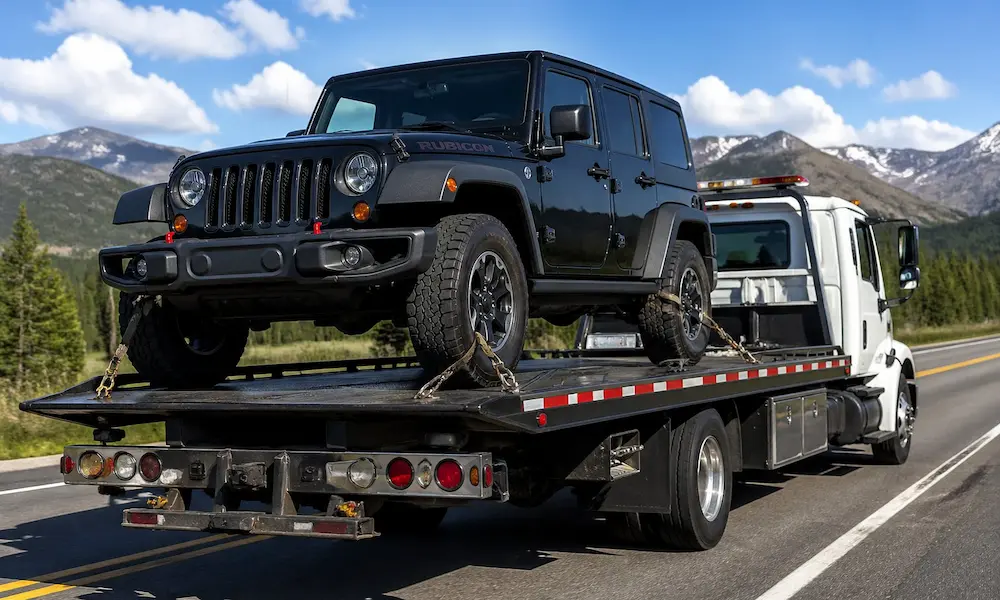
Understanding Jeep Flat Towing and Why Drivetrain Type Matters
Flat towing means pulling a Jeep behind another vehicle with all four Jeep wheels touching the ground. RV owners often use this method because it saves space and makes travel easier. A proper setup connects the Jeep with a tow bar, safety cables, wiring, and braking equipment.
The Complete Guide to Jeep Flat-Towing Requirements Across Different Drivetrains starts with one key idea: the drivetrain controls whether flat towing is safe. Engine type matters less than the transmission, transfer case, and axle system.
- ✦ Transmission design
Manual and automatic transmissions handle flat towing differently because internal parts may or may not receive proper lubrication when the engine is off.
- ✦ Transfer case operation
Many Jeep 4×4 models use a neutral transfer case position that disconnects drivetrain components during towing.
- ✦ Model year differences
Jeep updates systems over time, so owners must confirm requirements for their exact year and trim.
Flat-Towing Requirements for Jeep Wrangler Models
The Jeep Wrangler remains one of the most popular flat-tow vehicles in the United States. Its body-on-frame design, strong 4×4 system, and available transfer case neutral setting make many Wrangler models suitable for RV towing.
The Complete Guide to Jeep Flat-Towing Requirements Across Different Drivetrains shows that Wrangler owners must follow the correct sequence before connecting to the motorhome. A missed step can create unnecessary drivetrain stress.

- ✦ Four-wheel-drive Wrangler models
Many Wrangler 4×4 versions can be flat towed after placing the transfer case in neutral and following the manual procedure.
- ✦ Manual transmission Wranglers
Manual versions are often easier to prepare because the transmission can remain disconnected from engine operation.
- ✦ Automatic transmission Wranglers
Automatic models require careful transfer case use because towing with the wrong setting can damage components.
Common Wrangler Flat-Towing Preparation Steps
A typical Wrangler setup includes shifting the transfer case into neutral, placing the transmission in the recommended position, unlocking steering, and confirming all connections. Owners should follow the exact sequence listed in the vehicle manual.
- ✦ Check owner’s manual
Use the factory procedure for your specific Wrangler year and drivetrain.
- ✦ Test before long trips
Practice the setup at home before starting a long RV journey.
Jeep Grand Cherokee Flat-Towing Requirements Across Drivetrains
The Jeep Grand Cherokee has offered several drivetrain combinations over many generations. Some versions support flat towing, while others require different towing methods because of transmission or drivetrain limitations.
The Complete Guide to Jeep Flat-Towing Requirements Across Different Drivetrains requires special attention for Grand Cherokee models because four-wheel-drive systems changed over time.

- ✦ Selectable 4×4 systems
Certain systems include settings designed to disconnect drivetrain parts for recreational towing.
- ✦ Two-wheel-drive versions
Rear-wheel-drive and two-wheel-drive models may have different restrictions and should not be assumed safe for flat towing.
- ✦ Newer electronic systems
Modern Jeep electronics may require additional steps before towing.
How Manual and Automatic Jeep Transmissions Affect Flat Towing
Transmission type is one of the most important factors in flat towing. A vehicle transmission depends on proper lubrication and movement patterns that may change when the engine is not running.
The Complete Guide to Jeep Flat-Towing Requirements Across Different Drivetrains explains why owners should never rely only on drivetrain labels like 4×4 or AWD. The transmission and transfer case work together.
- ✦ Manual transmission considerations
Manual systems often allow easier towing preparation, but owners still need the correct transfer case and gear settings.
- ✦ Automatic transmission considerations
Automatic systems need strict procedures because internal lubrication may depend on operating conditions.
- ✦ Electronic controls
Modern transmissions may include computer controls that affect towing procedures.
Essential Jeep Flat-Towing Equipment and Safety Setup
A safe flat-towing system requires more than a tow bar. The Jeep and the RV must work together as one connected system. Good equipment reduces risk during braking, turning, and highway driving.
Experienced RV travelers know that preparation matters more than speed. A careful inspection before every trip prevents many common towing failures.

- ✦ Tow bar
The tow bar connects the Jeep to the motorhome and must match the vehicle weight and towing rating.
- ✦ Base plate
A base plate provides a secure attachment point designed for the Jeep model.
- ✦ Supplemental braking system
Many RV setups use extra braking systems to improve control and reduce stopping distance.
- ✦ Electrical wiring
Lighting connections allow the Jeep’s brake lights and signals to work with the towing vehicle.
Common Jeep Flat-Towing Mistakes to Avoid
Many towing failures happen because owners rush through preparation. A Jeep that looks ready may still have an incorrect drivetrain setting.
Following the Complete Guide to Jeep Flat-Towing Requirements Across Different Drivetrains helps prevent expensive repairs and unsafe travel situations.

- ✦ Ignoring factory instructions
Every Jeep model has specific towing rules that should guide the setup process.
- ✦ Skipping safety checks
Owners should inspect connections, cables, and brakes before every trip.
- ✦ Using the wrong drivetrain mode
Incorrect transfer case settings can cause serious mechanical problems.
Frequently Asked Questions about Complete Guide to Jeep Flat-Towing Requirements Across Different Drivetrains

Jeepexplorerr
Contributor