Jeep Wrangler Wheel Alignment and Suspension Geometry is one of the most important areas to understand for owners who drive both on highways and trails. A Wrangler has a unique solid axle suspension design that gives it excellent off-road strength, but small geometry changes can greatly affect steering feel and tire wear.
From my experience working with Jeep suspension setups, many handling problems are not caused by bad parts. They often come from incorrect alignment after tire upgrades, suspension lifts, or worn steering components. A correct setup helps your Wrangler track straight, turn smoothly, and perform better in daily American driving conditions.

Understanding Jeep Wrangler Wheel Alignment and Suspension Geometry
Jeep Wrangler Wheel Alignment and Suspension Geometry refers to the way your Jeep wheels, axles, steering parts, and suspension components work together. Alignment is not only about pointing the tires straight. It controls how the Jeep responds during acceleration, braking, cornering, and off-road driving.
A Wrangler uses a solid axle system, which means both wheels on an axle move together. This design is strong for trails but requires careful attention to suspension angles. Changes in ride height or tire size can alter the original factory geometry.

- ✦ Wheel alignment
Alignment adjusts wheel angles so tires contact the road correctly and the Jeep drives straight.
- ✦ Suspension geometry
Geometry describes the relationship between axles, control arms, steering links, and suspension angles.
Why Geometry Matters on a Wrangler
A Wrangler is often modified with bigger tires, aftermarket wheels, and lift kits. These upgrades change suspension movement and steering angles. Without correcting geometry, the Jeep may develop poor handling or faster tire wear.
- ✦ Daily driving impact
Correct geometry improves highway stability and reduces driver fatigue.
Key Alignment Angles on Jeep Wrangler Suspension Systems
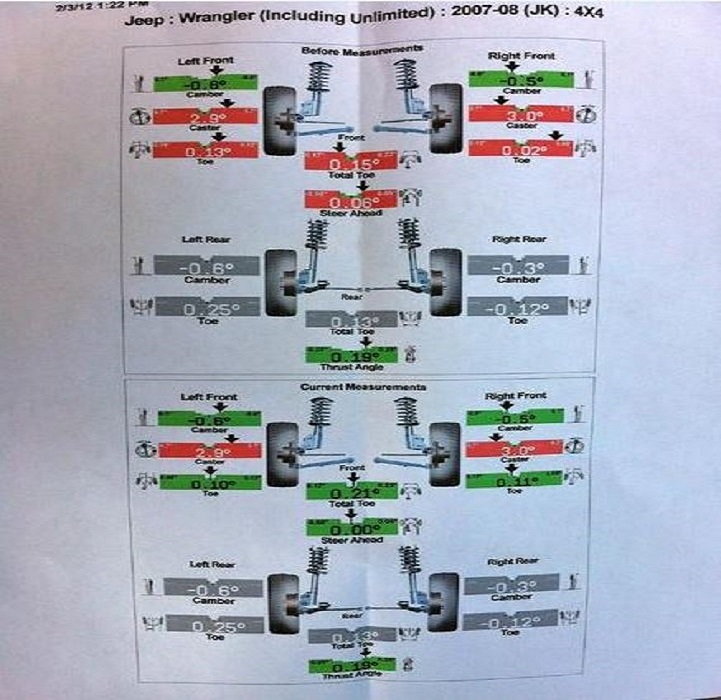
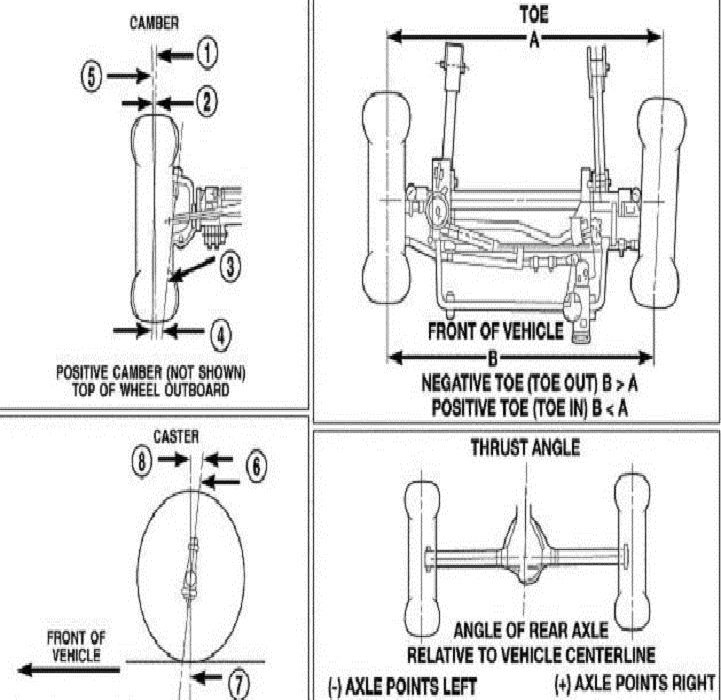
The three main alignment angles are caster, camber, and toe. Each angle affects how your Jeep handles and how your tires wear. Understanding these settings helps owners make better decisions after suspension upgrades.
Jeep Wrangler Wheel Alignment and Suspension Geometry depends heavily on keeping these angles within a suitable range. Factory settings work well for stock Jeeps, but modified Wranglers may need additional adjustments.

- ✦ Caster angle
Caster affects steering return, straight-line stability, and highway tracking. Reduced caster can make a lifted Wrangler feel unstable.
- ✦ Camber angle
Camber controls the inward or outward tilt of the tire. Incorrect camber can cause uneven tire wear.
- ✦ Toe angle
Toe controls whether tires point slightly inward or outward. Incorrect toe is a common cause of tire scrubbing.
How Lift Kits Change Jeep Wrangler Suspension Geometry
Installing a lift kit changes the position of suspension components. Control arm angles become different, driveshaft angles change, and steering geometry may move away from factory specifications.
A lifted Wrangler often needs supporting upgrades such as adjustable control arms, track bars, or alignment correction parts. These components help restore proper suspension geometry.
- ✦ Control arm changes
Lifted Jeeps may require adjustable control arms to restore caster and axle position.
- ✦ Track bar adjustment
A corrected track bar helps center the axle under the vehicle.
Common Lift Related Alignment Problems
Many Wrangler owners notice steering vibration, pulling, or loose steering after a lift. These symptoms often point to geometry changes rather than tire problems alone.
- ✦ Steering wander
Low caster or incorrect toe settings can make the Jeep move side to side.
Signs Your Jeep Wrangler Needs an Alignment Check
A Wrangler usually gives warning signs when alignment settings are incorrect. Paying attention early can prevent expensive tire replacement and steering repairs.
Jeep Wrangler Wheel Alignment and Suspension Geometry should be inspected after major suspension changes and whenever handling feels different.

- ✦ Uneven tire wear
Inside or outside tire wear patterns often indicate alignment problems.
- ✦ Steering pull
The Jeep may drift left or right instead of maintaining a straight path.
- ✦ Off-center steering wheel
A crooked steering wheel can indicate incorrect toe adjustment.
Professional Alignment Process for a Jeep Wrangler
A professional alignment starts with checking suspension parts for wear. Loose ball joints, worn tie rods, or damaged control arm bushings can prevent accurate alignment results.
A proper technician measures the current settings, compares them with suitable specifications, and adjusts the components that can be changed. This process is especially important for modified Wranglers.

- ✦ Inspection first
Suspension problems must be fixed before alignment adjustments are made.
- ✦ Measurement tools
Alignment machines measure wheel angles with high accuracy.
Maintaining Correct Jeep Wrangler Suspension Geometry
Good maintenance keeps alignment settings stable. Regular inspections help catch worn parts before they create handling problems.
Drivers who use their Wrangler for off-road trips should inspect suspension components more often because rocks, mud, and rough terrain place extra stress on steering and suspension parts.
- ✦ Check after modifications
Always inspect alignment after changing tires, wheels, lifts, or suspension parts.
- ✦ Rotate tires regularly
Proper rotation helps maintain even wear and extends tire life.