Expect to pay between $700 and $2,500 to regear a Jeep, depending on parts and labor.
I’ve spent years working on Jeeps and helping owners choose the right upgrades. This article explains how much to regear a Jeep, why it matters, and how to estimate real costs. You’ll learn exact cost drivers, practical tips from my shop experience, common mistakes to avoid, and a step-by-step plan to get the job done right. Read on to make a confident, informed decision about regearing your Jeep.
Why regearing matters for your Jeep
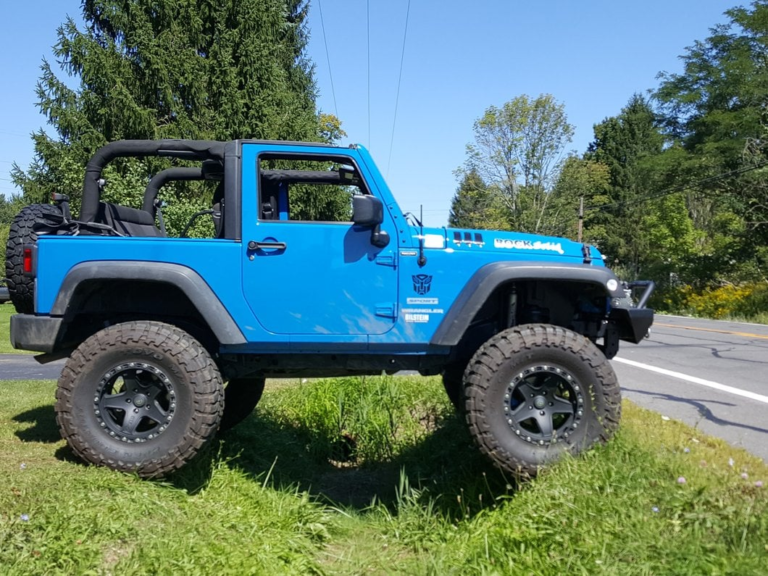
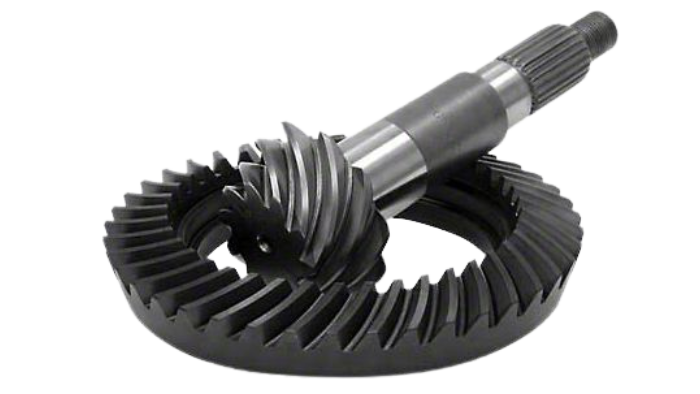
Regearing improves power, drivability, and transmission life after tire or lift upgrades. When you change tire size or add heavy accessories, the engine can lose its optimal rpm range. Replacing axle gears restores correct engine load and can reduce stress on the transmission. Knowing how much to regear a Jeep helps you plan a budget and avoid wasted upgrades.
- Restores acceleration that larger tires reduce.
- Improves towing and off-road crawlability.
- Lowers transmission wear from prolonged high rpm.
How much to regear a Jeep directly ties to parts, labor, and whether you choose performance or stock replacement. Regear choices affect fuel economy and drivability, so pick ratios that match your tire size and driving style.

Typical cost breakdown: parts and labor
Costs vary widely by axle type, gear ratio, and labor rates. I’ll break down typical ranges so you can estimate expenses.
-
Parts
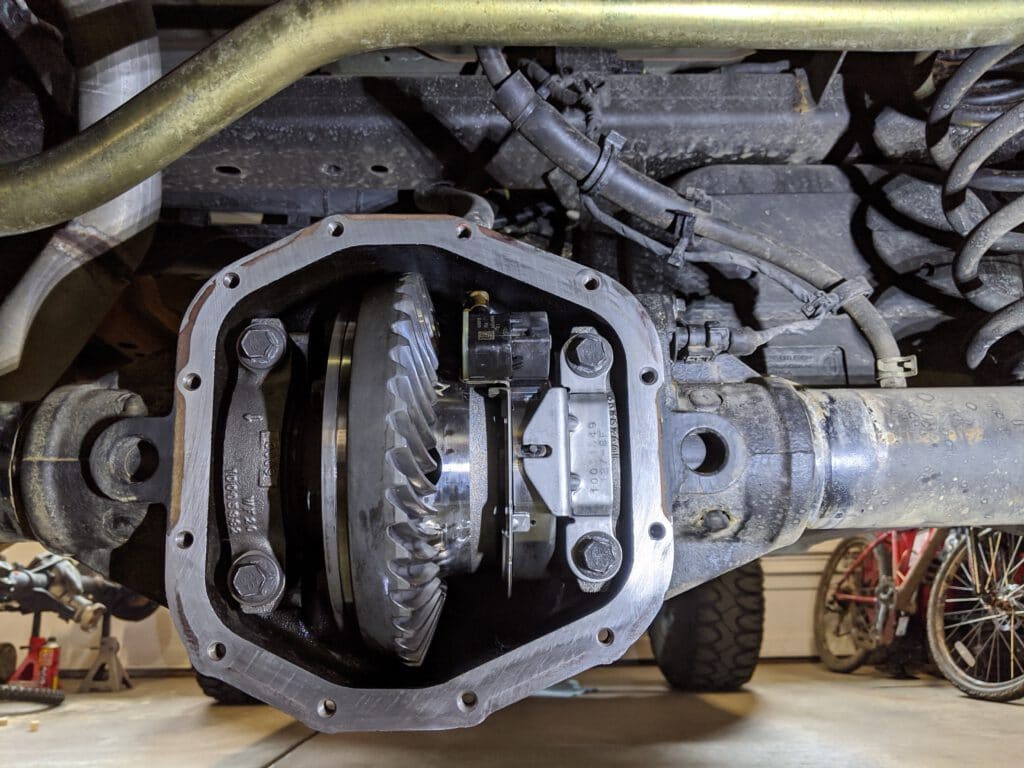
- Gear sets: $150 to $600 per axle depending on quality and ratio.
- Pinion bearings, seals, and master kits: $80 to $200 per axle.
- Bearing preloads or carrier shims can add $20 to $100.
-
Labor
- Shop labor: $250 to $900 per axle depending on complexity and region.
- Full rebuild with tech setup and break-in: $500 to $1,200 for both axles.
-
Other costs
- Limited slip or locker installation: $200 to $800 extra.
- New shafts, rebuilds, or welding for damage: variable.
Total estimates for how much to regear a Jeep usually fall into these buckets:
- One axle only: $400 to $1,200.
- Both axles (typical): $700 to $2,500.
These ranges match what I’ve seen in my work and in industry pricing. Plan for higher cost if you want premium gears or differential lockers.
How to choose the right gear ratio
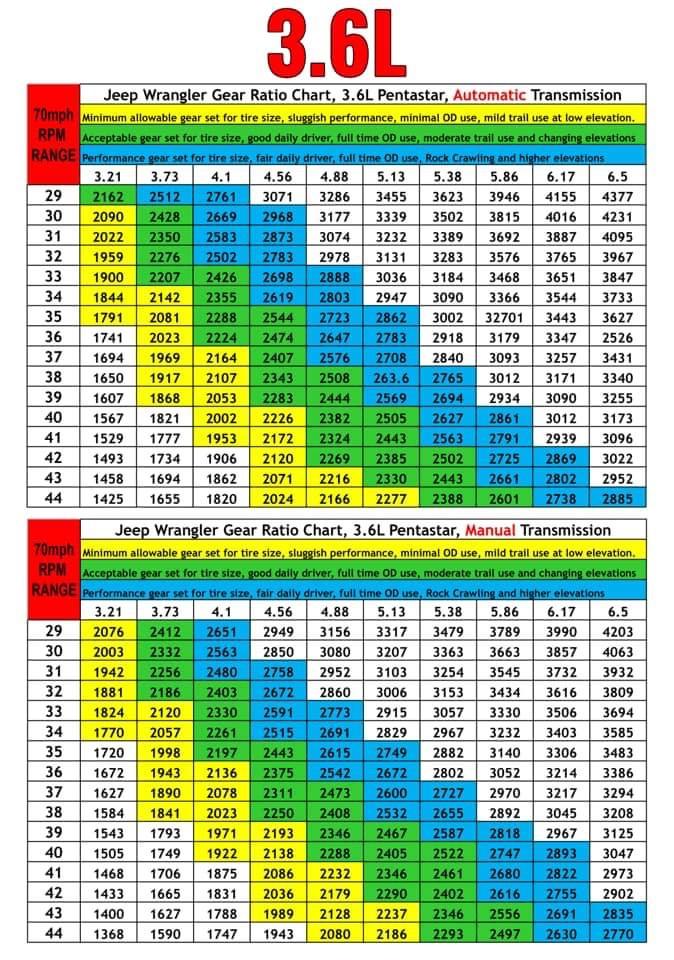
Pick a ratio based on tire size, engine, and driving use. The goal is to return the engine rpm to the factory sweet spot at highway speed.
Steps to choose:
- Measure your current tire diameter and note factory ratio.
- Use a tire-to-gear chart or calculator to see recommended ratios.
- Consider your engine output: small engines often need lower (numerically higher) gears.
- Decide on single or double drop: some lift setups need different choices.
Example recommendations:
- Stock 33-inch tires: stay near factory ratio or mild change.
- 35-inch tires: consider 4.56 or 4.88 for 4-cylinder or small V6 engines.
- 37-inch tires: often need 5.13 or 5.38 for best performance.
From my experience, erring on the side of stronger torque (numerically higher ratio) improves off-road control and towing. If you plan to upgrade the engine later, match gears to the future setup.
 overview (what shops do)”
style=”max-width: 100%; height: auto; border: 2px solid black; border-radius: 10px; display: block; margin: 0 auto;”
loading=”lazy”
/>
Regear process overview (what shops do)
Understanding the process helps set expectations for time and cost. Shops follow a careful sequence.
Typical steps:
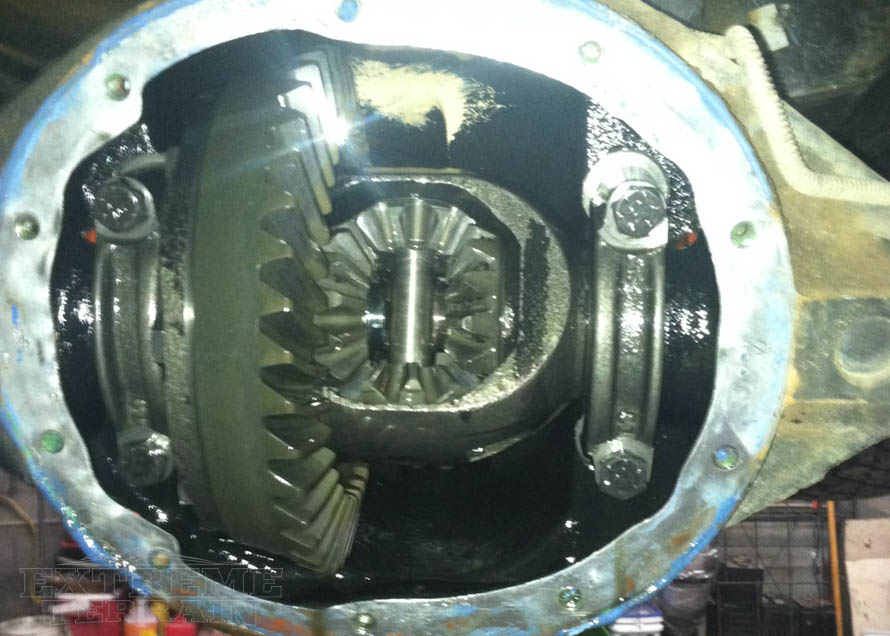
- Disassemble axle and remove differential.
- Inspect and replace worn parts like bearings and seals.
- Set pinion depth and backlash using shims or crush sleeve.
- Pattern the gear with marking compound, test, and adjust.
- Torque everything, refill with gear oil, and road test.
A good shop will break-in gears per manufacturer instructions and recheck noise or pattern after a short drive. Mistakes in setup cause noise, premature wear, or failure, so professional setup matters.
DIY vs professional installation
You can regear at home, but it’s not trivial. I’ve installed gears both at home and in shops. Here’s how to choose.
DIY pros:
- Lower parts-only cost.
- Learn mechanical skills and control quality.
- Good for experienced mechanics with proper tools.
DIY cons:
- Requires special tools: dial indicator, torque wrench, bearing press.
- Easy to mis-set pinion depth and backlash.
- Mistakes lead to expensive failures.
Professional pros:
- Experienced techs, warranty, and fast turnaround.
- Proper tools and test procedures.
- Safer for complicated differentials or lockers.
Professional cons:
- Higher labor cost.
- Possible delays if parts are backordered.
If you do DIY, budget extra time and buy a quality master installation kit. If you’re not confident, hire a trusted shop to avoid repeat work.

Benefits and limitations of regearing
Regearing brings clear gains but has trade-offs. Know both before you spend money.
Benefits:
- Restores engine rpm and acceleration with larger tires.
- Improves fuel economy under many conditions.
- Reduces strain on transmission and transfer case during climbs.
Limitations:
- Costly if both axles and lockers are involved.
- Wrong ratio can harm highway fuel economy.
- Does not fix weak stock axles or transmission issues.
In my experience, regearing delivers the best value when paired with tire or lift upgrades. It’s a targeted fix that pays off in drivability and longevity.

Real-life examples and lessons learned
I once helped a friend regear his Jeep after fitting 35-inch tires. His stock 3.21 gears made freeway driving noisy and slow. We chose 4.56 gears and a locker, and the Jeep drove smoothly at highway speeds again. Fuel economy improved slightly and the engine felt happier on hills.
Lessons learned:
- Always regear both axles for balanced performance.
- Replace pinion bearings and seals during the job.
- Test drive and recheck pattern after break-in.
Personal tip: Save receipts and notes on shim counts during teardown. That record makes future service easier.

Cost-saving tips and mistakes to avoid
You can control how much to regear a Jeep spends by making smart choices.
Cost-saving tips:
- Buy quality gear sets, not the cheapest units.
- Shop local shops and compare labor quotes.
- Combine regearing with other planned axle work to save labor calls.
- If DIY, invest in a good master kit and learn from video guides.
Mistakes to avoid:
- Regearing only one axle—this ruins driveline balance.
- Ignoring bearing and seal replacement.
- Skipping gear pattern checks and road testing.
Planning saves money and ensures longer gear life.
Frequently Asked Questions of how much to regear a jeep
What factors most affect how much to regear a Jeep?
Parts quality, number of axles, labor rates, and additional items like lockers or shaft work drive the cost. Regional labor rates also change the final price.
Is it necessary to regear after putting on larger tires?
Yes, larger tires change final drive ratio and often require regearing to restore proper rpm and performance. Small increases might be tolerable, but larger sizes usually need a regear.
Can I regear only the rear or front axle?
You can, but it’s not recommended. Regearing only one axle can stress driveline components and cause poor performance or damage.
How long does it take to regear a Jeep at a shop?
A professional shop typically takes 1 to 3 days, depending on parts availability and additional repairs. Complex setups or rechecks can extend this time.
Will regearing improve my Jeep's gas mileage?
Regearing can improve gas mileage if it restores engine rpm to the efficient band after tire upgrades. Results vary by driving style and ratio chosen.
Conclusion
Regearing a Jeep usually costs between $700 and $2,500 when you factor parts and labor, and the exact price depends on axle type, parts quality, and labor. Regearing fixes the loss of torque from larger tires, protects the transmission, and improves driving feel. My advice: measure your tire size, choose a ratio based on real use, and decide between DIY or a trusted shop. Take action by getting a few shop estimates, or prepare properly if you plan to do it yourself. Share your plan or questions below, and subscribe or comment to learn more about Jeep upgrades.