Read the code with an OBD-II scanner, check freeze-frame data, then test sensors and wiring.
I’ve spent years diagnosing check engine lights on Jeeps, from simple loose gas caps to tricky cam/crank sync faults. This guide explains how to diagnose Jeep check engine codes step by step, with clear tools, tests, and real-world tips. You’ll learn how to read codes, interpret freeze-frame and live data, run targeted tests, and decide when to fix it yourself or bring it to a shop. Follow the workflow to save time and avoid costly mistakes.

Why the check engine light comes on in Jeeps
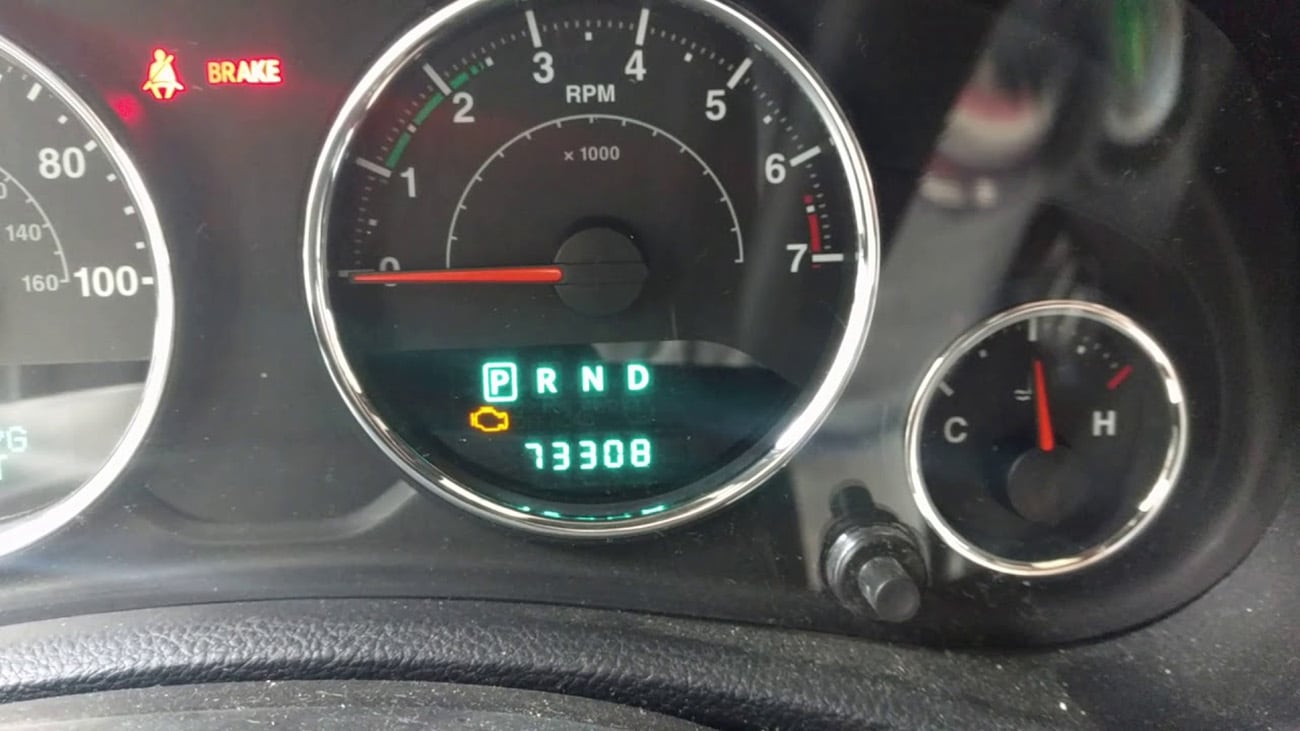
The check engine light (CEL) is the vehicle telling you the engine control module (ECM) found a fault. Codes log faults from sensors, emissions systems, misfires, and drivability issues. Modern Jeeps use OBD-II, which stores Diagnostic Trouble Codes (DTCs) and freeze-frame info. Reading the code is step one. Interpreting it and testing the root cause is step two. Knowing the difference between a pending code and a confirmed code helps you prioritize repairs.
Tools you need to diagnose Jeep check engine codes
- OBD-II scanner that reads generic and manufacturer codes.
- Enhanced scanner or software for Jeep-specific modules when possible.
- Multimeter for voltage, continuity, and sensor checks.
- Fuel pressure gauge to test fuel delivery.
- Smoke machine or smoke tester for vacuum and EVAP leaks.
- Basic hand tools and a service manual or wiring diagrams.
- Optional: oscilloscope for advanced sensor waveform checks.
These tools let you read codes, watch live data, and test parts without guessing. Start with a good scanner. It saves time and money.

How to read OBD-II codes on your Jeep
- Park safely and turn off accessories.
- Connect your OBD-II scanner to the port under the dash.
- Turn the key to the run position or start the engine.
- Read stored and pending codes. Record code numbers and descriptions.
- Check freeze-frame data for engine load, RPM, coolant temp, and fuel trim.
- Watch live data while the engine runs to spot sensors that don’t change.
- Clear codes only after you record everything. See if codes return.
These steps form the backbone of how to diagnose Jeep check engine codes. Freeze-frame is often the clue that points to the exact condition when the fault occurred. Live data lets you watch the problem happen in real time.
Common PAA-style questions about reading codes
What does a pending code mean?
A pending code means the ECM saw a fault once but needs to see it again to set a confirmed DTC. It’s worth monitoring, especially if symptoms are repeatable.
Can I clear codes and drive to reset the CEL?
Clearing codes erases history and freeze-frame. If the issue is still present, the light will likely return. Don’t clear codes before recording data.
Will a basic scanner read Jeep-specific codes?
Basic scanners read generic OBD-II codes. For manufacturer-specific codes or advanced module data, an enhanced scanner or dealer-level tool is helpful.

Interpreting codes and common Jeep-specific codes
- Code formats: Pxxxx covers powertrain, Bxxxx body, Cxxxx chassis, and Uxxxx network. P0xxx are generic. P1xxx can be manufacturer-specific.
- Common Jeep codes and quick causes:
- P0300 Random/Multiple Misfire — bad plugs, coils, fuel, vacuum leak.
- P0171 System Too Lean Bank 1 — vacuum leak, low fuel pressure, MAF sensor issue.
- P0420 Catalyst System Efficiency Below Threshold — bad catalytic converter or upstream O2 sensor.
- P0455 Evaporative Emission System Leak (large leak) — loose gas cap, cracked hose, failed purge valve.
- P0128 Coolant Thermostat Below Regulating Temperature — stuck open thermostat or wrong thermostat.
When you see a code, don’t replace parts immediately. Use live data and tests. For example, P0171: check fuel pressure, look for vacuum leaks, and test the MAF reading against expected airflow at idle and RPM. That approach cuts costs and avoids wasted parts.

Step-by-step diagnostic workflow for Jeep check engine codes
- Read and record all codes, freeze-frame, and pending codes.
- Search for known Jeep TSBs or common faults for the exact model and year.
- Inspect basics: gas cap tight, battery voltage, grounds, visible vacuum hoses, and connectors.
- Use live data to compare sensor readings to expected values. Watch MAF, O2 sensors, fuel trims, RPM, and coolant temp.
- Run a smoke test to spot vacuum or EVAP leaks. This is often quicker than chasing hose clamps.
- Test fuel pressure at the rail under load and idle. Low pressure causes lean codes and misfires.
- Swap coils or spark plugs between cylinders to isolate misfires. If misfire moves, the ignition or fuel circuit is likely.
- Test sensors with a multimeter or oscilloscope for proper voltage, frequency, or waveform.
- Inspect wiring and connectors for corrosion, broken wires, or oil contamination. Pull and wiggle connectors while watching live data.
- If tests are inconclusive, consider module programming, cam/crank correlation checks, or professional diagnostics.
Personal note: I once chased a P0302 misfire on a Jeep for days. Swapping coils didn’t help. A wiggle test on the harness revealed a corroded connector to the injector. Fixing the connector solved the issue. Lesson: wiring often causes mysterious faults.

When to DIY vs when to see a shop
- DIY if the code points to simple items: spark plugs, coils, gas cap, battery, or obvious vacuum leaks. These are low risk and cost-effective to fix at home.
- See a shop if you need advanced tools like an oscilloscope, manufacturer-level scan tool, or the problem is intermittent and serious (engine damage risk).
- For emissions failures, complex EVAP issues, drivetrain control module reprogramming, or cam/crank timing faults, professional diagnostics can save time.
Be honest about your tools and skills. A good shop can prevent unnecessary parts swaps and diagnose network or ECU faults that are hard to test at home.

Troubleshooting tips, common mistakes, and preventive care
- Don’t replace parts without verifying tests. Codes point to symptoms, not always the root cause.
- Record freeze-frame and live data before clearing codes. Data is your friend.
- Check grounds and battery health first. Low voltage can create odd codes.
- Use OEM specs for sensor voltages and fuel pressure. Generic guesses often mislead.
- Keep maintenance up: replace spark plugs, coils, MAF cleaning, and fuel filter on schedule to reduce random codes.
Tip from experience: clean the MAF with proper cleaner rather than replacing it immediately. Many “faulty” MAFs recover after cleaning. Avoid cheap aftermarket sensors and caps that don’t fit well.
Frequently Asked Questions of how to diagnose jeep check engine codes
How do I read the codes on my Jeep?
Plug an OBD-II scanner into the port under the dash, turn the key to run, and use the scanner to read stored and pending codes. Record code numbers, descriptions, and freeze-frame data.
Can a loose gas cap trigger the check engine light?
Yes. A loose or damaged gas cap can cause EVAP leak codes like P0455. Tighten the cap and clear codes to see if the light returns.
How long after fixing an issue will the CEL go off?
If you clear codes, the light goes off immediately, but the ECM may need several driving cycles without the fault to keep it off. If the issue is fixed, the light often stays off after a few starts and drives.
Is it safe to drive with the check engine light on?
It depends. If the light is steady and the car runs fine, short trips to a shop are usually okay. If the light is flashing or the vehicle runs poorly, stop driving to avoid damage.
Do I need a dealer tool to diagnose Jeep codes?
A basic scanner reads generic codes. For advanced module data, manufacturer-specific codes, or special resets, an enhanced scanner or dealer tool is helpful but not always required for common faults.
Conclusion
Diagnosing Jeep check engine codes is a repeatable process: read the code, gather freeze-frame and live data, run targeted tests, and repair the root cause. Use the right tools and follow a clear workflow to save time and money. Start small with sensor checks and visible inspections, then move to more advanced tests when needed. Take action: plug in a good OBD-II scanner, record the data, and tackle the issue step by step. If you found this useful, try these steps on your Jeep and share your results or questions in the comments.